Guide
How to Store Fresh Herbs to Maximize Freshness
Discover my top tips on how to store fresh herbs, preserving their aroma and freshness. Make your herbs last longer with these easy tips!
 By April21 min read
In this guide
- Why Proper Herb Storage Matters
- Cleaning and Prepping Fresh Herbs
- Storing Soft Herbs in Water
- Storing Hardy Herbs in Moist Paper Towels
- Dividing Herbs into Smaller Batches
- Freezing Herbs for Extended Storage
- The Best Ways to Store Fresh Herbs
- Tips from Garden Experts on Herb Storage
- Tender Herbs vs. Hearty Herbs
- Prepping Fresh Herbs for Storage
- Storing Soft Herbs in Water vs. Damp Paper Towels
- Freezing Herbs for Long-Term Storage
- Conclusion
- Source Links
- FAQ
When it comes to cooking with fresh herbs, maximizing freshness is key. Proper storage techniques not only help preserve the aromas and flavors of herbs but also extend their shelf life. In this article, I will share my top tips for storing fresh herbs to ensure they stay fresh and flavorful for longer.
Why Proper Herb Storage Matters
Storing fresh herbs correctly is not just about preserving their flavors and aromas; it also helps prevent food and money waste. Without proper storage, herbs can quickly spoil, resulting in a bag of mush that needs to be thrown away. By utilizing the right storage techniques, you can keep your herbs fresh and ready to use, saving you from unnecessary expenses and reducing food waste.
Improper storage of fresh herbs can lead to disappointment in the kitchen. Imagine reaching for that sprig of cilantro or parsley to garnish your dish, only to find them wilted and unusable. Not only does this mean wasted herbs, but it also means wasted money. By taking the time to store your fresh herbs correctly, you ensure that they remain in their prime condition, ready to enhance your culinary creations.
To avoid the disappointment of wilted and wasted herbs, it's essential to store them properly. By doing so, you can maximize their shelf life and maintain their vibrant flavors. Whether you opt for storing soft herbs in water or using damp paper towels for hardy herbs, ensuring the right level of moisture is crucial. Taking the time to learn the best storage methods for different types of herbs will not only save you money but also guarantee that you always have fresh herbs on hand to elevate your cooking.
Why Proper Herb Storage Matters:
- Prevents food waste
- Saves money
- Maintains flavors and aromas
- Ensures availability of fresh herbs for cooking
| Improper Herb Storage | Proper Herb Storage |
|---|---|
| Wasted herbs | Fresh and usable herbs |
| Diminished flavors | Intensified flavors |
| Increased food waste | Reduced food waste |
| Extra expenses | Savings on herb purchases |
Cleaning and Prepping Fresh Herbs
When it comes to storing fresh herbs, proper cleaning and preparation are essential for maximizing their longevity. Cleaning herbs before storage helps remove bacteria and dirt, ensuring that they stay fresh for longer periods. Here are some important steps to follow:
- Start by removing any twist ties or rubber bands that may be securing the herbs together. This allows the herbs to breathe and prevents them from becoming bruised or damaged.
- Next, wash the herbs under running water to remove any dirt or debris. Gently rub the leaves with your fingers to loosen any stubborn dirt particles.
- After washing, make sure to dry the herbs thoroughly. Excess moisture can lead to the growth of bacteria and cause the herbs to spoil quickly. Use a clean towel or paper towel to pat the herbs dry.
By following these cleaning and prepping steps, you can ensure that your herbs are free from bacteria and dirt, enhancing their longevity and flavor.
Storing Soft Herbs in Water
Soft herbs like cilantro, parsley, mint, and basil can wilt quickly if not stored correctly. To keep them fresh and vibrant, there is a simple method of storing them in water. Here's how:
- Trim the bottom of the herb stems to remove any dry or damaged parts.
- Gather the herbs into small bundles and place them in a jar filled with 1-2 inches of water. Make sure the stems are submerged.
- Cover the leaves of the herbs with a clear plastic bag to create a mini-greenhouse effect.
- Store the jar in the refrigerator to maintain a cool and moist environment for the herbs.
This method helps to hydrate and refresh the herbs, keeping them fresher for longer. It also prevents wilting and extends the shelf life of soft herbs.
"Storing soft herbs in water is a game-changer. It keeps them looking fresh and crisp, just like the day they were picked. I love using this method for cilantro and basil in my cooking - it makes a noticeable difference in the flavor and presentation of my dishes!" - Chef Jane Smith
Try this method for storing your soft herbs, and enjoy the benefits of having fresh and flavorful herbs at your fingertips for a longer period of time!
Storing Hardy Herbs in Moist Paper Towels
When it comes to storing hardy herbs like rosemary, dill, sage, thyme, chives, and oregano, a common and effective method is to use moist paper towels. This technique helps maintain the right level of moisture without submerging the herbs, keeping them fresh and flavorful for longer.
To store hardy herbs using this method, start by taking a few sheets of paper towel and dampening them with water. Make sure they are not soaking wet, but moist enough to provide some humidity. Then, wrap the herbs gently in the damp paper towel, ensuring that all the leaves are covered.
Once the herbs are wrapped, place them in a sealed container or airtight bag. This helps create a microenvironment that retains moisture and prevents the herbs from drying out. It's important to check the paper towel regularly and re-moisten it as it dries out, ensuring that the herbs stay fresh.
"Storing hardy herbs in moist paper towels helps keep them fresh and flavorful for longer periods, ensuring that you always have aromatic herbs on hand for your culinary creations." - Herb Enthusiast
Table: Comparison of Storing Hardy Herbs in Different Conditions
| Storage Method | Advantages | Disadvantages |
|---|---|---|
| Moist Paper Towels in a Sealed Container | - Maintains the right moisture level - Keeps herbs fresh for longer periods |
- Requires regular monitoring - Can be less visually appealing |
| Dry Storage in Open Container | - Easy to access herbs - No need for extra moisture |
- Herbs can dry out quickly - Prone to losing flavor |
| Freezing | - Extends shelf life significantly - Preserves flavor and aroma |
- Texture may change after thawing - Not suitable for all herbs |
Storing hardy herbs in moist paper towels is a convenient and effective way to preserve their freshness. This method, compared to other storing options like dry storage in open containers or freezing, ensures that the herbs retain their flavor and aroma for a longer period. While the container or bag may not be as visually appealing as other methods, the focus is on maintaining the quality of the herbs.
By following these storage tips, you can extend the shelf life of hardy herbs and always have them on hand for your culinary endeavors.
https://www.youtube.com/watch?v=JoY17o6-P4o
Dividing Herbs into Smaller Batches
When it comes to storing fresh herbs, dividing them into smaller batches can greatly help regulate moisture and prolong their freshness. By separating your herbs into smaller portions, you can prevent excess moisture or dryness that can cause them to spoil or lose their flavor.
To divide your herbs, start by gently separating the stems and leaves. If you have different types of herbs, it's best to keep them in separate batches to maintain their distinct flavors. Place each batch in airtight containers or resealable bags to ensure they stay fresh.
Dividing your herbs into smaller batches also offers the advantage of convenience. You can easily grab a small portion of herbs as needed, without exposing the entire supply to potential spoilage. This way, you can enjoy the fresh taste of herbs in your cooking, while ensuring the rest remain in optimal condition.
Benefits of Dividing Herbs into Smaller Batches:
- Regulates moisture levels to prevent spoilage
- Preserves the distinct flavors of each herb
- Provides convenience and easy access to fresh herbs
By following this simple storage technique, you can extend the shelf life of your fresh herbs and enjoy their vibrant flavors for longer periods. So, next time you bring home a bunch of herbs, consider dividing them into smaller batches to ensure maximum freshness and flavor.
| Benefits of Dividing Herbs into Smaller Batches |
|---|
| Regulates moisture levels to prevent spoilage |
| Preserves the distinct flavors of each herb |
| Provides convenience and easy access to fresh herbs |
Freezing Herbs for Extended Storage
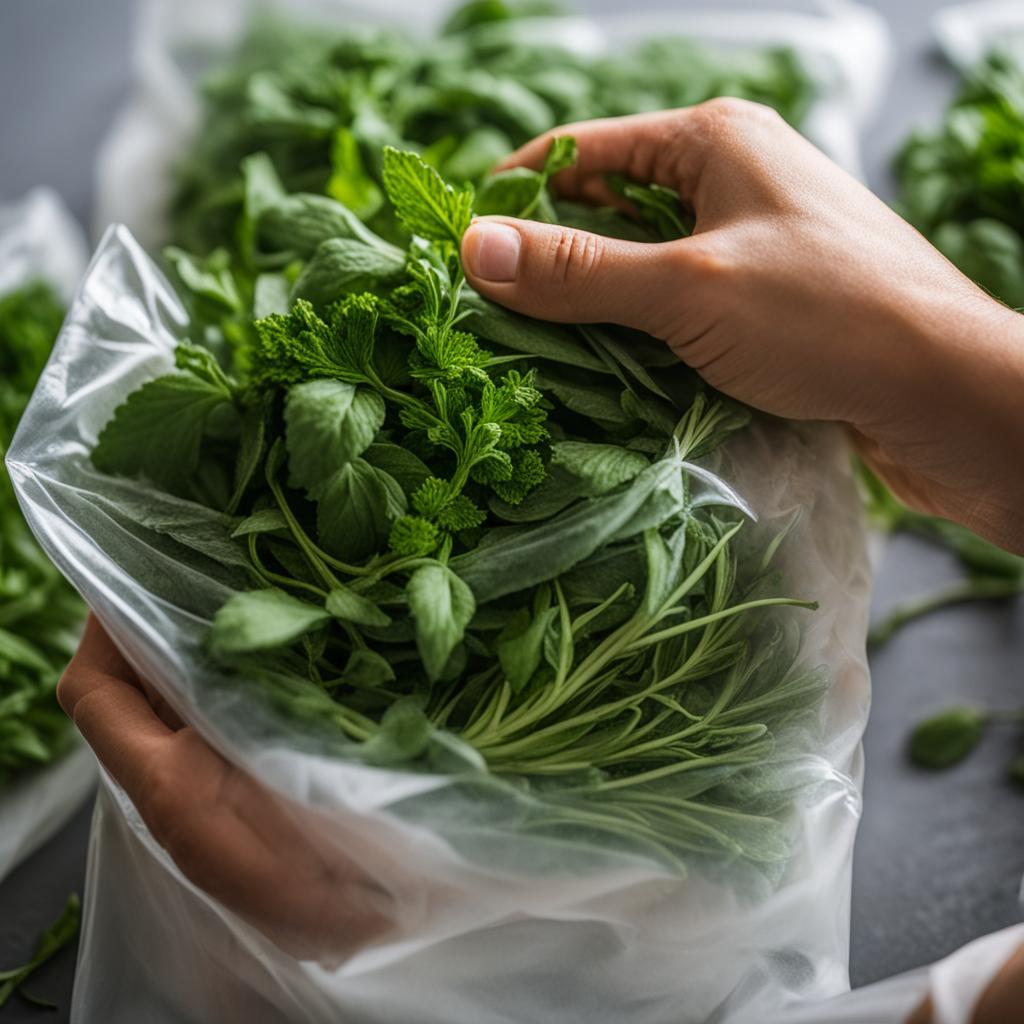
When it comes to storing herbs for an extended period, freezing is a convenient and effective method. Freezing herbs not only helps to preserve their flavors but also allows you to enjoy the taste of fresh herbs even when they are not in season. Whether you have an abundance of herbs from your garden or want to make the most of store-bought herbs, freezing is a great solution.
Freezing Techniques
There are different freezing techniques to consider depending on the type of herbs you are storing. For hardy herbs like rosemary, thyme, and sage, you can simply wrap them in a damp paper towel and place them in a labeled, resealable freezer bag. This method helps to maintain the quality of the herbs and can keep them frozen for several months.
For soft herbs like basil, cilantro, and mint, you can blend them with either oil or water and freeze the mixture in an ice cube tray or freezer bag. This allows you to portion out the herbs and easily add them to soups, sauces, or marinades as needed. When using this method, it's important to label the bag or tray with the type of herb and the date of freezing.
Freezing Soft Herbs vs. Freezing Hardy Herbs
Freezing Soft Herbs:
| Herb | Freezing Method |
|---|---|
| Basil | Blend with oil or water and freeze in an ice cube tray |
| Cilantro | Blend with oil or water and freeze in an ice cube tray |
| Mint | Blend with oil or water and freeze in an ice cube tray |
Freezing Hardy Herbs:
| Herb | Freezing Method |
|---|---|
| Rosemary | Wrap in a damp paper towel and place in a labeled, resealable freezer bag |
| Thyme | Wrap in a damp paper towel and place in a labeled, resealable freezer bag |
| Sage | Wrap in a damp paper towel and place in a labeled, resealable freezer bag |
By utilizing these freezing techniques, you can ensure that your herbs retain their flavors and aromas, allowing you to enjoy the taste of fresh herbs all year round. Freezing herbs not only provides convenience but also helps minimize waste, as you can store and use them as needed in your favorite recipes.
The Best Ways to Store Fresh Herbs
When it comes to storing fresh herbs, proper storage techniques can make a significant difference in maintaining their freshness and maximizing their shelf life. Here are some of the best methods to store your herbs and ensure that they stay fresh and flavorful for longer periods.
Storing Soft Herbs in Water
Soft herbs like cilantro, parsley, mint, and basil can wilt quickly if not stored correctly. One effective method is to trim the bottom of the stems, gather the herbs into bundles, and place them in a jar filled with 1-2 inches of water. Covering the leaves with a clear plastic bag helps retain moisture and keeps the herbs hydrated. Store the jar in the refrigerator to extend their freshness. This method keeps the herbs crisp and refreshes them, so they stay flavorful and ready to use.
Storing Hardy Herbs with Damp Paper Towels
Hardy herbs such as rosemary, dill, sage, thyme, chives, and oregano have sturdier leaves and can tolerate slightly drier conditions. To store these herbs, wrap them in a damp paper towel to provide a controlled level of moisture. Place the wrapped herbs in a tightly sealed container or reusable bag to maintain their freshness and prevent them from drying out. Remember to re-moisten the paper towel as needed to keep the herbs in optimal condition.
Dividing Herbs into Smaller Batches
To regulate moisture and prolong the freshness of your herbs, consider dividing them into smaller batches. Storing herbs separately helps prevent excess moisture or dryness that can lead to spoilage or loss of flavor. By storing your herbs in smaller quantities, you can ensure that each batch stays fresh and retains its potency.
| Soft Herbs | Hardy Herbs |
|---|---|
| Cilantro | Rosemary |
| Parsley | Dill |
| Mint | Sage |
| Basil | Thyme |
By following these storage methods, you can keep your fresh herbs at their best. Whether you choose to store soft herbs in water, use damp paper towels for hardy herbs, or divide them into smaller batches, these techniques will help maximize their shelf life and ensure that you have fresh herbs on hand whenever you need them.
Tips from Garden Experts on Herb Storage
When it comes to storing fresh herbs, garden experts have some valuable tips to maximize their longevity and flavor. These tips can help you make the most out of your herb storage and ensure that you always have fresh herbs on hand for your culinary creations.
Washing and Drying Herbs
Before storing your fresh herbs, it's important to wash and dry them properly. This step helps remove any dirt or debris, ensuring that your herbs are clean and ready for storage. After washing, gently pat them dry with a clean kitchen towel or paper towel to remove excess moisture. This drying process helps prevent the herbs from becoming mushy and extends their shelf life.
Storing Soft Herbs in Jars with Water
Soft herbs, such as basil, cilantro, and parsley, can be stored in jars with water to keep them fresh and vibrant. Trim the bottom of the stems, place the herbs in a jar filled with about an inch of water, and cover the leaves with a clear plastic bag. This method helps hydrate the herbs and maintain their freshness for a longer period. Keep the jars in the refrigerator to extend the lifespan of the herbs.
Storing Woody Herbs in Damp Paper Towels
Woody herbs like rosemary, thyme, and sage can be stored in damp paper towels to retain their moisture. Wrap the herbs in a slightly damp paper towel and place them in an airtight container or resealable bag. The paper towel helps regulate the moisture around the herbs, preventing them from drying out while stored in the refrigerator. This method ensures that your woody herbs stay fresh and flavorful for an extended period.
By following these expert tips, you can enhance the storage of your fresh herbs, prolong their freshness, and enjoy their flavors in your favorite dishes.
Tender Herbs vs. Hearty Herbs
When it comes to storing fresh herbs, it's crucial to understand the difference between tender herbs and hearty herbs. Tender herbs, such as basil, cilantro, and mint, have delicate, tender stems, and are typically added towards the end of cooking to preserve their flavors. On the other hand, hearty herbs like rosemary and thyme have woodier stems and can be used at any stage of cooking, as they hold up well to heat and longer cooking times.
The delicate nature of tender herbs requires special care in storage. These herbs are best stored in water to keep them hydrated and prevent wilting. Simply trim the bottom of the stems, place the herbs in a jar with 1-2 inches of water, cover the leaves with a clear plastic bag, and store them in the refrigerator. This method helps to maintain the freshness and vibrant flavors of tender herbs for an extended period.
On the other hand, hearty herbs can be stored using damp paper towels. Wrap the herbs in a damp paper towel to provide the right level of moisture and place them in a sealed container or reusable bag. Make sure to check the paper towel regularly and re-moisten it as needed to maintain the freshness of the herbs. Storing hearty herbs with a slightly higher moisture level helps to preserve their flavor and prevent them from drying out.
By understanding the characteristics of tender herbs and hearty herbs, you can ensure that you store them properly, preserving their delicate flavors and prolonging their shelf life. Whether you're cooking with basil and cilantro or using rosemary and thyme, knowing how to handle and store each type of herb will ensure that you get the best possible results in your culinary creations.
Prepping Fresh Herbs for Storage
When it comes to storing fresh herbs, proper prepping is key. By following a few simple steps, you can ensure that your herbs stay fresh and flavorful for longer. Here's a guide on how to wash, dry, and prep your fresh herbs for optimal storage.
Washing Fresh Herbs
Before storing fresh herbs, it's important to give them a thorough wash. Start by gently rinsing the herbs under cool, running water to remove any dirt or debris. If your herbs are particularly dirty, you can fill a bowl with water and soak them for a few minutes to loosen any stubborn dirt. However, be cautious not to oversoak, as excess moisture can lead to rot.
"Washing fresh herbs helps remove dirt and impurities, ensuring clean and safe storage."
After washing, pat the herbs dry using a clean kitchen towel or paper towels. It's essential to remove as much moisture as possible to prevent the herbs from becoming damp or wet, which can lead to rot. Gently press the towels against the herbs to absorb the excess water.
Trimming and Removing Leaves
Once your herbs are washed and dried, it's time to trim the stems and remove any discolored or wilted leaves. This step helps prolong the freshness of the herbs by getting rid of any potential sources of decay. Use a sharp knife or kitchen shears to trim the bottom of the stems, cutting at a slight angle to expose more surface area for water absorption.
If there are any brown or yellowing leaves on the stems, gently pluck them off to ensure that only healthy leaves are stored. Removing these leaves helps prevent the spread of any rot or mold to the rest of the herb.
Storing Prepped Herbs
After washing, drying, and prepping your fresh herbs, they are ready for storage. Soft herbs, like basil and cilantro, are best stored in a jar with a small amount of water, similar to a bouquet of flowers. This helps keep them hydrated and prevents them from drying out. Cover the leaves with a clear plastic bag and secure it with a rubber band to create a mini greenhouse effect.
Hardy herbs, such as rosemary and thyme, can be stored in a damp paper towel. Wrap the herbs gently in the towel and place them in an airtight container or resealable bag. Make sure the towel is slightly damp but not soaking wet to maintain the right level of moisture.
By properly prepping your fresh herbs for storage, you can ensure that they stay fresh, vibrant, and full of flavor for longer periods. Remember to wash, dry, and trim your herbs before storing them in the appropriate way, whether in water or damp paper towels. With these simple steps, you can make the most out of your fresh herbs and minimize waste.
Storing Soft Herbs in Water vs. Damp Paper Towels
When it comes to storing soft herbs, such as cilantro, parsley, mint, and basil, there are two popular methods: using water or damp paper towels. Both methods have their advantages, so let's explore each one.
Storing Soft Herbs in Water
One common approach to keeping soft herbs fresh is to place them in a jar filled with water. This method helps hydrate the herbs, keeping them crisp and vibrant. To do this, trim the bottom of the herb stems, gather them into bundles, and place them in a jar filled with about 1-2 inches of water. Next, cover the leaves with a clear plastic bag to prevent moisture loss and store the jar in the refrigerator.
Storing soft herbs in water can help maintain their moisture, preventing wilting and browning. It also allows you to pick the herbs as needed, as they remain fresh and ready to use for a longer period. However, it's important to change the water every few days to prevent the growth of bacteria and ensure the herbs stay fresh.
Storing Soft Herbs with Damp Paper Towels
Alternatively, you can store soft herbs with damp paper towels to maintain their freshness. To do this, wrap the herbs loosely in slightly damp paper towels and place them in a plastic bag. Seal the bag, leaving some air inside, and store it in the refrigerator. The damp paper towels help provide the right level of moisture to the herbs, keeping them hydrated without submerging them in water.
This method is convenient and requires minimal effort. The herbs stay fresh and can be easily accessed whenever you need them. However, it's essential to check the paper towels regularly and remoisten them as necessary to ensure the herbs don't dry out.
| Storing Method | Advantages | Considerations |
|---|---|---|
| Water | Keeps herbs hydrated, prevents wilting and browning | Change water every few days to prevent bacteria growth |
| Damp Paper Towels | Convenient and easy, provides the right moisture level | Check and remoisten paper towels regularly |
In conclusion, whether you choose to store soft herbs in water or with damp paper towels, both methods can help keep them fresh and flavorful for longer. Consider your personal preferences and the convenience of each method when deciding which one works best for you. With proper storage, you can enjoy the vibrant flavors and aromas of fresh herbs in your culinary creations for an extended period.
Freezing Herbs for Long-Term Storage
When it comes to preserving the flavors of unused herbs for an extended period, freezing is an excellent option. It allows you to enjoy the taste of fresh herbs even when they are not in season. Freezing herbs is a simple process that can be done using airtight bags or containers, or even ice cube trays for pre-portioned amounts.
By storing herbs in airtight bags, you can ensure that they are protected from freezer burn and moisture. This method is particularly convenient if you have a large quantity of herbs to freeze. Simply place the herbs in a single layer in an airtight bag, remove any excess air, seal it tightly, and label it with the herb's name and the date of freezing.
Another option is to freeze herbs in ice cube trays. This is especially useful if you like to add herbs to soups, stews, or sauces. Chop the herbs finely and place them in each compartment of an ice cube tray. Fill each compartment with water or oil, depending on your preference, and freeze until solid. Once frozen, transfer the herb cubes to an airtight bag or container, making sure to label them accordingly.
By pre-portioning herbs in this way, you can easily add them to your dishes without having to defrost a large batch. It's a convenient way to have fresh herbs at your fingertips whenever you need them. Whether it's a sprig of rosemary for a roast chicken or some chopped parsley for a pasta dish, frozen herbs can be a time-saving addition to your culinary arsenal.
Conclusion
In conclusion, proper storage is crucial to optimize herb freshness and prolong their shelf life. By following the tips and techniques mentioned in this article, you can maximize the flavor and longevity of your fresh herbs, minimizing waste and enhancing your culinary experience.
Remember to clean and prep your herbs before storing, removing any excess moisture that can lead to spoilage. Soft herbs like cilantro, parsley, mint, and basil can be stored in water, while hardy herbs like rosemary, dill, sage, thyme, chives, and oregano can be wrapped in damp paper towels. Dividing your herbs into smaller batches and freezing them is also an effective way to keep them fresh for an extended period.
By understanding the differences between tender and hearty herbs and tailoring your storage techniques accordingly, you can ensure optimal freshness. With these strategies, you can make the most out of your herbs, savoring their flavors and aromas even when they are not in season.
So, whether you're growing herbs in your garden or purchasing them from the store, implementing proper herb storage practices will help you maximize freshness, prolong shelf life, and elevate your culinary creations.
Source Links
- https://www.foodandwine.com/seasonings/herbs/how-to-store-fresh-herbs
- https://www.cnet.com/home/kitchen-and-household/how-to-store-and-preserve-fresh-herbs/
- https://www.seriouseats.com/the-best-way-to-store-fresh-herbs-parsley-cilantro-dill-basil
Frequently asked questions
- How should I store fresh herbs to maximize their freshness?
Storing fresh herbs correctly can help retain their aromas, flavors, and extend their shelf life. Follow the tips and techniques mentioned in this article to ensure your herbs stay fresh for longer.
- Why is proper herb storage important?
Proper herb storage helps prevent waste of food and money. Improper storage can cause herbs to spoil quickly, resulting in a bag of mush. By using the correct storage techniques, you can keep your herbs fresh and ready to use in your favorite recipes.
- How should I clean and prep fresh herbs before storing them?
To properly clean and prep fresh herbs, remove any twist ties or rubber bands, wash them under running water, and dry them thoroughly. This will prevent the growth of surface bacteria and dirt, which can cause herbs to spoil quickly.
- How should I store soft herbs like cilantro, parsley, mint, and basil?
Trim the bottom of the stems, gather the herbs into bundles, and place them in a jar filled with 1-2 inches of water. Cover the leaves with a clear plastic bag and store them in the refrigerator. This method helps hydrate and refresh the herbs, keeping them fresher for longer.
- How should I store hardy herbs like rosemary, dill, sage, thyme, chives, and oregano?
Wrap the hardy herbs in a damp paper towel and store them in a tightly sealed container or reusable bag in the refrigerator. Make sure to re-moisten the paper towel as it dries out to maintain the herbs' freshness.
- Should I divide my herbs into smaller batches for storage?
Yes, dividing herbs into smaller batches and storing them separately helps regulate moisture and maximize freshness. This prevents excess moisture or dryness that can cause herbs to spoil or lose their flavor.
- Can I freeze fresh herbs for long-term storage?
Yes, freezing herbs is a great option for storing them for an extended period. Wrap hardy herbs in a damp paper towel and place them in a labeled, resealable freezer bag. For soft herbs, blend them with oil or water and freeze the mixture in an ice cube tray or freezer bag.
- What are the best ways to store fresh herbs?
Storing soft herbs in water and hardy herbs in moist paper towels are ideal methods to keep them fresh. Dividing herbs into smaller batches and freezing them are also effective ways to extend their freshness.
- Do garden experts have any tips for herb storage?
Garden experts recommend washing and drying herbs before storage, storing soft herbs in water or damp paper towels, and storing hardy herbs in airtight containers with damp paper towels. These steps can help ensure that your herbs stay fresh for as long as possible.
- What is the difference between tender herbs and hearty herbs?
Tender herbs, such as basil, cilantro, and mint, have delicate stems and are typically added towards the end of cooking. Hearty herbs, like rosemary and thyme, have woodier stems and can be used at any stage of cooking.
- How should I prepare fresh herbs before storing them?
Before storing fresh herbs, wash and dry them thoroughly to remove excess moisture and prevent rotting. Trim the stems and remove any discolored or wilted leaves to keep the herbs fresh.
- Should I store soft herbs in water or damp paper towels?
The choice between storing soft herbs in water or damp paper towels depends on personal preference. Storing them in water helps keep them hydrated and prevents browning, while damp paper towels provide the right level of moisture without submerging the herbs.
- Can I freeze unused herbs for long-term storage?
Yes, freezing unused herbs is an effective way to store them for later use. Place the herbs in airtight bags or containers, or use ice cube trays for pre-portioned amounts. This allows you to enjoy the taste of fresh herbs even when they are not in season.
AprilCook, recipe developer and the heart of Chefwiz. More about April