Thanksgiving Pioneer-Style Herb Roasted Turkey
Rate this recipeBe the first to rate
 By AprilPublished
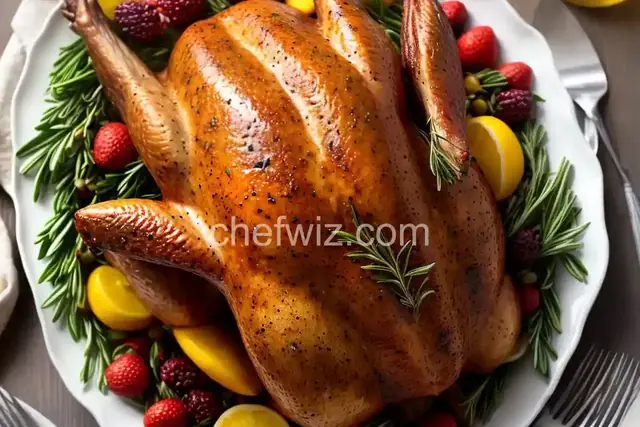
 Thanksgiving is just around the corner, and what better way to celebrate than with a mouthwatering herb roasted turkey?
 By AprilPublished
 Thanksgiving is just around the corner, and what better way to celebrate than with a mouthwatering herb roasted turkey?
Take the turkey out of the refrigerator one hour before roasting.
Use a food processor to blend together the butter, sage, rosemary, thyme, and parsley until it becomes a smooth mixture. Add salt and pepper to taste.
Preheat the oven to 450 degrees F.
Season the inside of the turkey with salt and pepper, then stuff it with half of the carrots, celery, and onion. Rub the entire turkey with the herb butter mixture and season generously with salt and pepper.
In a medium saucepan, heat 4 cups of chicken stock on low heat to keep it warm.
Arrange the remaining vegetables in the bottom of a large roasting pan. Place the turkey on top of the vegetables and put it in the preheated oven. Roast for about 45 minutes, or until the turkey turns a light golden brown.
Reduce the oven temperature to 350 degrees F and continue roasting the turkey. Baste it with the warm chicken stock every 15 minutes. Cook until an instant-read thermometer inserted into the thigh reaches 160 degrees F. This should take approximately 2 to 2 1/4 hours.
Remove the turkey from the oven, transfer it to a baking sheet, and loosely cover it with foil. Let it rest for 20 minutes before slicing.
For the sage gravy, strain the cooking liquid from the roasting pan into a medium saucepan.
Thanksgiving is just around the corner, and what better way to celebrate than with a mouthwatering herb roasted turkey? In this article, we'll explore how to prepare a delicious Thanksgiving turkey using pioneer-style techniques. So grab your apron and let's get cooking!
The first step to a successful Thanksgiving turkey is selecting the right bird. Look for a fresh or frozen turkey that is plump and juicy. Consider the size of your gathering - a general rule of thumb is to allow 1 pound of turkey per person. If you're cooking for a smaller group, you may opt for a turkey breast instead.
Before you can start roasting your turkey, it's essential to properly prepare it. Start by removing the giblets and neck from the cavity. Rinse the turkey inside and out with cold water and pat dry with paper towels. Now it's time to infuse the bird with some delicious flavors.
To add a pioneer-style twist to your turkey, create a simple yet flavorful herb rub. Combine herbs like rosemary, thyme, and sage with salt, pepper, and olive oil. Massage the herb rub all over the turkey, making sure to get into every nook and cranny. The aroma alone will have your mouth watering!
Now that your turkey is seasoned, it's time to roast it to perfection. Preheat your oven to the recommended temperature. Place the turkey breast-side up on a rack in a roasting pan, ensuring that there is enough space for hot air to circulate. Cover the turkey with foil and roast according to the recommended cooking time based on the weight of your bird.
To achieve that beautiful golden finish on your turkey, remove the foil during the last 30 minutes of cooking. Baste the turkey with its own juices to keep it moist and flavorful. This extra step will create a crispy, caramelized skin that will impress your Thanksgiving guests.
Once your turkey is done, resist the temptation to carve it immediately. Allow it to rest for about 20-30 minutes before slicing. This resting period allows the juices to redistribute, resulting in a moist and tender turkey.
Preparing a Thanksgiving turkey pioneer-style is a delightful way to honor tradition while indulging in a delicious meal. By following these simple steps, you'll be able to create a herb roasted turkey that is juicy, flavorful, and sure to impress your loved ones.
The cooking time for a turkey depends on its weight. As a general guideline, roast a turkey at 325°F for about 15 minutes per pound.
While it is common to stuff the turkey, it's important to note that it can increase the cooking time. Make sure the stuffing reaches a safe internal temperature of 165°F.
Use a meat thermometer to check the internal temperature of the turkey. It should reach 165°F in the thickest part of the thigh.
Absolutely! Feel free to experiment with different herbs and spices to create a flavor profile that suits your taste buds.
Leftover turkey can be used in a variety of dishes, such as sandwiches, soups, and casseroles. Get creative and enjoy the deliciousness for days to come!
Carving a turkey can seem intimidating, but with a sharp knife and a little patience, you'll be able to master it. Start by removing the legs and wings, then slice the breast meat against the grain.
Absolutely! This method can be used for other poultry, such as chicken or Cornish hens. Just adjust the cooking time accordingly.
To make a delicious gravy, skim the fat from the drippings, then whisk in flour to create a roux. Slowly whisk in the turkey broth and bring to a simmer until thickened. Season with salt and pepper to taste.
AprilCook, recipe developer and the heart of Chefwiz. More about April