Pappardelle al Cinghiale
Rate this recipeBe the first to rate
 By AprilPublished
 Have you ever experienced the delight of indulging in a plate of pappardelle al cinghiale?
 By AprilPublished
 Have you ever experienced the delight of indulging in a plate of pappardelle al cinghiale?
Combine the flour and eggs until a dough forms.
Knead the dough for about 10 minutes until it becomes elastic and springs back when pressed with your finger.
Cover the dough and let it rest for 30 minutes.
Use a pasta machine or rolling pin to roll out the dough until it is 1/16-inch thick.
Cut the rolled-out dough into ribbons that are 3/4-inch wide.
In a separate pan, sauté onions, rosemary, and celery in olive oil until they become soft and start to brown.
Add tomatoes, wild boar, and grated nutmeg to the pan.
Cook the mixture for about 10 to 15 minutes, until the boar meat is fully cooked and the mixture thickens to a sauce consistency.
Cook the pasta in boiling, salted water until it is al dente, which usually takes about 2 to 3 minutes.
Drain the cooked pasta and add it to the sauce.
Toss the pasta in the sauce until it is well coated.
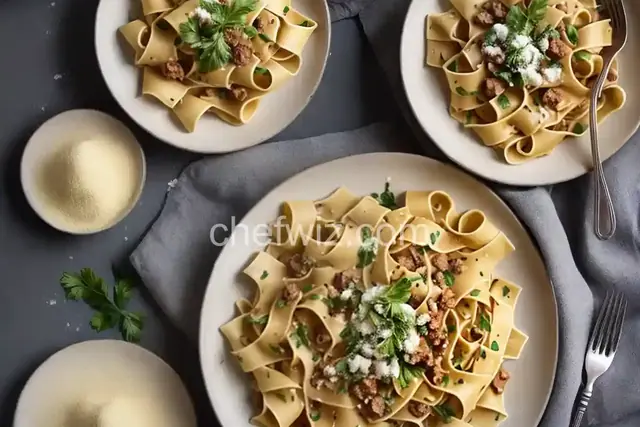
Have you ever experienced the delight of indulging in a plate of pappardelle al cinghiale? This traditional Italian dish is a true gastronomic masterpiece. The combination of wide, flat pasta noodles with a rich wild boar ragù creates a symphony of flavors that will transport you to the heart of Tuscany. In this article, we will delve into the history of pappardelle al cinghiale and explore why it has become a beloved dish around the world.
Legend has it that pappardelle al cinghiale originated in the hills of Tuscany, where wild boars roam freely. The local hunters would bring home their prized catch, and the women of the village would transform the meat into a rich and flavorful sauce. They would then toss the sauce with pappardelle, a type of pasta known for its wide and ribbon-like shape. The dish quickly gained popularity due to its rustic charm and the unique taste of the wild boar.
What makes pappardelle al cinghiale so special? It is the perfect combination of tender pasta and robust sauce. The wide noodles provide a substantial base for the rich ragù, allowing the flavors to meld together harmoniously. The slow-cooked wild boar sauce, infused with aromatic herbs and red wine, adds depth and complexity to every bite. The result is a dish that is both comforting and sophisticated.
Preparing pappardelle al cinghiale requires time and patience, but the end result is well worth the effort. First, the wild boar meat is marinated to tenderize it and enhance its flavor. Then, it is slowly braised with a medley of vegetables and spices to create a rich and hearty sauce. The pappardelle noodles are cooked until al dente and then tossed with the ragù. The dish is typically garnished with a sprinkle of freshly grated Parmesan cheese and a sprig of fresh herbs.
While pappardelle al cinghiale is delicious on its own, there are several variations and accompaniments that can elevate the dish even further. Some chefs add a touch of cream to the sauce to create a silkier texture. Others incorporate mushrooms or truffles for an earthy flavor. Pappardelle al cinghiale pairs well with a robust red wine, such as Chianti, to complement the richness of the dish.
In conclusion, pappardelle al cinghiale is a culinary masterpiece that captures the essence of Tuscany. Its origins in the rustic hills of Italy and the combination of wide pasta noodles with a rich wild boar ragù make it a dish that is both comforting and sophisticated. Whether you enjoy it at a traditional trattoria or make it in the comfort of your own kitchen, pappardelle al cinghiale is sure to satisfy your taste buds and transport you to the heart of Italy.
Pappardelle refers to a type of pasta that is wide and ribbon-like in shape.
While wild boar is traditional, you can use other meats such as pork or beef as a substitute.
The wild boar ragù is slow-cooked for several hours to ensure tender and flavorful meat.
Yes, you can freeze the leftovers in an airtight container for future enjoyment.
Yes, you can replace the wild boar with mushrooms or lentils to create a vegetarian version of this dish.
While homemade pasta is ideal, you can use store-bought pappardelle noodles as a convenient alternative.
A robust red wine, such as Chianti, pairs well with the rich flavors of pappardelle al cinghiale.
Yes, you can prepare the sauce in advance and reheat it when ready to serve with freshly cooked pasta.
AprilCook, recipe developer and the heart of Chefwiz. More about April