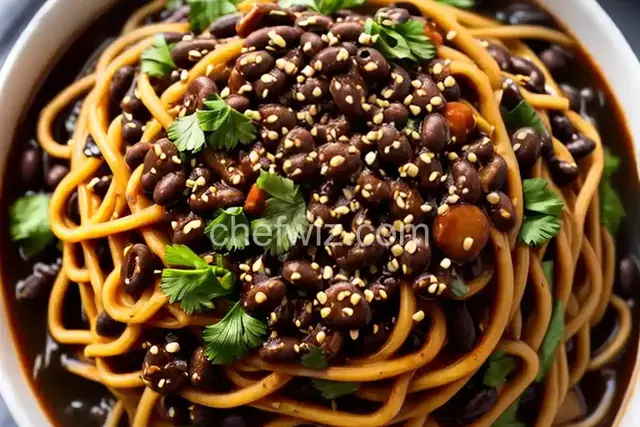
Jajangmyeon (Vegetarian Korean Black Bean Noodles)
Rate this recipeBe the first to rate
 By AprilPublished
 Do you love exploring different cuisines from around the world?
 By AprilPublished
 Do you love exploring different cuisines from around the world?
Heat oil in a wok over medium heat.
Add garlic, carrot, and potato to the wok. Stir and season with salt and pepper. Cook until softened, around 5 to 7 minutes.
Next, add zucchini and onion to the wok. Stir everything together.
In a separate bowl, mix cornstarch and water until well combined.
Pour water, black bean paste, and sugar into the wok. Stir everything together.
Slowly add the cornstarch mixture to the wok while stirring continuously. Cook until the sauce thickens, approximately 3 to 5 minutes.
Meanwhile, bring a large pot of lightly salted water to a boil. Add the noodles and cook them until they are tender yet firm to the bite, usually around 3 minutes. Drain the noodles.
Serve the noodles in a large pasta bowl and pour the black bean mixture on top. Mix everything well.
If you're looking for Korean bean noodles, also known as myun, you can typically find them in the refrigerated section of Korean or Asian markets. Use 2 bunches from a package that contains 4 bunches.
Do you love exploring different cuisines from around the world? If so, you're in for a treat! Today, we're going to dive into the delicious world of Korean cuisine and discover the wonders of Jajangmyeon, a popular Korean dish that will leave your taste buds begging for more. In this article, we'll explore what Jajangmyeon is, its origins, and how to enjoy a vegetarian version of this delectable dish.
Before we delve into the details of this mouthwatering dish, let's take a moment to appreciate its rich history. Jajangmyeon is a Korean-Chinese fusion dish that originated in China and was brought to Korea during the early 20th century. Over time, it has become a beloved staple in Korean cuisine, enjoyed by people of all ages.
If you're wondering what sets Jajangmyeon apart from other noodle dishes, the answer lies in its unique black bean sauce. The sauce is made from fermented black soybeans, which give it a rich, savory flavor that is both satisfying and comforting. When combined with chewy noodles and a variety of vegetables, Jajangmyeon becomes a symphony of flavors that will tantalize your taste buds.
Imagine a plate of perfectly cooked noodles, coated in a thick, glossy black bean sauce, topped with crunchy vegetables and served with a side of pickled radish. The combination of textures and flavors is truly a delight for the senses.
If you follow a vegetarian diet, you'll be pleased to know that you can still enjoy the flavors of Jajangmyeon. Simply substitute the meat-based ingredients with plant-based alternatives. Instead of pork or beef, you can use tofu or mushrooms to add depth and protein to the dish. The key is to marinate the tofu or mushrooms in a flavorful sauce before stir-frying them with the other vegetables.
Jajangmyeon is a truly unique and delicious dish that will transport you to the vibrant streets of Korea. Whether you're a vegetarian or simply looking to explore new flavors, this Korean-Chinese fusion dish is sure to satisfy your cravings. So why not give it a try? Gather the ingredients, roll up your sleeves, and embark on a culinary adventure that will leave you wanting more.
No, Jajangmyeon is not typically spicy. The sauce has a rich, savory flavor with a hint of sweetness, but it is not spicy. However, you can always add some spice if you prefer by adding chili paste or chili flakes to your liking.
Yes, you can make Jajangmyeon gluten-free by using gluten-free noodles and ensuring that all the sauces and ingredients you use are gluten-free. There are many gluten-free options available in stores, so you can still enjoy this delicious dish.
Absolutely! Jajangmyeon is a versatile dish, and you can customize it to suit your taste. You can add extra vegetables like bell peppers, carrots, or zucchini to make it more colorful and nutritious. Feel free to get creative and experiment with your favorite ingredients.
Yes, you can make Jajangmyeon ahead of time and store it in the refrigerator. The flavors actually deepen and become even more delicious when the dish is allowed to sit overnight. Simply reheat it before serving, and you'll have a ready-to-enjoy meal in no time.
Jajangmyeon can be a healthy dish, especially when you load it up with plenty of vegetables. The black bean sauce provides a good amount of protein, and the vegetables add essential nutrients. Just be mindful of the amount of oil and salt you use in the cooking process.
Yes, Jajangmyeon is a popular dish that is widely available in Korean restaurants around the world. You can enjoy this delicious dish whether you're in Korea or any other country with a Korean restaurant nearby.
While Jajangmyeon traditionally uses thick, chewy wheat noodles, you can certainly experiment with other types of noodles if you prefer. Udon noodles or even spaghetti can be used as alternatives, although the taste and texture may differ slightly.
To complete your Jajangmyeon experience, you can serve it with a variety of delicious side dishes. Kimchi, pickled radish, and Korean-style vegetable pancakes, known as "jeon," are all popular choices. These side dishes complement the flavors of Jajangmyeon and add extra depth to your meal.
AprilCook, recipe developer and the heart of Chefwiz. More about April