Carbonara (
Rate this recipeBe the first to rate
 By AprilPublished
 When it comes to pasta dishes, there are few that can match the rich and creamy flavors of Carbonara.
 By AprilPublished
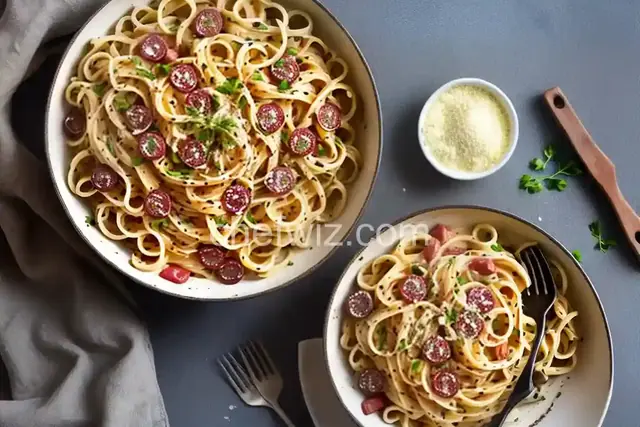
 When it comes to pasta dishes, there are few that can match the rich and creamy flavors of Carbonara.
In a large skillet, place the guanciale (or bacon) and oil. Cook over medium heat until the edges of the guanciale pieces start to turn brown, approximately 2 minutes. Be careful not to overcook. Set the skillet aside while keeping it warm.
In an 8-quart (8-liter) pot, bring 5 quarts (5 liters) of water to a boil over high heat. Once the water is boiling, add 3 tablespoons of kosher salt, then add the pasta. Cook the pasta, stirring occasionally, until it is al dente.
While the pasta is cooking, break the eggs into a small bowl and add all the cheese along with a generous amount of freshly ground pepper. Gently whisk the mixture until it becomes smooth.
Drain the cooked pasta, reserving and keeping warm about a cup of the cooking water. Transfer the drained pasta to the skillet with the guanciale, over low heat. Toss the pasta quickly to mix it well with the guanciale.
Holding the skillet slightly above the burner (without touching it), pour the egg and cheese mixture in a steady stream into the pasta. If you have the skill, toss the pasta with a flick of your wrist to blend all the ingredients in the skillet. If you don't feel comfortable doing this, remove the skillet from the heat and quickly mix the pasta with two wooden spoons. If you have a warm spot,
A Classic Pasta Dish That Will Leave You Craving for More)
When it comes to pasta dishes, there are few that can match the rich and creamy flavors of Carbonara. This classic Italian dish is a favorite among pasta lovers worldwide. From its velvety sauce to the perfectly cooked pasta, Carbonara is a dish that is sure to leave you craving for more. But what exactly makes Carbonara so special? Let's dive into the world of this delectable pasta dish and discover its secrets.
Carbonara is believed to have originated in Rome, Italy, during the mid-20th century. It was a dish that was popular among Italian coal workers, who used to cook it over open fires. The name "Carbonara" itself is derived from the Italian word "carbone," which means coal. Over the years, Carbonara has evolved and become a staple in Italian cuisine.
What sets Carbonara apart is its simple yet flavorful combination of ingredients. The traditional recipe calls for eggs, cheese, pancetta or guanciale (Italian cured meats), and black pepper. The eggs and cheese create a luscious and creamy sauce, while the pancetta or guanciale adds a salty and smoky flavor. The black pepper adds a hint of spice, balancing out the richness of the dish. Together, these ingredients create a symphony of flavors that is hard to resist.
Making Carbonara is an art in itself. It requires precision and attention to detail to achieve the perfect balance of flavors. The pasta should be cooked al dente, firm to the bite, to provide a satisfying texture. The sauce should be creamy without being too heavy, coating the pasta evenly. And of course, the pancetta or guanciale should be crispy and golden brown, adding a delightful crunch to every bite.
Here are some tips to help you master the art of making Carbonara:
Carbonara is a classic pasta dish that never fails to impress. Its creamy sauce, perfectly cooked pasta, and savory flavors make it a favorite among pasta lovers. With the right combination of ingredients and a little practice, you too can create a Carbonara that will leave you craving for more. So why not give it a try and experience the indulgence of this timeless Italian dish?
While pancetta or guanciale is the traditional choice for Carbonara, you can certainly use bacon as a substitute. Just make sure to choose a high-quality bacon for the best flavor.
While Carbonara is traditionally made without vegetables, you can experiment with adding some. However, be mindful of the flavors and textures, as they should complement the dish rather than overpower it.
While spaghetti is the most commonly used pasta for Carbonara, you can use other types such as fettuccine or rigatoni. The key is to choose a pasta shape that can hold the creamy sauce well.
Carbonara is a rich and indulgent dish, but it doesn't have to be heavy. By using high-quality ingredients and portion control, you can enjoy a lighter version of Carbonara without sacrificing flavor.
Carbonara is best enjoyed immediately after cooking, as the sauce tends to thicken upon standing. However, if you have leftovers, you can reheat them gently in a pan with a splash of pasta water to revive the creamy texture.
It is not recommended to freeze Carbonara, as the sauce may separate and become grainy upon thawing. It is best to enjoy Carbonara fresh.
Yes, you can make a vegetarian version of Carbonara by substituting the pancetta or guanciale with ingredients like mushrooms or tofu. The flavor profile will be different, but it can still be delicious in its own right.
While Carbonara traditionally relies on the flavors of eggs, cheese, and pancetta or guanciale, you can experiment with adding spices like garlic or herbs to enhance the dish. Just remember to use them sparingly, so as not to overpower the delicate flavors of the sauce.
AprilCook, recipe developer and the heart of Chefwiz. More about April