Guide
Secrets Unveiled: How to Thicken Mashed Potatoes Easily
Discover my simple steps on how to thicken mashed potatoes for the perfect, hearty side dish. Master your kitchen skills now!
 By April15 min read
In this guide
- Why Mashed Potatoes Become Thin
- How to Drain Potatoes Properly
- The Importance of Potato Size
- Choosing the Right Potatoes
- Adding Creaminess and Thickness with Cheese
- Creamy Additions: Heavy Cream and Sour Cream
- Making Mashed Potatoes Healthier with Mashed Cauliflower
- Adding Protein and Thickness with Powdered Milk
- Greek Yogurt for Thickness and Nutrients
- Surprising Tips to Thicken Mashed Potatoes
- Conclusion
- Source Links
- FAQ
Hey there, fellow culinary enthusiasts! Today, I'm going to let you in on a little secret - how to thicken those mashed potatoes to perfection. We all know that creamy, velvety mashed potatoes are a staple in any kitchen. But sometimes, despite our best efforts, they turn out thin and watery. No worries, though! I've got you covered with a step-by-step guide that will have you whipping up thick and delicious mashed potatoes in no time.
Now, let's dive into the reasons why mashed potatoes can end up thin and how to prevent it from happening. We'll also explore different methods for thickening mashed potatoes to achieve that perfect texture and consistency. Get ready to become a mashed potato maestro!
Why Mashed Potatoes Become Thin
There are several reasons why mashed potatoes can end up thin and watery. According to expert chefs, these include not draining them properly, cutting the potatoes into small pieces, and using waxy potatoes that absorb more water. By understanding these reasons, we can take steps to prevent our mashed potatoes from becoming thin.
Not Draining Properly
One of the main reasons mashed potatoes become thin is inadequate draining. If the potatoes are not drained properly after boiling, excess water remains in the pot, resulting in watery mashed potatoes. To avoid this, make sure to thoroughly drain the boiled potatoes and allow them to sit in the empty pot for a few minutes. This will allow any excess liquid to evaporate, resulting in a thicker consistency.
Cutting Into Small Pieces
Another factor that contributes to thin mashed potatoes is cutting the potatoes into small pieces before boiling them. When the potatoes are cut too small, they absorb more water during the cooking process, leading to a higher water content in the mashed potatoes. To prevent this, chefs recommend cutting the potatoes into larger chunks, such as halves or quarters, before boiling. This helps to minimize water absorption and maintain a thicker texture.
Using Waxy Potatoes
The type of potatoes used can also affect the thickness of mashed potatoes. Waxy potatoes, such as New potatoes and French fingerling, have a higher moisture content and tend to absorb more water during cooking. This can result in thinner mashed potatoes. To achieve a thicker consistency, it is recommended to use high-starch potatoes like Russets or Yukon Golds. These varieties have a lower water content and produce a creamier texture when mashed.
By understanding the reasons why mashed potatoes become thin, we can take the necessary steps to prevent it from happening. Proper draining, cutting the potatoes into larger chunks, and using the right type of potatoes will help us achieve the desired thick and creamy texture in our mashed potatoes.
How to Drain Potatoes Properly
One of the key factors in preventing watery mashed potatoes is to drain them properly. Chefs recommend the following steps to ensure excess liquid is removed and the potatoes have the right consistency:
- After boiling the potatoes, thoroughly drain them in a colander or sieve.
- Return the drained potatoes to the empty pot and let them sit for a few minutes. This allows any remaining water to evaporate.
- While mashing the potatoes, gradually add warm milk and butter instead of cold. Cold dairy ingredients can cause temperature shock and result in separation and thinning of the potatoes.
By following these steps, you can achieve mashed potatoes with a creamy texture and avoid excess liquid that leads to a watery consistency.
https://www.youtube.com/watch?v=9zv3dqeOenk
Why Properly Draining Potatoes is Crucial
Properly draining potatoes is crucial because it eliminates excess liquid, which is the main culprit behind watery mashed potatoes. When potatoes are not drained thoroughly, the extra moisture can make the mashed potatoes runny and lacking in texture.
Allowing the boiled potatoes to sit in the empty pot for a short time after draining is an important step in evaporating any remaining water. This ensures that the mashed potatoes have the right consistency and are not diluted by excess liquid.
Remember, a little patience in draining the potatoes can go a long way in achieving the perfect mashed potato consistency - creamy, thick, and free from excess liquid. - Chef John
The Importance of Warm Dairy Ingredients
Using warm milk and butter instead of cold ones is another technique that helps prevent watery mashed potatoes. The warmth of these ingredients promotes a smoother integration with the potatoes, resulting in a creamier texture.
When cold milk and butter are added to hot mashed potatoes, they can cause temperature shock, leading to separation and thinning. By using warm dairy ingredients, you maintain the desired consistency and thickness of the mashed potatoes.
The Importance of Potato Size
When it comes to making the perfect mashed potatoes, the size of the potatoes plays a crucial role in achieving the desired texture. Cutting the potatoes into small pieces before boiling them can lead to waterlogged potatoes and a watery mash. To avoid this, it's important to cut the potatoes into larger chunks, such as halves or quarters, before boiling.
A larger potato size not only prevents water retention but also speeds up the preparation process. The larger pieces cook more evenly and allow excess water to evaporate during the boiling process. This results in a fluffier and more substantial mashed potato consistency.
So, next time you're making mashed potatoes, remember to choose the right size potatoes and cut them into larger chunks for a thick and creamy mash that will leave everyone wanting seconds.
Table: Comparison of Different Potato Sizes
| Potato Size | Texture of Mashed Potatoes |
|---|---|
| Small pieces | Watery and inconsistent |
| Halves or quarters | Fluffy and substantial |
Choosing the Right Potatoes
When it comes to making mashed potatoes, selecting the right type of potatoes is crucial. The choice of potatoes can greatly impact the texture and thickness of your mashed potatoes. Waxy potatoes, such as New potatoes and French fingerling, have a higher moisture content and tend to absorb more water during cooking. This can result in a thinner mash that lacks the desired consistency.
To achieve a thicker and creamier mashed potato texture, it is recommended to choose high-starch potatoes like Russets or Yukon Golds. These varieties have a lower moisture content and higher starch content, making them ideal for achieving a thick and smooth mash. High-starch potatoes absorb less water during cooking, resulting in a thicker and more velvety texture.
When preparing your mashed potatoes, always keep in mind the texture and consistency you desire. By selecting the right type of potatoes, you can ensure that your mashed potatoes turn out thick, creamy, and absolutely delicious.
Comparison of Potato Types
| Potato Type | Texture | Moisture Content | Starch Content |
|---|---|---|---|
| Russet Potatoes | Fluffy and light | Low | High |
| Yukon Gold Potatoes | Buttery and creamy | Medium | Medium to high |
| New Potatoes | Firm and waxy | High | Low to medium |
| French Fingerling Potatoes | Firm and waxy | High | Low to medium |
"Choosing the right potatoes is key to achieving the perfect mashed potato texture. High-starch potatoes like Russets or Yukon Golds are the best choice for a thick and creamy mash. They have a lower moisture content and higher starch content, resulting in a velvety smooth texture. So, make sure to choose your potatoes wisely for the most delicious mashed potatoes!"
Adding Creaminess and Thickness with Cheese
Mashed potatoes are a classic side dish that can be made even more delicious by adding cheese. Not only does cheese contribute to the creaminess and richness of mashed potatoes, but it also adds a tangy flavor that complements the potatoes perfectly. There are several types of cheese that work well in mashed potatoes, such as cream cheese, freshly grated cheese, and even powdered cheese.
"Cheese is a versatile ingredient that can elevate the texture and taste of mashed potatoes," says Chef Julia.
Cream cheese is a popular choice as it blends seamlessly into the potatoes, giving them a smooth and velvety consistency. Freshly grated cheese, such as cheddar or Parmesan, adds a bold flavor and a slight tanginess to the mashed potatoes. If you're feeling adventurous, you can even experiment with powdered cheese, which comes in various flavors and can provide a unique twist to your mashed potatoes.
To incorporate the cheese, simply add it to the mashed potatoes while they are still warm and mix until well combined. The heat will melt the cheese and create a luscious, creamy texture. Whether you prefer a subtle hint of cheese or a bolder, cheesier flavor, adding cheese is an excellent way to thicken and enhance the taste of your mashed potatoes.
| Cheese Type | Texture | Flavor | Recommended Pairings |
|---|---|---|---|
| Cream Cheese | Smooth and creamy | Mild and tangy | Garlic, chives, or dill |
| Freshly Grated Cheese | Melts into the potatoes | Bold and slightly tangy | Cheddar, Parmesan, or Gruyère |
| Powdered Cheese | Dissolves into the potatoes | Variety of flavors available | Smoked paprika, chipotle, or truffle |
So next time you're making mashed potatoes, don't hesitate to add some cheese for extra creaminess and flavor. Whether you choose cream cheese, freshly grated cheese, or powdered cheese, your mashed potatoes will be transformed into a delectable side dish that everyone will love.
Creamy Additions: Heavy Cream and Sour Cream
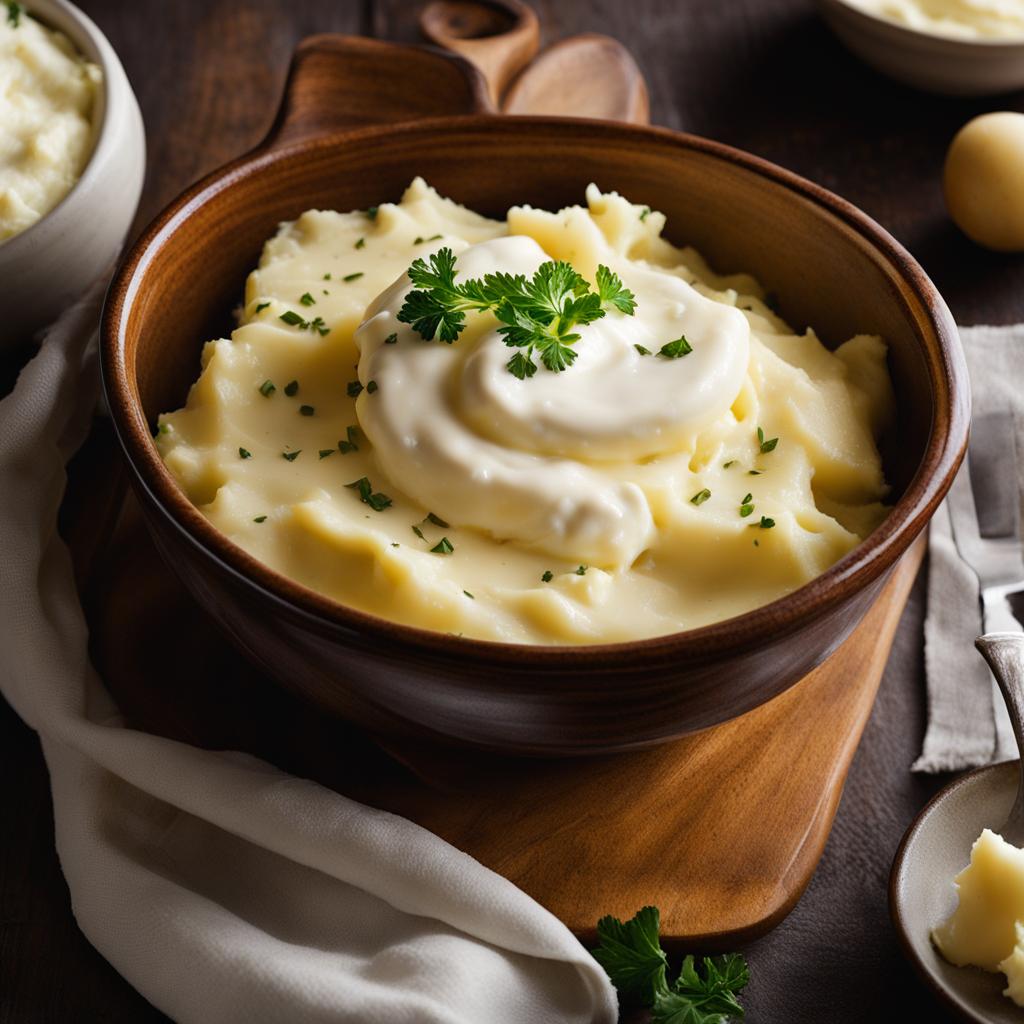
If you're looking to take your mashed potatoes to the next level in terms of richness and satisfaction, consider adding heavy cream or sour cream to your recipe. These creamy additions not only enhance the flavor but also contribute significant fat, resulting in silky and indulgent mashed potatoes.
By incorporating heavy cream or sour cream into your mashed potatoes, you'll achieve a luscious and velvety texture that will elevate any meal. The creaminess of the heavy cream or sour cream blends perfectly with the fluffy potatoes, creating a heavenly combination that will have your taste buds singing.
Whether you prefer the luxurious richness of heavy cream or the tanginess of sour cream, both options will add a delightful creaminess to your mashed potatoes. So go ahead, indulge a little and savor the velvety smoothness that heavy cream or sour cream brings to this classic comfort dish.
Making Mashed Potatoes Healthier with Mashed Cauliflower
If you're looking for a healthier twist to your mashed potatoes, adding mashed cauliflower is a great option. Not only does it contribute to the creaminess and thickness of the dish, but it also offers several health benefits. Cauliflower is lower in calories and carbs compared to potatoes, making it a nutritious addition to your meal. It's also packed with vitamins and minerals that promote overall health, including vitamin C, vitamin K, and folate.
To incorporate mashed cauliflower into your mashed potatoes, simply cook the cauliflower until it's tender and mash it in a separate bowl. Then, add the mashed cauliflower to your traditional mashed potatoes and mix until well combined. The mild flavor of cauliflower blends seamlessly with the potatoes, resulting in a creamy and flavorful dish.
Not only does adding mashed cauliflower make your mashed potatoes healthier, but it also adds an interesting twist to the classic side dish. The combination of potatoes and cauliflower creates a unique texture that's sure to impress your family and friends. So why not give it a try and enjoy the benefits of a healthier and tastier version of mashed potatoes?
Benefits of Mashed Cauliflower in Mashed Potatoes
- Lower in calories and carbs compared to potatoes
- Packed with vitamins and minerals
- Contributes to creaminess and thickness
- Adds an interesting twist to the classic side dish
By incorporating mashed cauliflower into your mashed potatoes, you can enjoy a healthier version of this beloved side dish. The combination of flavors and textures will add depth to your meal while providing the nutrients your body needs. So go ahead, try this delicious and nutritious twist on mashed potatoes and elevate your culinary experience.
Adding Protein and Thickness with Powdered Milk
When it comes to thickening mashed potatoes and adding a boost of protein, powdered milk can be your secret ingredient. Powdered milk acts as a thickening agent while also providing extra protein to the dish. It's a healthier alternative to using cream or butter and can help create a creamy texture without the need for additional fats.
To incorporate powdered milk into your mashed potatoes, simply sprinkle a small amount into the pot while mashing the potatoes. Start with a teaspoon and adjust according to your desired thickness. The powdered milk will dissolve easily with the heat of the potatoes, creating a velvety texture and enhancing the overall flavor.
Not only does powdered milk help thicken mashed potatoes, but it also adds nutritional value. It's a great source of protein, essential vitamins, and minerals. By incorporating powdered milk into your mashed potatoes, you're not only achieving the desired consistency but also boosting the nutritional content of the dish.
"I love using powdered milk in my mashed potatoes. It creates that perfect creamy texture without the need for extra cream or butter. Plus, it adds a subtle hint of sweetness that complements the potatoes beautifully." - Chef Maria
Summary:
Incorporating powdered milk into mashed potatoes is a simple and effective way to thicken the dish while adding protein. It dissolves easily and creates a creamy texture without the need for additional fats. Plus, powdered milk adds nutritional value to the dish, making it a healthier option. Try this tip next time you're making mashed potatoes for a delicious and nutritious twist!
Greek Yogurt for Thickness and Nutrients
When it comes to thickening mashed potatoes while adding a boost of nutrients, Greek yogurt is a fantastic option to consider. Not only does it provide a creamy and tangy flavor, but it also offers a range of health benefits. Greek yogurt is packed with hunger-squashing protein, which can help keep you feeling satisfied for longer. It also contains bone-strengthening calcium and gut-healthy probiotics, promoting overall well-being.
To incorporate Greek yogurt into your mashed potatoes, simply add a dollop of unflavored Greek yogurt to your preferred recipe. The creamy texture and tangy taste will complement the potatoes beautifully, enhancing both the thickness and flavor profile of the dish. Whether you're aiming for a traditional or a healthier version of mashed potatoes, Greek yogurt is a versatile ingredient that can elevate your culinary creations.
Experiment with different amounts of Greek yogurt to find the perfect balance for your taste preferences. Remember to taste as you go and adjust the seasoning accordingly. With the addition of Greek yogurt, your mashed potatoes will be thick, creamy, and packed with nutrients that will impress your family and friends.
Surprising Tips to Thicken Mashed Potatoes
When it comes to making mashed potatoes, there are some surprising tips that can take your dish to the next level. Here are a few unexpected techniques to achieve the perfect texture and consistency:
- Put them in the oven: If your mashed potatoes have turned out too watery, try placing them in a preheated oven at a low temperature, around 250°F (120°C). This will help evaporate excess liquid and thicken the potatoes.
- Add starch: To quickly thicken mashed potatoes, you can incorporate starch into the mixture. Cornstarch or potato starch are great options as they act as thickening agents. Start by adding a small amount, about a teaspoon, and gradually increase until you reach the desired consistency.
- Instant mashed potatoes as a quick fix: If you're in a pinch and need to thicken your mashed potatoes in no time, instant mashed potatoes can come to the rescue. Simply prepare a small amount of instant mashed potatoes following the package instructions, and then mix them into your homemade mash. This will add instant thickness and save you valuable time.
These surprising tips offer alternative methods to thicken your mashed potatoes and ensure a delicious and satisfying outcome. Whether you choose to use the oven, add starch, or opt for instant mashed potatoes, these techniques can help you achieve the perfect consistency with minimal effort.
Expert Tip: Avoid Overmixing
When incorporating these surprising tips into your mashed potatoes, be careful not to overmix the potatoes. Overmixing can result in a gummy or gluey texture. Instead, gently fold in the added ingredients just until combined to maintain a fluffy and light consistency.
Now that you're armed with these surprising tips, you can confidently experiment with different methods to thicken your mashed potatoes. Whether you choose to use the oven, add starch, or opt for instant mashed potatoes, these techniques will help you achieve the desired thickness and impress your guests with perfectly creamy and flavorful mashed potatoes.
Conclusion
In conclusion, thicken mashed potatoes doesn't have to be difficult. By following the tips and techniques shared by professional chefs, I can easily achieve the desired texture and consistency. Whether you prefer a richer or healthier version, there are various methods to help you thicken mashed potatoes according to your preferences. Experimenting with different ingredients and techniques can help me find the perfect combination for my taste.
Throughout this guide, I have learned that draining potatoes properly, using the right size potatoes, and selecting the right type of potato can all contribute to thicker mashed potatoes. Additionally, adding creamy ingredients like cheese, heavy cream, sour cream, or Greek yogurt can enhance both the texture and flavor. For a healthier twist, I can incorporate mashed cauliflower or powdered milk. Surprising tips such as using the oven or adding starch can also come in handy.
So, armed with these tips and techniques, I am confident that I can consistently achieve the perfect texture and consistency for my mashed potatoes. Whether it's for a special occasion or a weeknight dinner, my mashed potatoes will always be a hit. So go ahead, get creative in the kitchen, and enjoy your deliciously thickened mashed potatoes!
Source Links
- https://insanelygoodrecipes.com/how-to-thicken-mashed-potatoes/
- https://www.yahoo.com/lifestyle/thicken-mashed-potatoes-chefs-best-211444117.html
- https://www.firstforwomen.com/posts/food-recipes/how-to-thicken-mashed-potatoes
Frequently asked questions
- Why do mashed potatoes become thin?
Mashed potatoes can become thin due to improper draining, cutting the potatoes into small pieces, or using waxy potatoes that absorb more water.
- How do I drain potatoes properly?
To drain potatoes properly, thoroughly drain the boiled potatoes and allow them to sit in the empty pot for a short time, allowing excess water to evaporate.
- What is the importance of potato size in mashed potatoes?
Cutting the potatoes into small pieces before boiling can result in waterlogged potatoes and watery mash. It is best to cut the potatoes into larger chunks, such as halves or quarters, to prevent water retention.
- Which type of potatoes should I choose for mashed potatoes?
Waxy potatoes, such as New potatoes and French fingerling, naturally absorb more water and may result in thinner mash. It is recommended to select high-starch potatoes like Russets or Yukon Golds, as they absorb less water and create a creamier texture.
- How can I add creaminess and thickness to mashed potatoes?
Adding cheese, such as cream cheese or freshly grated cheese, can enhance both flavor and texture. Powdered cheese is also an option. These additions add tang and richness to the mashed potatoes.
- What are some creamy additions for thickening mashed potatoes?
Adding heavy cream or sour cream can thicken mashed potatoes while increasing richness. These additions contribute significant fat, resulting in silky and satisfying mashed potatoes.
- How can I make mashed potatoes healthier?
Adding mashed cauliflower to the potatoes can make them healthier. Cauliflower is lower in calories and carbs but still contributes to creaminess and thickness. It also provides vitamins and minerals.
- Can I use powdered milk to thicken mashed potatoes?
Yes, powdered nonfat milk powder can act as a thickening agent and add extra protein to the dish. It provides a creamy texture without the need for additional fats.
- How can Greek yogurt help thicken mashed potatoes?
Greek yogurt can be added to mashed potatoes for thickness and added nutrients. It is packed with hunger-squashing protein, bone-strengthening calcium, and gut-healthy probiotics. Greek yogurt provides tang and creaminess.
- What are some surprising tips for thickening mashed potatoes?
Surprising tips include putting the mashed potatoes in the oven at a low temperature to evaporate excess liquid, adding starch such as cornstarch or potato starch as thickening agents, or using instant mashed potatoes as a quick fix.
AprilCook, recipe developer and the heart of Chefwiz. More about April