Guide
How to Cut a Tomato? (Perfect Step-By-Step Guide)
Master the art of slicing with our step-by-step guide on how to cut a tomato. Unleash your kitchen skills for a tastier, healthier meal prep.
 By April18 min read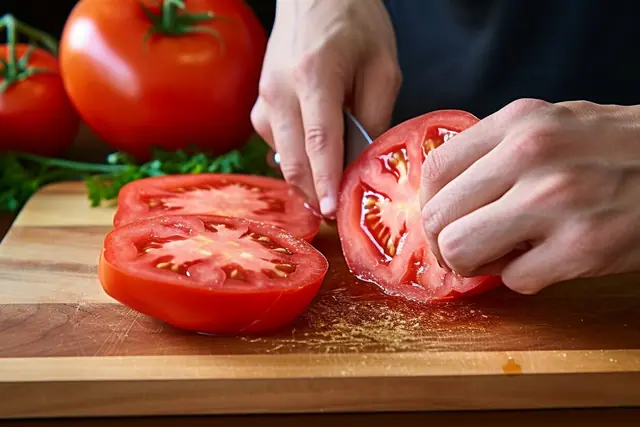
In this guide
- Choosing the Perfect Tomato
- Setting Up Your Cutting Station
- Basic Tomato Cutting Technique
- Slicing Off the Sides
- Removing the Core and Seeds
- Cutting Into Strips
- Dicing the Tomato
- Storing and Using the Diced Tomato
- Additional Tomato Cutting Tips and Tricks
- Tomatoes for Beginners
- Mastering the Art of Tomato Cutting
- How to Cut a Tomato - Conclusion
- Our Friends:
- FAQ
How to Cut a Tomato
Cutting a tomato properly is a fundamental skill for any cook, and with the right technique, you can enhance the flavor and presentation of your dishes. Whether you're preparing a fresh salad, making a flavorful sauce, or garnishing a sandwich, knowing how to cut a tomato correctly can make all the difference.
To start, rinse and scrub the tomato to remove any dirt or debris. Dry it thoroughly with a dish towel to ensure a clean surface. Then, place the tomato on a cutting board, with the stem facing up. This position will make it easier to slice without crushing the fruit.
Using a sharp knife, slice off the sides of the tomato, following its natural curves. Rotate the tomato and repeat the process to remove all the sides. After this, discard the core and seeds, as they can affect the texture and taste of your dish.
Next, cut the tomato into strips by slicing it lengthwise. Then, dice the strips into small, even cubes. The size of the cubes will depend on your recipe, so adjust accordingly.
Once you have diced the tomato, it's ready to use in your favorite recipes. If you don't plan to use it immediately, store the diced tomato in an airtight container in the fridge to keep it fresh and flavorful.
How to Cut a Tomato - Key Takeaways:
- Choose firm, ripe tomatoes with even color for the best results.
- Rinse and dry the tomato before cutting to ensure cleanliness.
- Handle the tomato gently to avoid crushing it.
- Use a sharp knife for clean and precise cuts.
- Follow the step-by-step guide for proper tomato cutting technique.
https://www.youtube.com/watch?v=y8IsYmHYWZI
Choosing the Perfect Tomato
To ensure the best flavor and texture, choose a tomato that is firm, ripe, and has an even color. When selecting tomatoes, look for vibrant red, orange, or yellow hues, with no signs of greenness. Avoid tomatoes that have wrinkled or discolored skin, as these are likely to be overripe or damaged.
Size is also an important factor to consider. Depending on your recipe, you may prefer smaller tomatoes, like cherry or grape varieties, for salads or snacks. Larger tomatoes, such as beefsteak or heirloom varieties, are great for slicing and grilling.
If possible, try to buy tomatoes from a local farmer's market or grow your own for optimal freshness and flavor. Organic tomatoes are also a good choice, as they are free from synthetic pesticides and fertilizers.
| Tomato Variety | Best Uses |
|---|---|
| Cherry | Salads, snacks, garnishes |
| Beefsteak | Slicing, grilling, stuffing |
| Roma | Sauces, pastes, canning |
Remember, the quality of your tomato will greatly affect the taste of your dish. So take your time to choose the perfect tomato, and you'll be rewarded with delicious results!
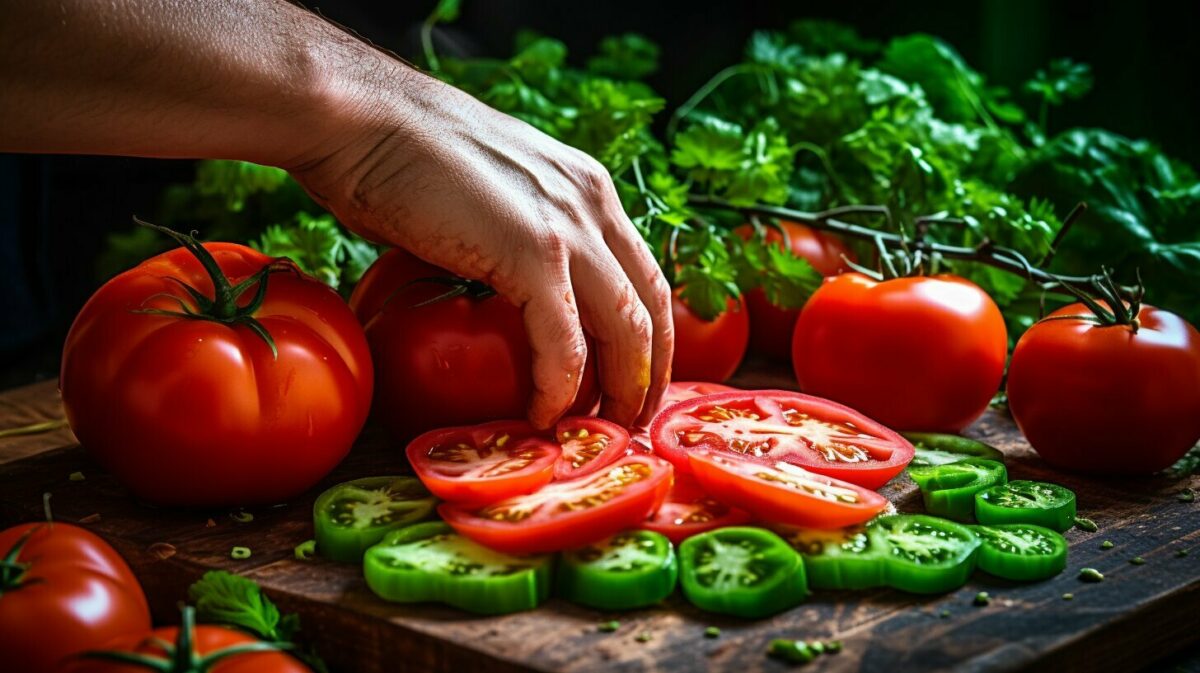
Start by rinsing the tomato under running water and scrubbing it gently to remove any dirt or debris. This step is essential to ensure that your tomato is clean and ready for cutting.
After rinsing, dry the tomato thoroughly with a dish towel. This will help prevent slipping and ensure better control while cutting.
Next, place the tomato on a cutting board with the stem facing up. This position will make it easier to slice off the sides following the natural curves of the fruit.
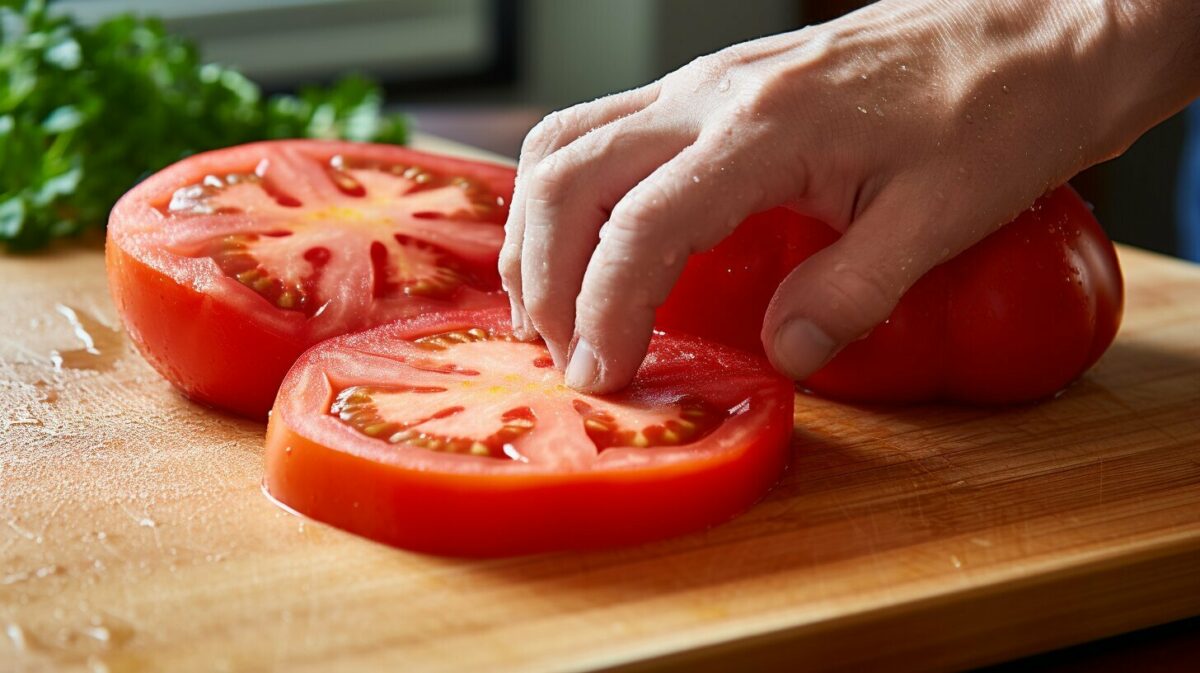
Rotate the tomato and continue slicing off the remaining sides. Once the sides are removed, you can discard the core and seeds.
To proceed with cutting the tomato into smaller pieces, cut it into strips first. Then, dice the strips into small, even cubes. Remember to use a sharp knife and handle the tomato gently to avoid crushing it.
Now that you are familiar with the preparation steps, you are ready to move on to the actual tomato cutting process. In the next section, we will cover the basic cutting technique for slicing a tomato into even, consistent pieces.
Setting Up Your Cutting Station
Before you begin cutting the tomato, make sure you have a clean cutting board and a sharp knife ready. Having the right tools and workspace is essential for a successful tomato cutting experience. A clean cutting board will prevent any contamination, while a sharp knife will make the process easier and safer.
Place the cutting board on a stable surface, ensuring it doesn't wobble or move while you're cutting. You can also place a damp towel underneath the cutting board to provide extra stability. This will ensure that your cutting board stays in place and doesn't slip while you're slicing the tomato.
Remember to always exercise caution when handling sharp objects. Hold the knife properly, with a firm grip on the handle, and keep your fingers away from the blade. It's also a good idea to work in a well-lit area to ensure you have clear visibility of the tomato while you're cutting.
Having your cutting station set up properly will help you work efficiently and safely, ensuring the best results for your tomato slicing endeavors.
| Benefits of a Clean Cutting Board | Tips for Handling a Knife Safely |
|---|---|
|
|
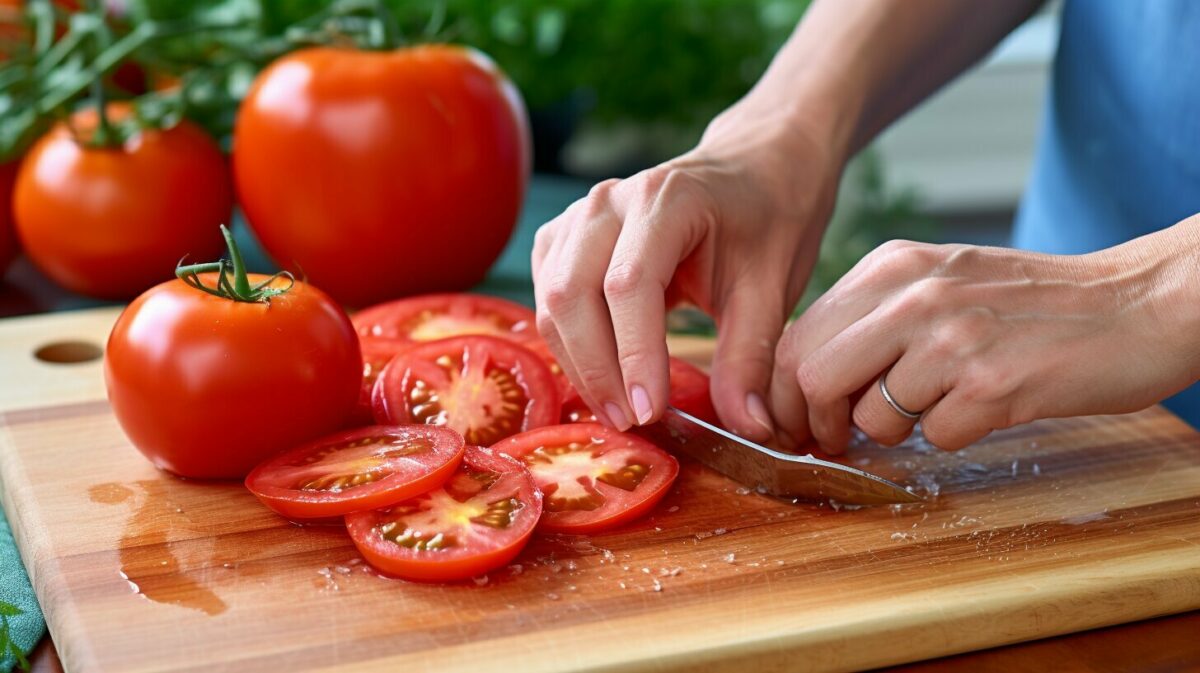
Having your cutting station set up properly will help you work efficiently and safely, ensuring the best results for your tomato slicing endeavors.
Proper Knife Maintenance
To ensure your knife is sharp and ready for tomato cutting, it's important to maintain it properly. Regularly sharpening your knife will make it easier to cut through the tomato's skin without exerting excessive force. You can use a sharpening stone or a honing rod to keep your knife sharp.
Additionally, remember to clean and dry your knife thoroughly after each use. This will prevent any rust or corrosion from forming, ensuring its longevity. Storing your knife in a safe and dry place, such as a knife block or a magnetic strip, will also help maintain its sharpness and prevent accidents.
By taking proper care of your knife, you'll have a reliable tool for all your tomato cutting needs.
Basic Tomato Cutting Technique
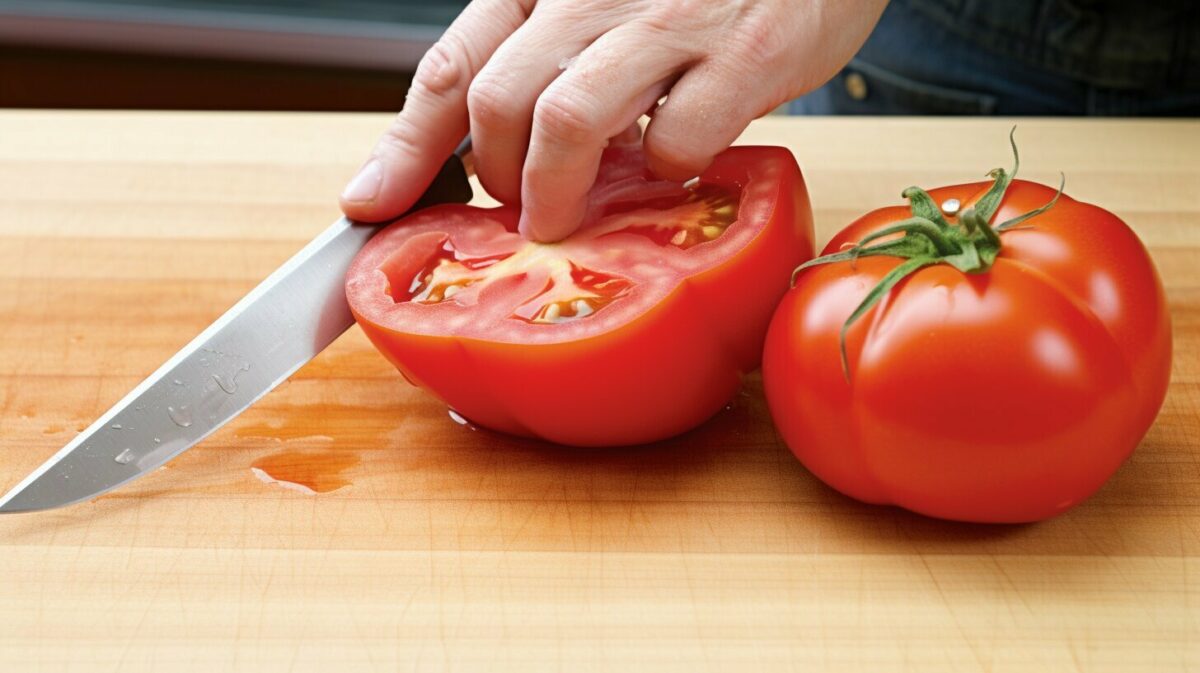
The key to a successful tomato cut is to use a sharp knife and apply gentle pressure to avoid crushing the fruit. Follow these steps for a clean and precise tomato slicing method:
- Rinse and scrub the tomato to remove any dirt or debris.
- Dry the tomato thoroughly with a dish towel to ensure a firm grip.
- Place the tomato on a cutting board, with the stem facing up.
- Slice off the sides, following the natural curves of the fruit. Remember to maintain a steady hand and make even slices.
- Rotate the tomato and slice off the remaining sides using the same technique.
- Discard the core and seeds, as they can alter the texture and taste of your dish.
- To create tomato strips, cut the remaining fruit into thin, uniform slices.
- Finally, dice the tomato strips into small cubes for a versatile ingredient in your recipes.
Remember to use a cutting board that provides stability and grip, and a sharp knife to ensure clean cuts. Applying gentle pressure while cutting will prevent the tomato from getting crushed or losing its shape. By mastering this basic tomato cutting technique, you'll be able to showcase your culinary skills with beautifully sliced and diced tomatoes.
| Key Points: |
|---|
| Use a sharp knife for clean cuts |
| Apply gentle pressure to avoid crushing the fruit |
| Follow the natural curves of the tomato |
| Discard the core and seeds |
| Dice the tomato strips into small cubes |
Slicing Off the Sides
Start by placing the tomato on the cutting board with the stem facing up. This will provide stability and prevent the tomato from rolling around while you slice it. Ensure that you have a sharp knife for clean, precise cuts.
Using a smooth, steady motion, slice off one side of the tomato following its natural curves. This will remove the skin and reveal the juicy flesh beneath. Rotate the tomato and repeat this process to remove the remaining sides, leaving you with a core in the center.
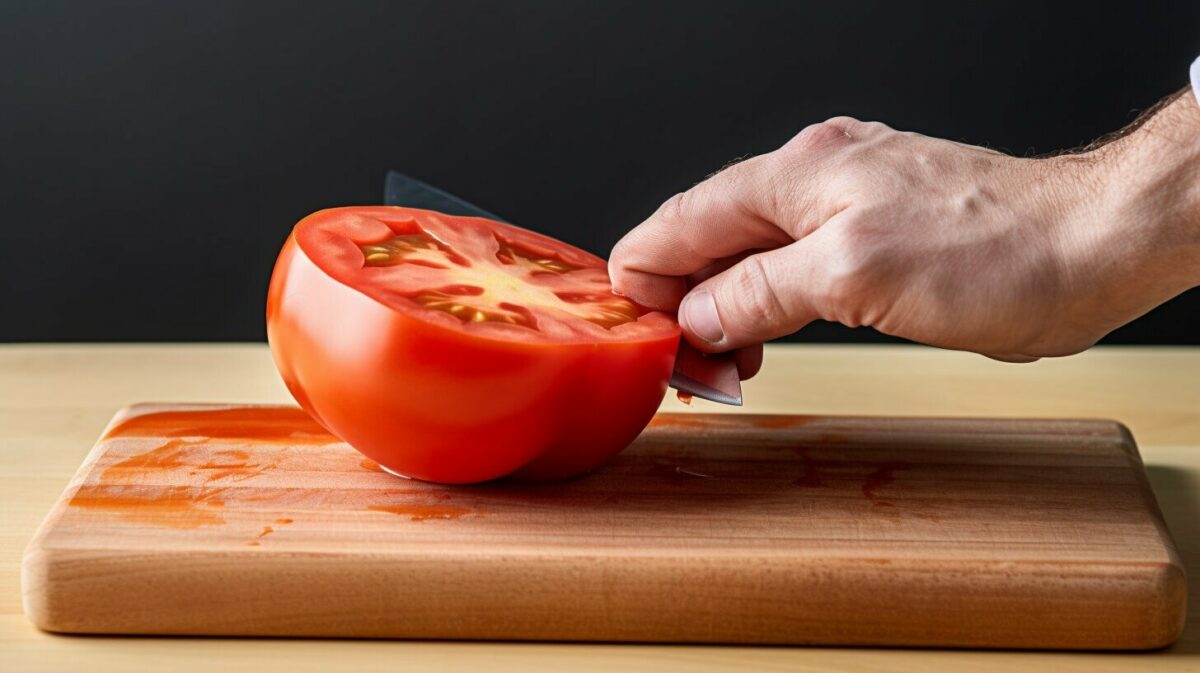
| Slicing Off the Sides | |
|---|---|
| Step 1 | Place the tomato on the cutting board with the stem facing up. |
| Step 2 | Slice off one side of the tomato following its natural curves. |
| Step 3 | Rotate the tomato and repeat the process to remove the remaining sides. |
"Slicing off the sides of the tomato is a crucial step in the cutting process. It allows for easy removal of the skin and prepares the fruit for further slicing or dicing."
Once you have sliced off the sides, you can proceed to the next step in the tomato cutting process, which involves removing the core and seeds.
Removing the Core and Seeds
Once you have sliced off the sides of the tomato, discard the core and seeds. These parts are not typically used in recipes as they can be bitter and have a different texture compared to the rest of the tomato. Removing the core and seeds will ensure that you are left with the best part of the tomato for slicing and dicing.
To remove the core, simply position the tomato with the cut side down and make a small vertical cut at the top where the stem was attached. Then, angle your knife slightly and cut along the inside of the tomato, following the natural shape, until the core is completely removed. The core should easily come out, leaving you with a clean center.
To remove the seeds, gently squeeze the tomato halves over a sink or garbage bin. The seeds should easily separate from the flesh and fall away. If necessary, use your fingers to scoop out any remaining seeds. It's important to remove the seeds as they can add excess moisture to your dishes.
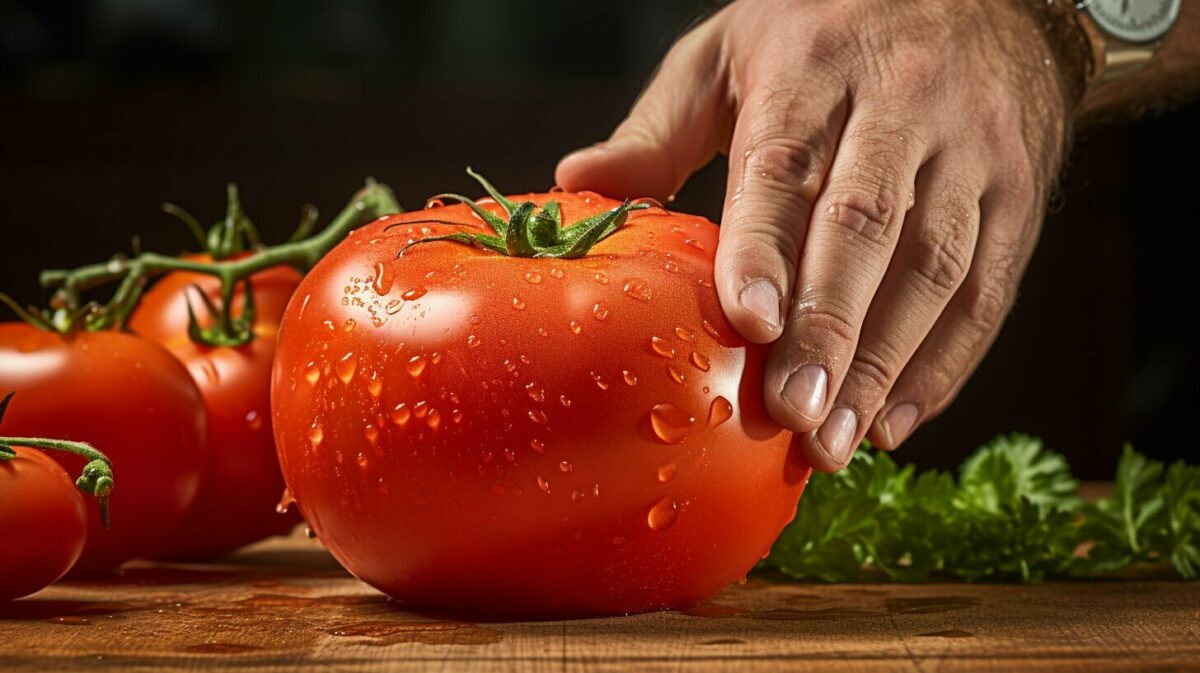
Now that you have successfully removed the core and seeds, you can proceed with cutting the tomato into strips and dicing them into small cubes, as outlined in the previous sections. Remember to handle the tomato gently and use a sharp knife to achieve the best results.
Cutting Into Strips
Take the remaining tomato slices and cut them into long, thin strips. To do this, position each slice horizontally on the cutting board, then use a sharp knife to make vertical cuts. Start at one end of the slice and slowly work your way to the other end, ensuring each strip is of even thickness.
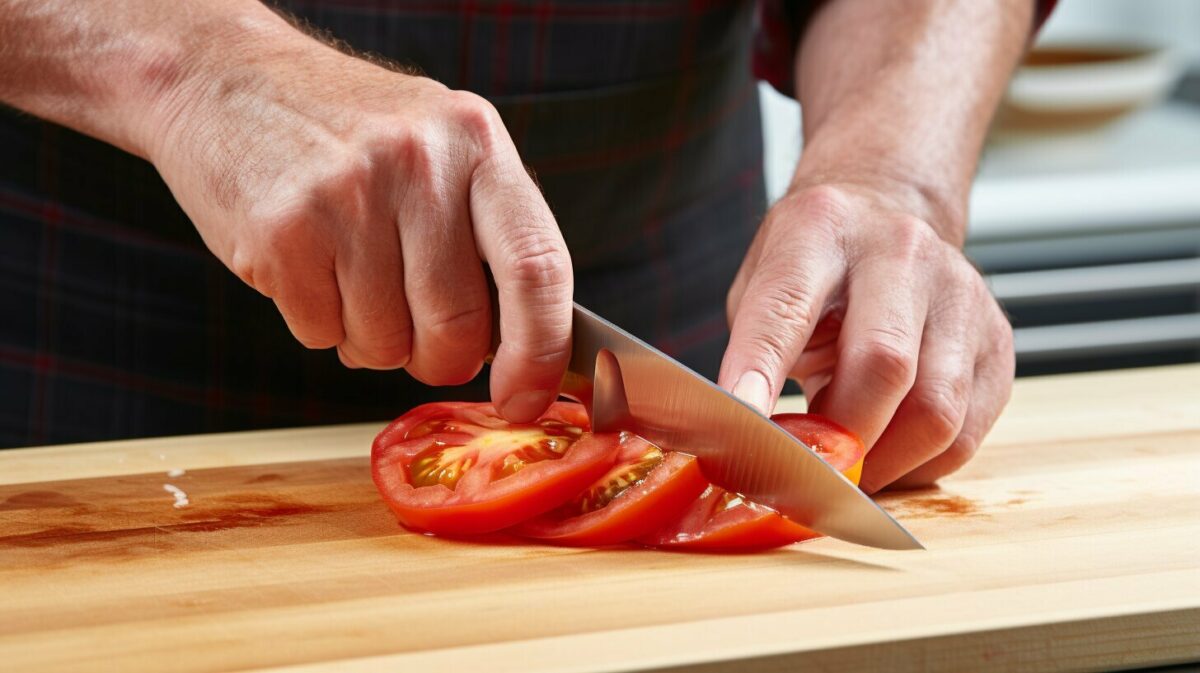
As you cut the tomato into strips, be mindful of your knife skills. Maintain a steady grip on the knife and use a smooth chopping motion, keeping the blade in contact with the cutting board at all times. This will help you achieve clean, precise cuts and prevent the tomato from slipping or rolling while you're working.
Once you've finished cutting the strips, you can proceed to the next step of dicing the tomato. Remember to handle the tomato with care to avoid crushing it and use a sharp knife to make the cutting process easier. By following these steps, you'll be well on your way to mastering the art of tomato cutting.
Table: Tomato Cutting Techniques
| Technique | Description |
|---|---|
| Strips | Position the tomato slice horizontally and make vertical cuts to create long, thin strips. |
| Dicing | Cut the strips into small, even cubes for use in recipes. |
Now that you've successfully cut the tomato into strips, it's time to dice them into smaller pieces. Continue reading to learn the technique for dicing and how to store and use the diced tomato in your recipes.
Dicing the Tomato
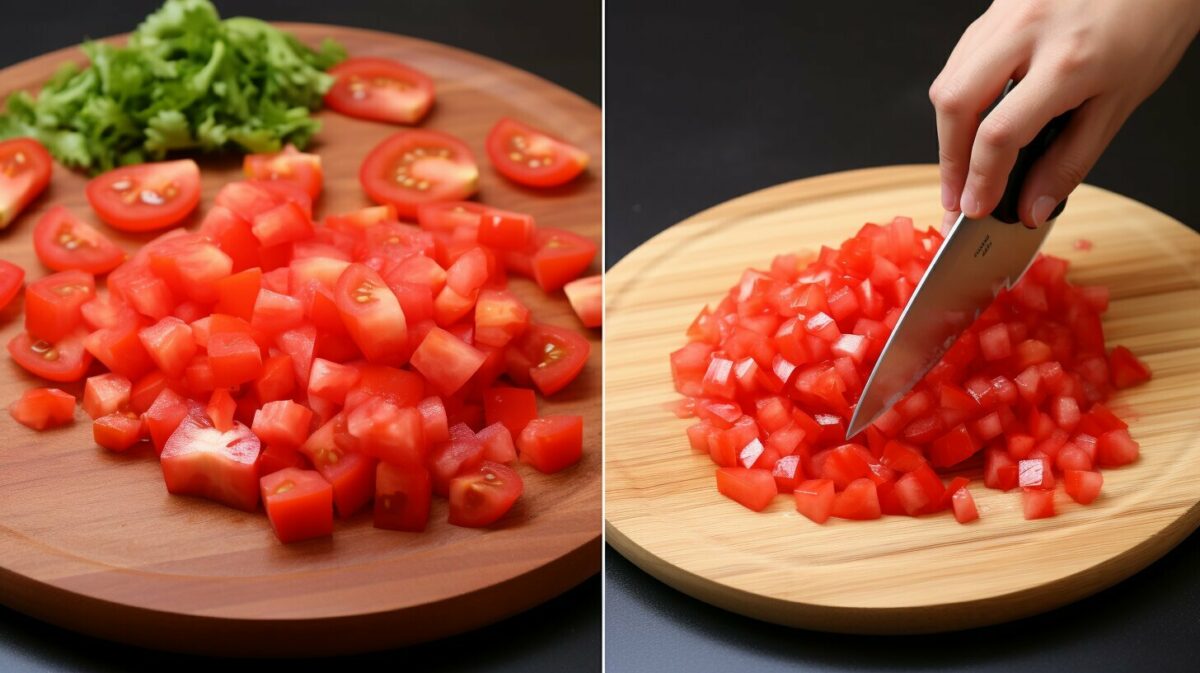
Gather the tomato strips and dice them into small, uniform cubes. Dicing the tomato adds versatility to your culinary creations, allowing you to incorporate it into various dishes. Whether you're making a fresh salad, a savory salsa, or a flavorful pasta sauce, properly dicing the tomato is crucial for achieving the desired texture and appearance.
To dice the tomato, ensure that your knife is sharp to ensure clean, precise cuts. Start by arranging the tomato strips into a neat pile on your cutting board. Hold the strips in place with your non-dominant hand, using your fingertips to firmly grip the tomato. With your dominant hand, carefully slice through the strips using a gentle rocking motion, creating even cubes.
When dicing the tomato, consistency is key. Aim for a uniform size to ensure even cooking and distribution of flavors. Take your time and focus on maintaining a steady pace to avoid uneven cuts. Remember, practice makes perfect, so don't be discouraged if your first attempts aren't flawless. With time and experience, you'll become more confident in your tomato dicing skills.
| Benefits of Dicing the Tomato |
|---|
| Provides even distribution of flavors |
| Enhances the visual appeal of dishes |
| Allows for better incorporation into various recipes |
Now that you've successfully diced the tomato, you can add it to your favorite recipes or store it for later use. Place the diced tomato in an airtight container and store it in the refrigerator. This will help preserve its freshness and prevent it from spoiling. Remember to use the diced tomato within a few days for the best flavor and texture.
Storing and Using the Diced Tomato
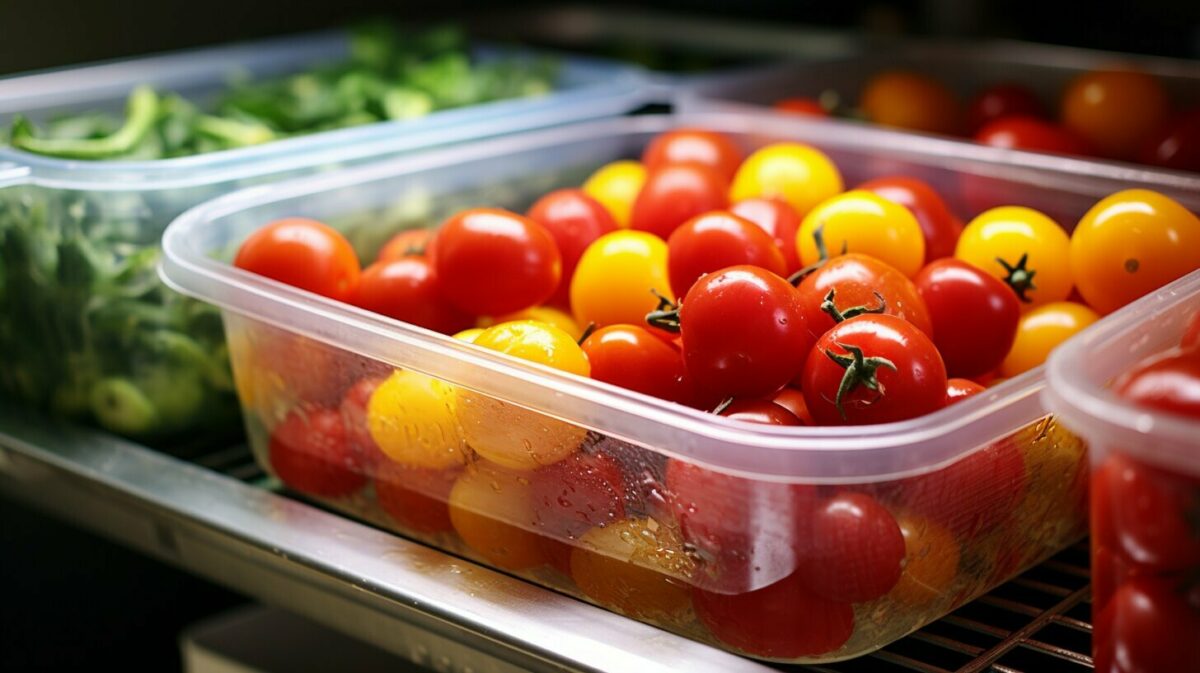
After dicing the tomato, you can use it immediately or store it in an airtight container in the refrigerator. This allows you to have freshly diced tomato readily available for your favorite recipes, saving you time and effort in the kitchen. Whether you're making a vibrant salsa, a refreshing salad, or a delicious pasta sauce, having diced tomatoes on hand can elevate your dish to the next level.
When storing diced tomatoes, it's important to use an airtight container to maintain their freshness and prevent them from absorbing any odors from other foods in the refrigerator. You can use glass or plastic containers with tight-fitting lids, or even resealable plastic bags. Make sure to label the container with the date to keep track of its freshness.
Before using the diced tomato, it's recommended to bring it to room temperature to enhance its flavor. You can simply let it sit on the countertop for a few minutes before incorporating it into your recipe. Diced tomatoes are incredibly versatile and can be used in a wide range of dishes, from soups and stews to pizzas and sandwiches. Experiment with different herbs and spices to create your own unique flavor combinations.
Remember, proper preparation and storage of the diced tomato are crucial to maintaining its quality and taste. By following these tips, you can enjoy the fresh flavors of diced tomatoes in your cooking whenever you desire.
Additional Tomato Cutting Tips and Tricks
Here are some expert tips and tricks to take your tomato cutting skills to the next level.
- Use a sharp knife: A sharp knife will make your tomato cutting experience much smoother and easier. It will help you achieve cleaner cuts and prevent crushing the tomato.
- Handle with care: Tomatoes are delicate fruits, so it's important to handle them gently. Apply light pressure when slicing to avoid squishing the tomato and losing its juicy flavors.
- Chill before cutting: For better control and cleaner cuts, try chilling the tomato in the refrigerator for about 15 minutes before cutting. The slightly firm texture will make it easier to handle.
- Master the claw grip: To protect your fingers while slicing, use the claw grip technique. Curl your fingers inward, keeping the tips of your fingers tucked away while holding the tomato. This way, you'll avoid accidental cuts.
- Get a firm grip: Make sure you have a secure grip on the tomato before cutting. If your hands are wet or slippery, use a clean dish towel or paper towel for better grip and stability.
Pro Tip: To make the most out of your tomato cutting session, try using a serrated knife. The serrated edge will help you cut through the tomato's skin without squishing the flesh.
"A sharp knife and a gentle touch are your best friends when it comes to cutting tomatoes." - Chef John Doe
Expert Slicing Techniques for Tomatoes
When it comes to slicing tomatoes, there are a few tried-and-true techniques that can elevate your culinary prowess:
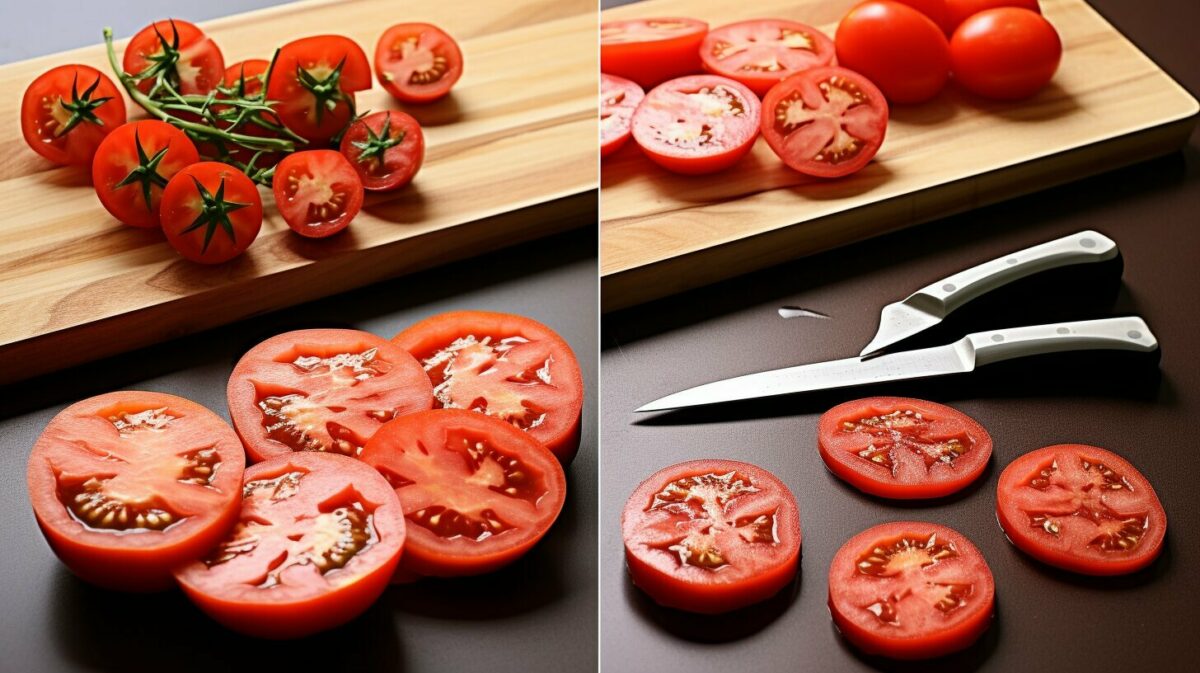
- Horizontal slices: Start by cutting your tomato horizontally to create round slices. These slices are great for layering in sandwiches or salads.
- Vertical slices: Try cutting your tomato vertically to create elongated slices. These are perfect for garnishing burgers or arranging on a platter.
- Diagonal slices: For a touch of elegance, slice your tomato diagonally. These diagonal slices work well in caprese salads or as beautiful toppings for bruschetta.
| Slice Type | Best Uses |
|---|---|
| Horizontal slices | Sandwiches, salads |
| Vertical slices | Burger garnish, platter arrangement |
| Diagonal slices | Caprese salads, bruschetta toppings |
Now armed with these tips and techniques, you'll be able to slice, dice, and chop tomatoes like a pro. Whether you're preparing a fresh salsa or a gourmet salad, your tomato cutting skills will surely impress!
Tomatoes for Beginners
If you're new to cutting tomatoes, don't worry. This guide will walk you through the process step by step. To start, make sure you have a sharp knife and a cutting board. Choosing the right tomato is also important. Look for tomatoes that are firm, ripe, and have even color. Now, let's get started!
Step 1Rinse and Dry
Begin by rinsing the tomato under cool water to remove any dirt or debris. Gently scrub the tomato with your fingers or a soft brush. Then, dry it thoroughly with a dish towel. This step ensures that your tomato is clean and ready to be cut.
Step 2Slice Off the Sides
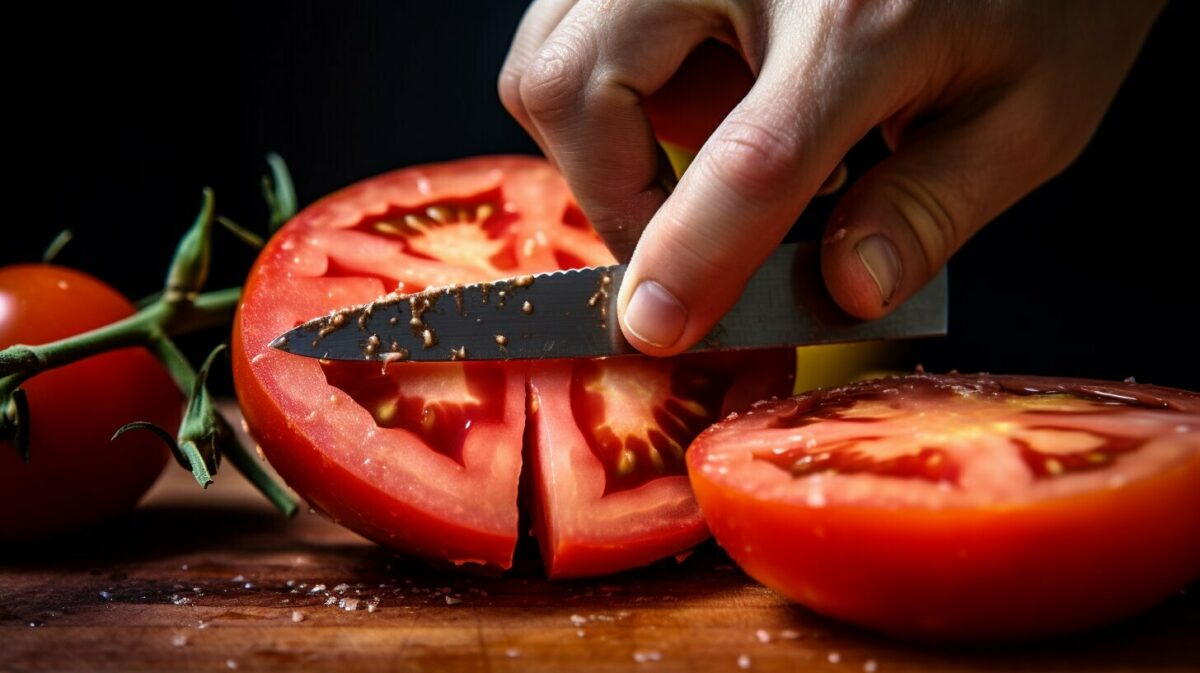
Place the tomato on the cutting board with the stem facing up. Take your sharp knife and slice off the sides, following the natural curves of the fruit. Rotate the tomato and slice off the remaining sides. You can discard the core and seeds as they are not usually used in recipes.
Step 3Cut Into Strips and Dice
Now that you have the tomato sides, cut them into strips. Once you have the strips, dice them into small cubes. Make sure to use a rocking motion with your knife to achieve even cuts. If you prefer larger or smaller pieces, adjust the size accordingly. Your diced tomato is now ready to be used in your favorite recipes!
Remember, practice makes perfect. With time, you'll become more comfortable and efficient at cutting tomatoes. Enjoy the process and have fun experimenting with different tomato dishes!
Mastering the Art of Tomato Cutting
Cutting a tomato is not just a basic cooking skill; it's an art that can be mastered with practice and experimentation. To elevate your tomato cutting game, consider employing some advanced techniques and strategies that will result in beautifully sliced, chopped, or diced tomatoes.
"The way you handle the knife and the tomato can greatly impact the final outcome," says chef Jane Smith. "Always use a sharp knife to ensure clean cuts and minimize crushing. And remember to handle the tomato gently to preserve its delicate texture."
One useful technique to master is the crosshatch method for dicing tomatoes. After slicing the tomato into strips, turn the strips perpendicular to your knife and cut across them in the opposite direction. This will create small even cubes, perfect for salads or salsas.
Another strategy to explore is overlapping slices for more aesthetically pleasing presentations. Instead of cutting straight down, angle your knife slightly and overlap each slice as you go. This technique works well for tomato roses or decorative garnishes.
Finally, you can experiment with different cutting speeds to achieve unique results. Slicing tomatoes quickly with a swift motion can create clean edges and retain more juices, while cutting slowly with a gentle touch can give you more control for precision cuts.
| Tomato Cutting Tips | Tomato Chopping Strategies | Tomato Dicing Techniques |
|---|---|---|
| Use a sharp knife to ensure clean cuts. | Experiment with overlapping slices for creative presentations. | Try the crosshatch method for perfectly diced tomatoes. |
| Handle the tomato gently to avoid crushing it. | Adjust your cutting speed for different effects. |
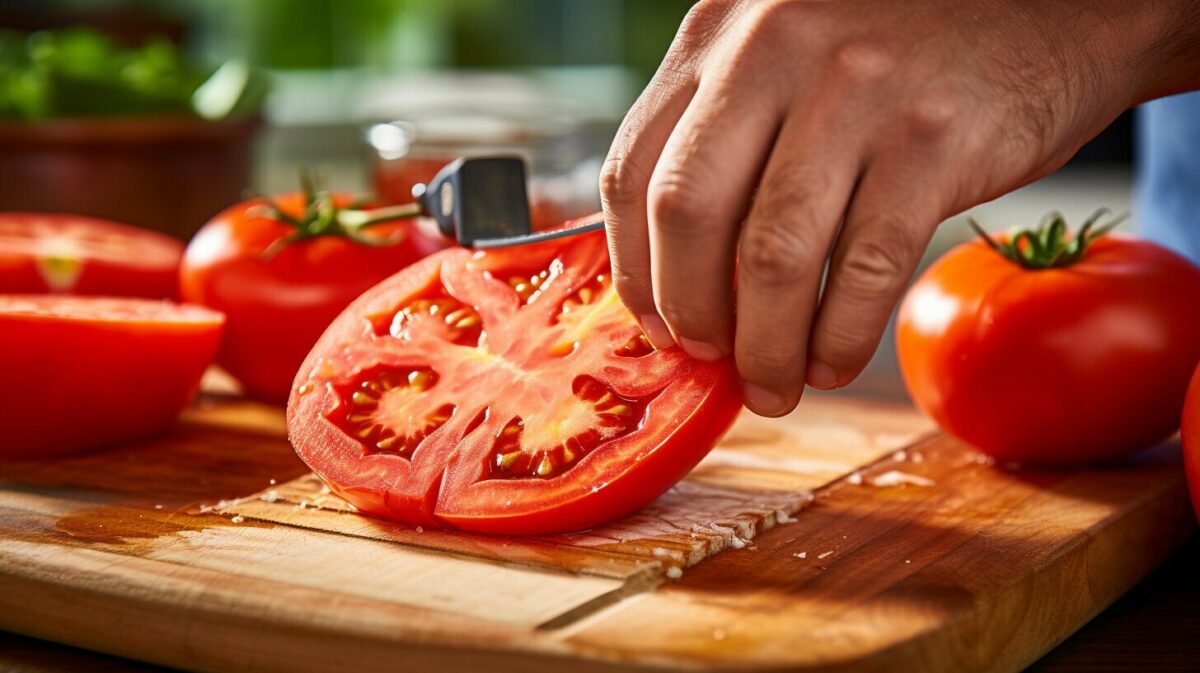
With these techniques and strategies, you can take your tomato cutting skills to the next level and impress your guests with beautifully prepared dishes. Remember, practice makes perfect, so keep honing your craft and enjoy the delicious results!
How to Cut a Tomato - Conclusion
With this comprehensive guide on how to cut a tomato, you can now confidently prepare this versatile ingredient for a wide range of delicious meals. To start, make sure you choose firm, ripe tomatoes with even color. Before cutting, rinse and dry the tomato to remove any dirt or debris.
Place the tomato on a cutting board with the stem facing up and slice off the sides, following the natural curves of the fruit. Rotate the tomato and repeat this process to remove the remaining sides. Next, discard the core and seeds.
To dice the tomato, cut it into strips and then dice the strips into small, even cubes. Remember to use a sharp knife and handle the tomato gently to avoid crushing it. Once diced, you can use the tomatoes immediately or store them in an airtight container in the fridge.
Now that you have mastered the art of tomato cutting, you can easily incorporate this flavorful ingredient into salads, salsas, sauces, and more. Enjoy the fresh taste and vibrant color of expertly sliced tomatoes in your favorite recipes!
Our Friends:
- https://www.eatingwell.com/article/7912240/how-to-cut-a-tomato/
- https://www.evolvingtable.com/how-to-dice-a-tomato/
Frequently asked questions
- How do I cut a tomato?
To cut a tomato, start by rinsing and scrubbing the tomato to remove any dirt or debris. Dry it thoroughly with a dish towel. Place the tomato on a cutting board with the stem facing up. Slice off the sides, following the natural curves of the fruit. Rotate the tomato and slice off the remaining sides. Discard the core and seeds. Cut the tomato into strips, then dice the strips into small cubes. Use immediately or store in an airtight container in the fridge. Make sure to use a sharp knife and handle the tomato gently to avoid crushing it.
- How do I choose the perfect tomato for slicing?
When choosing tomatoes, look for ones that are firm, ripe, and have even color. These characteristics ensure that the tomato is fresh and will slice easily and evenly.
- What are the steps to prepare a tomato for cutting?
To prepare a tomato for cutting, rinse and scrub it to remove any dirt or debris. Dry it thoroughly with a dish towel. Place the tomato on a cutting board with the stem facing up. Slice off the sides, following the natural curves of the fruit. Rotate the tomato and slice off the remaining sides. Discard the core and seeds.
- How should I set up my cutting station for cutting tomatoes?
When setting up your cutting station, make sure to have a clean, stable surface, such as a cutting board. Ensure that you have a sharp knife and a clean, dry dish towel to dry the tomato before cutting. Having all your tools and ingredients nearby will make the process more efficient.
- What is the basic technique for cutting a tomato?
The basic technique for cutting a tomato involves slicing off the sides, removing the core and seeds, and then cutting the tomato into strips. The strips can then be diced into smaller cubes.
- How do I slice off the sides of a tomato?
To slice off the sides of a tomato, place it on a cutting board with the stem facing up. Follow the natural curves of the fruit and use a sharp knife to slice off the sides in even, consistent cuts.
- How do I remove the core and seeds from a tomato?
After slicing off the sides of the tomato, you can easily remove the core and seeds by cutting them out with a knife or using a spoon to scoop them out.
- How do I cut a tomato into strips?
Once the sides have been sliced off and the core and seeds removed, you can cut the tomato into strips by slicing it lengthwise. These strips can then be diced into smaller cubes.
- What is the technique for dicing tomato strips into small cubes?
To dice tomato strips into small cubes, gather the strips together and make horizontal cuts to create small even cubes.
- How should I store and use diced tomatoes?
Diced tomatoes can be stored in an airtight container in the refrigerator for a few days. They can be used in a variety of recipes, such as salads, salsas, sauces, or toppings for sandwiches and burgers.
- Do you have any additional tips and tricks for cutting tomatoes?
Yes! Here are a few additional tips and tricks: use a sharp knife to make clean cuts, handle the tomato gently to avoid crushing it, and practice your cutting technique to improve speed and precision.
- What tips do you have for beginners learning to cut tomatoes?
For beginners, it's important to start with a sharp knife and take your time. Follow the step-by-step instructions provided and practice your cutting technique. With time and practice, you'll become more comfortable and confident in cutting tomatoes.
- How can I master the art of tomato cutting?
Mastering the art of tomato cutting takes practice and experimentation. Continuously challenge yourself with new techniques and strategies. With time and experience, you'll develop your own unique style and become a master at cutting tomatoes.
AprilCook, recipe developer and the heart of Chefwiz. More about April