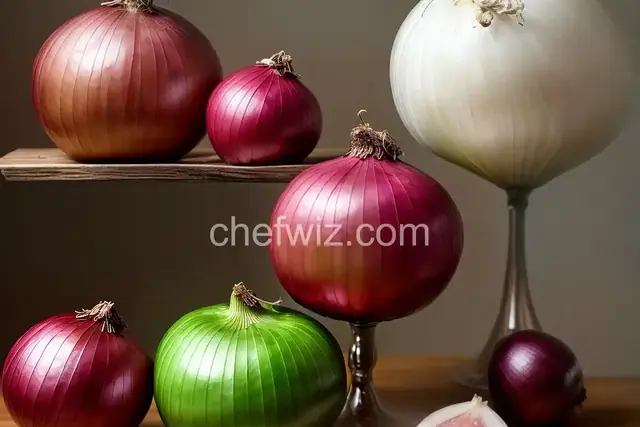
Onions. They're a staple in every kitchen. Whether you're sautéing them for a stir-fry, caramelizing them for a burger topping, or using them as a base for a flavorful soup, onions add depth and complexity to a wide range of dishes. But have you ever stopped to wonder why onions make us cry? Or how to choose the perfect onion for your recipe? Let's dive into the fascinating world of onions and discover why they're not just a laughing matter.
The Science Behind the Tears
Picture this: you're chopping an onion, minding your own business, when suddenly tears start streaming down your face. It's a common occurrence that has left many puzzled. The culprit behind this onion-induced waterworks is a chemical compound called syn-propanethial-S-oxide (try saying that five times fast!). When you slice an onion, enzymes are released, which then react with the sulfur compounds present in the onion, producing syn-propanethial-S-oxide. This volatile gas irritates the eyes, causing them to tear up in an attempt to flush out the irritant. So, the next time you find yourself crying over onions, remember that it's just chemistry at work!
Choosing the Right Onion
With so many different types of onions available, it can be overwhelming to know which one to pick for your recipe. But fear not, I'm here to simplify the process for you. When it comes to flavor, yellow onions are the most versatile and widely used. They have a strong, pungent taste that mellows out when cooked, making them perfect for a variety of dishes. If you prefer a milder flavor, opt for white onions. They are slightly sweeter and less pungent than their yellow counterparts. And for those looking for a pop of color, red onions are the way to go. They have a vibrant hue and a mild, slightly sweet flavor.
Yellow Onions
Yellow onions are the workhorse of the onion family. They have a strong, bold flavor that adds depth to any dish. When cooked, they become sweet and caramelized, making them perfect for French onion soup or a hearty beef stew.
White Onions
White onions are milder in flavor compared to yellow onions. They have a crisp texture and a slightly sweet taste. They are often used in Mexican cuisine, where their delicate flavor complements dishes like salsa or guacamole.
Red Onions
Red onions are known for their vibrant color and mild flavor. They are often used raw in salads or pickled for a tangy kick. Their striking appearance also makes them a visually appealing addition to any dish.
Storing and Preparing Onions
Proper storage and preparation are key to getting the most out of your onions. To keep them fresh for longer, store them in a cool, dry place with good ventilation. Avoid storing onions near potatoes, as they can cause each other to spoil faster. When it comes to preparing onions, a sharp knife is your best friend. A dull knife can crush the onion cells, releasing more of the tear-inducing compounds. So, sharpen your knives before you start chopping!
Frequently asked questions
- . Why do onions make us cry?
Onions make us cry because of a chemical compound called syn-propanethial-S-oxide. When you slice an onion, enzymes react with sulfur compounds, producing this irritant gas that causes tears.
- . Can I prevent tears when cutting onions?
There are a few tricks you can try to minimize tears when chopping onions. You can try refrigerating the onion before cutting, cutting near a running faucet, or wearing goggles to protect your eyes.
- . How do I get rid of the onion smell on my hands?
To get rid of the lingering onion smell on your hands, try rubbing them with lemon juice or stainless steel. The acid in lemon juice can help neutralize the odor, while stainless steel acts as a natural deodorizer.
- . Are all onions created equal?
No, not all onions are created equal. Yellow onions have a stronger flavor compared to white onions, while red onions have a milder taste and a vibrant color.
- . Can I substitute one type of onion for another in a recipe?
Yes, you can substitute one type of onion for another in most recipes. Just keep in mind that the flavor profile may be slightly different, so adjust accordingly.
- . How long do onions last?
Onions can last for several weeks if stored properly. Keep them in a cool, dry place with good ventilation to maximize their shelf life.
- . Can I freeze onions?
Yes, you can freeze onions. To freeze them, chop or slice the onions, place them in a freezer-safe bag, and store them in the freezer. Frozen onions are great for adding flavor to soups and stews.
- . Can I eat onions raw?
Absolutely! Onions can be enjoyed raw in salads, sandwiches, or salsas. Just keep in mind that different types of onions have varying levels of pungency, so choose accordingly.
In conclusion, onions are more than just a kitchen staple. They have a fascinating chemistry that can make us cry, and their flavor profiles vary, offering versatility in our culinary adventures. So, the next time you reach for an onion, remember the tears shed and the flavors added. Onions truly are a kitchen superhero.
 By AprilPublished