Yaki Mandu
Rate this recipeBe the first to rate
 By AprilPublished
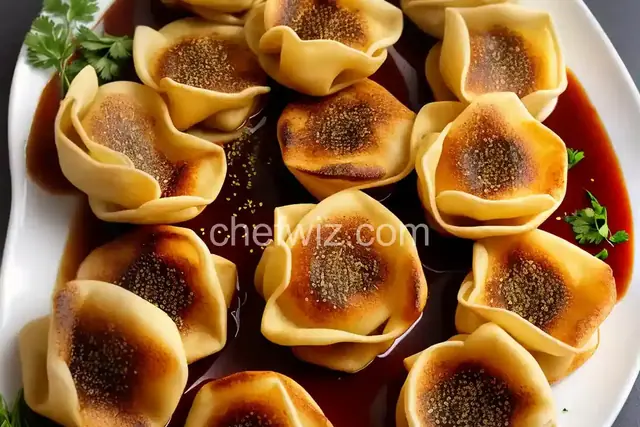
 Have you ever tried Yaki Mandu? These delectable Korean dumplings are a burst of flavor in a bite-sized package.
 By AprilPublished
 Have you ever tried Yaki Mandu? These delectable Korean dumplings are a burst of flavor in a bite-sized package.
Preheat a large skillet over medium-high heat. Cook and stir the beef in the skillet until it is browned and crumbly, usually taking around 5 to 7 minutes. Then, drain and get rid of any excess grease.
In a separate skillet, heat the vegetable oil over medium heat.
Combine the green onions, cabbage, carrot, garlic, 1 tablespoon of sesame oil, 1 tablespoon of sesame seeds, monosodium glutamate, salt, and pepper with the ground beef mixture. Cook and stir until the liquid evaporates and the vegetables become tender, typically around 5 to 10 minutes. Transfer the beef mixture to a bowl and mix in 1 egg.
In a separate bowl, crack the second egg and beat it well.
Take one wonton wrapper and hold it in the palm of your hand. Brush a thin layer of beaten egg on one edge of the wrapper. Scoop approximately 1 teaspoon of the beef mixture into the center of the wrapper. Fold the wrapper in half, from corner to corner, creating a triangle shape. Pinch the edges firmly to seal the dumpling, using your fingers to crimp the edges. To remove any air, lightly press on the dumpling with your fingers.
Fry the wontons in the hot oil until one side is browned, usually taking 2 to 3 minutes. Flip the wontons and cook until the other side is also brown
Have you ever tried Yaki Mandu? These delectable Korean dumplings are a burst of flavor in a bite-sized package. Just like a treasure chest, they are filled with a variety of ingredients that make your taste buds dance with joy. Yaki Mandu is a popular street food in Korea, and it's no wonder why. Let's take a closer look at these savory treats and discover what makes them so special.
Creating Yaki Mandu is truly an art form. It requires skill, precision, and a whole lot of love. The dough is carefully crafted to achieve the perfect balance of chewiness and crispiness. Inside, a delightful combination of ingredients awaits – from ground meat to vegetables and spices. The filling is like a symphony of flavors, harmonizing together to create a taste explosion in every bite.
When you sink your teeth into a Yaki Mandu, you embark on a culinary adventure. The crispy exterior gives way to a moist and flavorful interior that leaves you craving for more. Each bite is a journey, taking your taste buds on a rollercoaster ride of textures and tastes. It's a delightful experience that will keep you coming back for more.
Yaki Mandu is not just a one-trick pony – it's a versatile delight. These dumplings can be enjoyed in various ways, depending on your preference. You can pan-fry them to perfection, giving them a golden brown exterior that adds an extra layer of crunchiness. Alternatively, you can steam them, keeping the dumplings tender and juicy. Whichever method you choose, Yaki Mandu never fails to impress.
Yaki Mandu can be cooked by either pan-frying or steaming, depending on your taste preferences.
Yes, you can freeze Yaki Mandu. Just make sure to place them in an airtight container or freezer bag to maintain their freshness.
Traditional Yaki Mandu dough contains gluten. However, you can experiment with alternative flours to create a gluten-free version.
Yaki Mandu can be filled with a variety of ingredients, including ground meat, vegetables, tofu, and even kimchi.
Yes, you can prepare Yaki Mandu ahead of time and refrigerate or freeze them. Just make sure to cook them thoroughly before serving.
Yaki Mandu is often served with a dipping sauce made from soy sauce, vinegar, sesame oil, and chili flakes.
While they may look similar, Yaki Mandu and Chinese dumplings have distinct flavor profiles and cooking methods.
Absolutely! Feel free to experiment with different fillings to create your own unique Yaki Mandu recipe.
Yaki Mandu is a delightful culinary creation that captivates the senses. From the artful craftsmanship to the explosion of flavors, these Korean dumplings are truly a treat for the taste buds. Whether you enjoy them pan-fried or steamed, Yaki Mandu never fails to impress. So, why not embark on a culinary adventure and savor the wonders of Yaki Mandu?
AprilCook, recipe developer and the heart of Chefwiz. More about April