Wine-Braised Beef Brisket
Rate this recipeBe the first to rate
 By AprilPublished
 Are you ready to embark on a culinary journey that will tantalize your taste buds?
 By AprilPublished
 Are you ready to embark on a culinary journey that will tantalize your taste buds?
Preheat the oven to 350 degrees F (175 degrees C).
In a small bowl, combine thyme, salt, and black pepper. Rub this mixture over both sides of the brisket.
Heat olive oil in a roasting pan over medium-high heat. Add the brisket to the hot oil and brown it on both sides, about 3 to 4 minutes per side. Remove the brisket from the pan and set it aside.
Place the red onion slices into the same roasting pan and cook them until slightly softened, approximately 2 minutes. Stir in beef broth, tomato sauce, and wine.
Return the brisket to the roasting pan and cover it with foil.
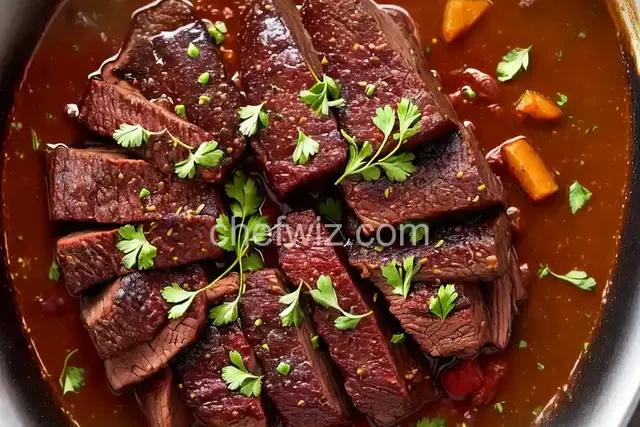
Roast the brisket in the preheated oven for 1 hour. Then, remove the foil and baste the brisket with the pan juices. Cover the pan with foil again and continue roasting the brisket until it is very tender and the pan sauce has thickened, for about 1 1/2 to 2 more hours.
If you plan to serve the brisket the next day, allow it to cool, slice it, and return the meat to the pan with the juices. Cover the pan with foil to reheat it faster and keep it extra-moist.
Are you ready to embark on a culinary journey that will tantalize your taste buds? Look no further than wine-braised beef brisket! This mouthwatering dish combines the rich flavors of succulent beef and aromatic wine, resulting in a tender and flavorful masterpiece. Whether you're hosting a dinner party or simply craving a hearty meal, this recipe is sure to impress. So, let's dive into the world of wine-braised beef brisket and discover what makes it so special.
Imagine sinking your teeth into a juicy piece of beef that practically melts in your mouth. That's the magic of wine-braised beef brisket. By slowly cooking the meat in a bath of red wine and aromatic herbs, you infuse it with irresistible flavors and achieve the perfect tenderness. The wine not only adds depth and complexity but also helps to break down the tough fibers, resulting in a more tender and flavorful dish.
Wine-braising is a culinary technique that has been used for centuries to transform tough cuts of meat into delectable masterpieces. The process involves searing the meat to develop a rich crust, then simmering it in a flavorful liquid until it becomes fork-tender. The addition of wine takes this technique to a whole new level, infusing the meat with its unique characteristics and enhancing the overall taste. It's like a symphony of flavors dancing on your palate!
When it comes to wine-braised beef brisket, the choice of wine is crucial. You want to select a red wine that complements the flavors of the meat without overpowering it. A full-bodied red wine, such as Cabernet Sauvignon or Merlot, works beautifully in this recipe. The tannins in the wine help to tenderize the meat while adding depth and complexity to the dish.
One of the secrets to achieving a tender and flavorful wine-braised beef brisket is to cook it low and slow. This allows the flavors to meld together and the meat to become incredibly tender. Patience is key here, as the longer you cook it, the more tender and flavorful it becomes. The result is a dish that will have your guests reaching for seconds (and maybe even thirds!).
Wine-braised beef brisket is a culinary masterpiece that combines the richness of beef with the depth of red wine. The slow and steady cooking process ensures a tender and flavorful result that will leave you craving more. So, gather your ingredients, pour yourself a glass of wine, and let the magic happen in your kitchen. Your taste buds will thank you!
A1: While red wine is traditionally used in wine-braised beef brisket, you can certainly experiment with white wine if you prefer. Just keep in mind that the flavor profile will be different, so choose a white wine that complements the beef.
A2: While brisket is the classic choice for wine-braising, you can also use other cuts of beef, such as chuck roast or short ribs. The key is to choose a cut with enough fat and connective tissue to ensure a tender and flavorful result.
A3: Marinating the beef in the wine overnight or for at least a few hours will help to enhance the flavors. However, if you're short on time, you can still achieve great results by skipping the marinating step and simply adding the wine directly to the cooking liquid.
A4: Absolutely! Wine-braised beef brisket can be cooked in a slow cooker for convenience. Just follow the same steps of searing the meat and then transfer it to the slow cooker along with the wine and other ingredients. Cook on low for 8-10 hours or on high for 4-6 hours until the meat is fork-tender.
A5: To create a luscious sauce, strain the cooking liquid after braising the meat and then reduce it on the stovetop until it thickens slightly. This will intensify the flavors and create a velvety texture.
A6: Yes, you can freeze leftover wine-braised beef brisket for up to 3 months. Just make sure to store it in an airtight container or freezer bag to prevent freezer burn.
A7: Wine-braised beef brisket pairs beautifully with creamy mashed potatoes, roasted root vegetables, or buttered noodles. The rich flavors of the brisket complement these sides perfectly.
A8: Yes, wine-braised beef brisket actually tastes even better when made in advance. The flavors have time to develop and intensify, resulting in a more delicious dish. Simply reheat it gently on the stovetop or in the oven before serving.
AprilCook, recipe developer and the heart of Chefwiz. More about April