Vietnamese Pho Rice Noodle Soup with Beef
Rate this recipeBe the first to rate
 By AprilPublished
 When it comes to comfort food, few dishes can match the warm and comforting embrace of a steaming bowl of Vietnamese Pho Rice Noodle Soup with Beef.
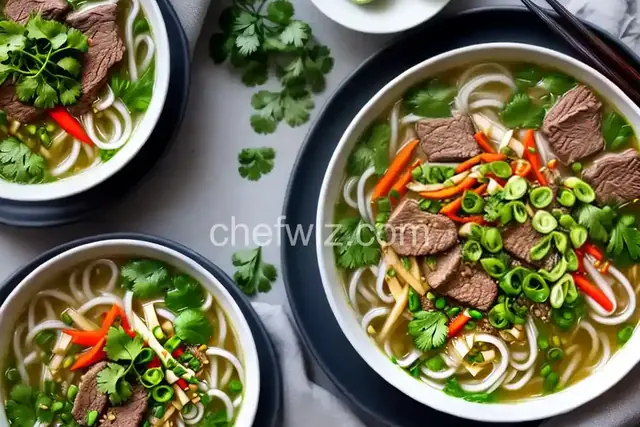 By AprilPublished
 When it comes to comfort food, few dishes can match the warm and comforting embrace of a steaming bowl of Vietnamese Pho Rice Noodle Soup with Beef.
Start by bringing 6 quarts of water to a boil in a large stockpot.
In a separate pot, place the bones and beef chuck and add enough water to cover them. Bring to a boil and let it boil vigorously for 5 minutes.
Carefully transfer the bones and beef to the first pot of boiling water, discarding the water they were cooked in. This step helps clean the bones and meat and removes impurities.
Once the water in the pot returns to a boil, reduce the heat to a simmer. Skim the surface regularly to remove any foam and fat.
Add the charred ginger and onions, fish sauce, and sugar to the pot. Simmer until the beef chuck becomes tender, which usually takes about 40 minutes.
Remove one piece of beef chuck from the pot and place it in cool water for 10 minutes to prevent it from darkening and drying out. Drain and slice it into thin pieces, then set it aside. Allow the other piece of beef chuck to continue cooking in the simmering broth.
After the broth has been simmering for a total of about 1 1/2 hours, wrap the star anise and cloves in a spice bag or cheesecloth and add it to the broth. Let it infuse for approximately 30 minutes until the broth becomes fragrant.
Discard both the spice bag and onions from the broth. Add salt and continue
When it comes to comfort food, few dishes can match the warm and comforting embrace of a steaming bowl of Vietnamese Pho Rice Noodle Soup with Beef. With its fragrant spices, tender beef, and slurp-worthy noodles, Pho is a true culinary masterpiece that delights the senses and warms the soul. In this article, we will dive into the world of Pho, exploring its rich history, the art of its preparation, and why it has become a beloved dish worldwide.
Pho, pronounced "fuh," originated in Vietnam in the early 20th century and has since become a staple in Vietnamese cuisine. Its roots can be traced back to the French colonial period when the Vietnamese adapted the French dish "pot-au-feu." Over time, Pho evolved into a uniquely Vietnamese creation, blending local ingredients and flavors with French influences.
What sets Pho apart from other noodle soups is its complex and aromatic broth. Made by simmering beef bones, spices, and herbs for hours on end, the broth develops a depth of flavor that is both robust and soothing. The combination of star anise, cinnamon, cloves, and other spices creates a symphony of tastes that dance on your palate with each spoonful.
Accompanying the flavorful broth are tender slices of beef, cooked to perfection. Whether it's thinly sliced rare beef that cooks in the hot broth or more substantial cuts that are simmered, the beef adds a meaty richness to the dish. The rice noodles, which are soft and chewy, provide the perfect canvas for soaking up the broth and delivering a satisfying slurp.
Ordering Pho is an experience in itself. As your bowl arrives, a cloud of fragrant steam wafts up, carrying the enticing aroma of spices and herbs. The garnishes that accompany the dish - bean sprouts, Thai basil, lime, and chili - add freshness, crunch, and a burst of vibrant flavors. You can customize your Pho by adding these garnishes and a drizzle of sriracha or hoisin sauce, tailoring it to your own taste.
As you take your first spoonful of Pho, you'll be greeted with a burst of flavors that is both familiar and exotic. The combination of the aromatic broth, tender beef, and delicate rice noodles creates a harmonious symphony of tastes and textures. Each spoonful is a journey for the senses, transporting you to the bustling streets of Vietnam.
Vietnamese Pho Rice Noodle Soup with Beef is more than just a bowl of soup; it is a culinary masterpiece that reflects the rich flavors and cultural heritage of Vietnam. Its fragrant broth, tender beef, and slurp-worthy noodles create a symphony of flavors that delights the senses and warms the soul. Whether enjoyed in a bustling Vietnamese street stall or in the comfort of your own kitchen, Pho is a bowl of pure delight that brings people together, one spoonful at a time.
The best cut of beef for Pho is typically beef brisket, which becomes tender and flavorful when simmered in the broth. However, other cuts such as flank steak, sirloin, or even meatballs can also be used to add variety to your Pho.
Absolutely! Vegetarian Pho, also known as "Pho Chay," is a delicious alternative for those who prefer plant-based options. Instead of beef, you can use tofu, mushrooms, or a variety of vegetables to create a flavorful and satisfying vegetarian version of this beloved dish.
Pho is naturally gluten-free as long as the rice noodles and the ingredients used in the broth are gluten-free. However, it's always a good idea to double-check the ingredients and ask the restaurant staff about any potential gluten cross-contamination.
Yes, you can freeze Pho for later enjoyment. It's best to freeze the broth and noodles separately to maintain their texture. When you're ready to enjoy your frozen Pho, simply thaw and reheat the broth, cook the noodles, and assemble your bowl with fresh garnishes.
While the classic Pho with beef is the most well-known, there are several popular variations to explore. Some notable ones include Pho Ga (chicken Pho), Pho Bo Vien (meatball Pho), and Pho Dac Biet (special combination Pho with various cuts of beef).
Absolutely! Pho has gained popularity worldwide, and you can find delicious renditions of this beloved dish in Vietnamese restaurants across the globe. Each country may add its own unique twist, but the heart and soul of Pho remain intact.
The correct pronunciation of "Pho" is "fuh." The "ph" is pronounced as an "f" sound, and the "o" is pronounced like the "u" in "sun." So, when ordering Pho, you can confidently say, "I'll have a bowl of fuh, please!"
Absolutely! While making Pho from scratch can be a time-consuming process, it is possible to recreate the flavors of this delightful dish in your own kitchen. There are numerous recipes and tutorials available online that can guide you through the process and help you create a homemade bowl of Pho that rivals those from the best Vietnamese restaurants.
AprilCook, recipe developer and the heart of Chefwiz. More about April