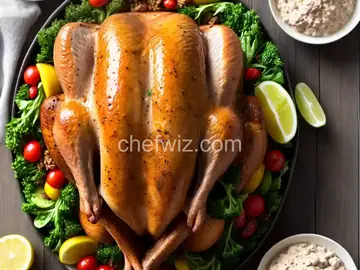
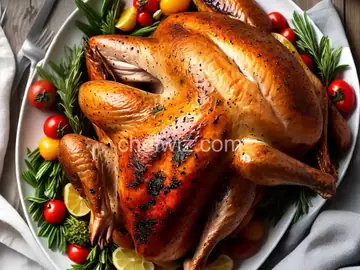
Upside-Down Turkey
Rate this recipeBe the first to rate
 By AprilPublished
 When it comes to Thanksgiving dinner, the centerpiece of the table is often a perfectly roasted turkey.
 By AprilPublished
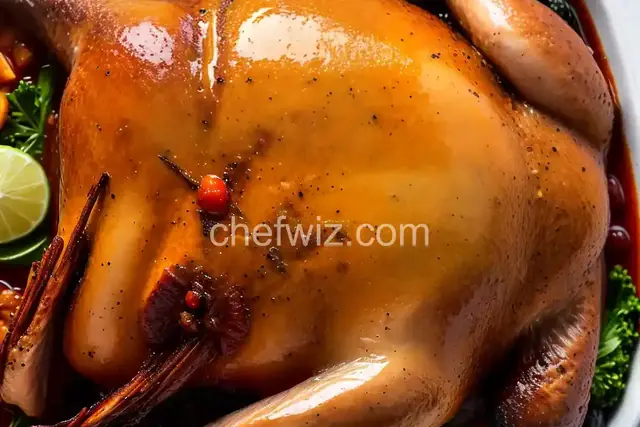
 When it comes to Thanksgiving dinner, the centerpiece of the table is often a perfectly roasted turkey.
Cooking an upside-down turkey can result in a moist and flavorful bird. Here are the steps to cook an upside-down turkey:
Preheat the oven to 350 degrees F (175 degrees C).
Remove the giblets from the turkey and discard them. Rinse the turkey and pat it dry.
Place the turkey upside-down in a roasting pan, with the breast facing down.
Place half of the butter inside the cavity of the turkey. Cut the remaining butter into pieces and rub it over the outside of the skin.
Pour water into the roasting pan and cover it with foil.
Cook the turkey in the preheated oven for 3 to 3 1/2 hours, or until the internal temperature of the thighs reaches 180 degrees F (80 degrees C).
Once the turkey is done, you can use the pan juices to prepare a gravy. Gradually add cornstarch, 1 tablespoon at a time, to the pan juices until the liquid begins to thicken.
Note: You can also experiment with different seasonings, such as salt, pepper, garlic powder, dried rosemary, or dried thyme, to add more flavor to your upside-down turkey.
When it comes to Thanksgiving dinner, the centerpiece of the table is often a perfectly roasted turkey. But have you ever considered turning tradition on its head and cooking an upside-down turkey? This unique cooking method not only creates a juicy and tender bird but also adds a touch of novelty to your holiday feast. In this article, we'll explore the benefits of cooking an upside-down turkey and provide some tips to ensure a successful and memorable meal.
Turning your turkey upside-down may seem counterintuitive, but there's a method to this madness. When the turkey is placed breast-side down, the juices from the dark meat seep into the breast, keeping it moist and flavorful. This technique also allows the skin on the breast to crisp up beautifully while protecting it from drying out. The result? A succulent turkey with tender meat and crispy skin, a winning combination that will have your guests coming back for seconds.
Before you embark on your upside-down turkey adventure, there are a few steps you need to take to ensure success. First, make sure to season your turkey generously with salt, pepper, and any other herbs and spices you prefer. This will not only add flavor but also enhance the juiciness of the meat.
Next, you'll need a sturdy roasting rack or a makeshift one using vegetables like carrots and celery. Placing the turkey on a rack elevates it from the bottom of the pan, allowing the heat to circulate evenly and ensuring that the skin crisps up on all sides.
Now that your turkey is prepped and ready, it's time to get cooking. Preheat your oven to the recommended temperature and place your turkey breast-side down on the roasting rack. This position allows the dark meat to cook first, ensuring it reaches the proper temperature while the breast remains moist and tender.
As the turkey roasts, the juices from the dark meat will drip down, keeping the breast meat moist and flavorful. To prevent the skin from sticking to the rack, you can lightly oil it or use parchment paper as a barrier.
Once the dark meat has reached its desired temperature, it's time to flip the turkey. Carefully use oven mitts or kitchen tongs to turn it breast-side up. This step allows the skin on the breast to brown and crisp up, giving it that irresistible golden color.
Continue roasting the turkey until the breast meat reaches the recommended internal temperature. Use a meat thermometer to ensure accuracy and avoid overcooking. Remember, a properly cooked turkey is not only safe to eat but also incredibly delicious.
When your upside-down turkey is ready to be served, carefully transfer it to a serving platter. Allow it to rest for at least 15 minutes before carving to ensure the juices redistribute throughout the meat.
Carve your turkey as you would with a traditional roast, starting with the breast and moving on to the dark meat. The result will be perfectly cooked, moist, and flavorful meat that will have your guests raving about your culinary skills.
Cooking an upside-down turkey is a fantastic way to elevate your Thanksgiving feast or any other special occasion. The combination of juicy dark meat and moist, flavorful breast meat will leave your guests impressed and satisfied. So why not give this unique cooking method a try and experience a delicious twist on a classic dish? Your taste buds will thank you!
Yes, you can still cook a stuffed turkey upside down. Just make sure to adjust the cooking time accordingly to ensure both the turkey and the stuffing reach the proper internal temperature.
The cooking time will depend on the size of your turkey. As a general guideline, calculate around 13 minutes per pound of turkey. However, always rely on a meat thermometer to determine when your turkey is fully cooked.
Absolutely! The upside-down cooking method ensures that the breast meat stays moist and flavorful by allowing the juices from the dark meat to seep into it.
Yes, you can! After flipping the turkey, the breast skin will have the opportunity to brown and crisp up, resulting in a deliciously crispy skin that adds texture to every bite.
Leftover turkey can be used in a variety of delicious recipes, such as turkey sandwiches, soups, stews, and casseroles. Get creative and experiment with different flavors to make the most of your leftovers.
Absolutely! Brining your upside-down turkey will add even more flavor and juiciness to the meat. Just make sure to adjust the cooking time accordingly, as brined turkeys tend to cook faster.
Definitely! While upside-down turkey is often associated with Thanksgiving, there's no reason why you can't enjoy this delicious twist on a classic dish any time of the year. Surprise your family and friends with a mouthwatering upside-down turkey for a special occasion or a Sunday family dinner.
Yes, you can certainly apply the upside-down cooking method to a boneless turkey breast. The same principles apply, ensuring a juicy and flavorful result.
AprilCook, recipe developer and the heart of Chefwiz. More about April