Traditional Sukiyaki (Japanese Beef Hot Pot) Recipe
Rate this recipeBe the first to rate
 By AprilPublished
 Have you ever wanted to transport your taste buds to the enchanting land of Japan?
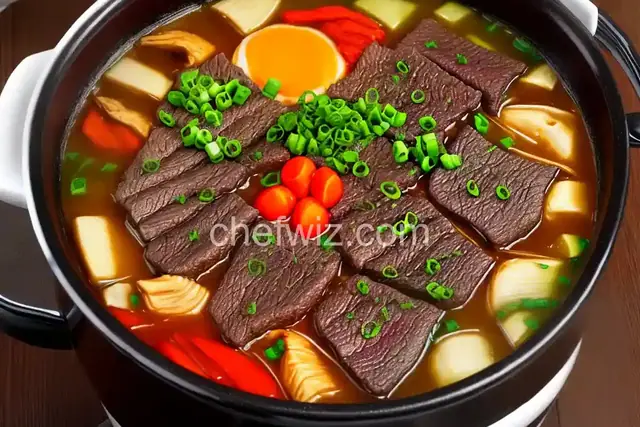 By AprilPublished
 Have you ever wanted to transport your taste buds to the enchanting land of Japan?
In a saucepan, combine mirin, sake, dashi, and sugar. Heat the mixture until it simmers, stirring until the sugar is fully dissolved. Remove from heat and set aside.
Arrange the beef and tofu on separate platters or dinner plates. Cover them with plastic wrap and refrigerate. Also, arrange the mushrooms, onion, scallions, and bok choy on a serving platter and set it aside.
Rinse the rice in a fine mesh strainer until the water runs clear. Then, place the rice in a small pot and add 2 cups of water. Bring it to a simmer and reduce the heat to low. Cover the pot with a tightly fitting lid and steam the rice until all the water is absorbed, approximately 30 minutes.
Prepare a butane burner or an electric hot plate and ignite it carefully. Place a thick-bottomed, low-sided pan on the burner and pour in the sauce mixture. Bring it to a simmer.
Divide the cooked rice among 4 small bowls. Place the platters of ingredients around the burner and cook them in the simmering broth to your desired doneness. Optionally, you can break an egg into a separate bowl, beat it, and use it as a dipping sauce for the hot ingredients.
Have you ever wanted to transport your taste buds to the enchanting land of Japan? Look no further than sukiyaki, a delectable Japanese hot pot dish that will take you on a culinary adventure. In this article, we will dive into the rich history of sukiyaki, explore its unique flavors, and discover why it has become a beloved staple in Japanese cuisine.
Like many traditional dishes, sukiyaki has a fascinating history that dates back centuries. Its origins can be traced to the Edo period in Japan, when people used to gather around a communal pot to cook their meals. This communal cooking style not only fostered a sense of togetherness but also allowed people to make the most of their ingredients.
Sukiyaki gained popularity in the Meiji era, when beef became more accessible to the general population. With its tender slices of beef cooked alongside various vegetables, tofu, and noodles, sukiyaki quickly became a beloved dish across Japan.
What sets sukiyaki apart from other hot pot dishes is its distinct sweet and savory flavor profile. The key to achieving this flavor lies in the sukiyaki sauce, a concoction of soy sauce, mirin, sugar, and sake. This sauce not only adds depth to the ingredients but also caramelizes them, resulting in a rich, umami-packed broth.
When you take your first bite of sukiyaki, you'll be greeted with a burst of flavors that dance on your palate. The tender beef, soaked in the savory broth, melts in your mouth, while the vegetables and tofu add a refreshing crunch. It's a harmonious balance of textures and tastes that will leave you craving for more.
Sukiyaki is not just a dish; it's an experience. The traditional way of enjoying sukiyaki involves cooking the ingredients at the table, allowing you to savor the aroma as it fills the air. The sight of the vibrant vegetables and succulent beef simmering in the pot is a feast for the eyes, while the sound of the ingredients sizzling adds to the anticipation.
As you gather around the sukiyaki pot with friends or family, you'll feel a sense of warmth and togetherness. Sharing this meal is not just about satisfying your hunger but creating lasting memories with loved ones.
In sukiyaki, thinly sliced beef, such as ribeye or sirloin, is commonly used. The marbling in these cuts of meat adds flavor and tenderness to the dish.
Yes, sukiyaki can be adapted to suit vegetarian or vegan diets. Instead of beef, you can use tofu or seitan as a protein substitute and load up on an array of vegetables.
While the classic sukiyaki is made with beef, there are variations that use pork (known as shabu-shabu) or chicken. Each variation offers a unique twist on the traditional dish.
Sukiyaki is usually served with a side of steamed rice and a raw egg. The egg is used as a dipping sauce for the cooked ingredients, adding a creamy and luxurious touch.
Absolutely! While sukiyaki is often associated with colder months, it can be enjoyed anytime. Whether it's a cozy winter evening or a summer gathering, sukiyaki is a versatile dish that never fails to impress.
Sukiyaki is packed with nutritious ingredients such as vegetables and tofu, making it a healthy choice. Plus, the communal aspect of sukiyaki encourages mindful eating and strengthens social bonds.
Absolutely! The beauty of sukiyaki lies in its versatility. You can adjust the sweetness of the sauce by adding more or less sugar, depending on your preference.
Not at all! While sukiyaki may seem complex, it is actually quite simple to make. With a few key ingredients and a sukiyaki pot or skillet, you can recreate the magic of this beloved dish in the comfort of your own kitchen.
In conclusion, sukiyaki is more than just a meal; it's a journey into the heart of Japanese cuisine. Its rich history, unique flavors, and communal nature make it a truly special dish. So why not embark on your own sukiyaki adventure? Gather your loved ones, fire up the stove, and let the flavors of Japan transport you to a world of culinary delight.
AprilCook, recipe developer and the heart of Chefwiz. More about April