The Rattlesnake
Rate this recipeBe the first to rate
 By AprilPublished
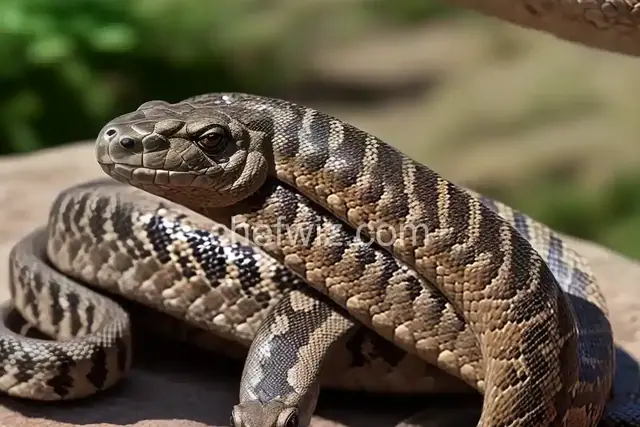
 Have you ever come across a rattlesnake? With its distinctive rattle and venomous bite, the rattlesnake is both feared and revered in the animal kingdom.
 By AprilPublished
 Have you ever come across a rattlesnake? With its distinctive rattle and venomous bite, the rattlesnake is both feared and revered in the animal kingdom.
Place 4 coupe glasses in the freezer to chill.
In a small saucepan, bring ½ cup water and sugar to a boil, stirring until the sugar is dissolved.
Cover the saucepan and refrigerate the simple syrup until cold, for at least 1 hour.
In a cocktail shaker, combine 1 egg white, 2 oz. rye whiskey, 1 oz. lemon juice, and ¾ oz. simple syrup. Shake vigorously without adding ice until the mixture becomes frothy.
Fill the shaker with ice and shake vigorously for about 20 seconds, until the outside of the shaker becomes frosty and the cocktail is frothy.
Rinse a chilled coupe glass with Pernod and discard the excess liquid.
Strain the cocktail through a fine-mesh sieve into the coupe glass.
Note: It is not recommended to use raw egg for the elderly, pregnant women, children under four, and individuals with weakened immune systems.
Have you ever come across a rattlesnake? With its distinctive rattle and venomous bite, the rattlesnake is both feared and revered in the animal kingdom. In this article, we will explore the intriguing world of rattlesnakes, their unique features, and their important role in the ecosystem.
Let's start by examining the physical characteristics of a rattlesnake. These reptiles are known for their long, slender bodies and triangular-shaped heads. Their scales are beautifully patterned, providing excellent camouflage in their natural habitats. The most striking feature of a rattlesnake is, of course, its rattle. Made up of interlocking segments, the rattle is a warning sign to potential predators.
Rattlesnakes are venomous creatures, equipped with fangs that inject venom into their prey. But did you know that their venom serves a dual purpose? Not only does it help them immobilize their prey, but it also aids in digestion. This venom is a potent cocktail of enzymes that break down the prey's tissues, allowing the rattlesnake to consume its meal more easily.
Despite their fearsome reputation, rattlesnakes play a crucial role in maintaining the balance of the ecosystem. As predators, they help control the population of small mammals such as rodents. By keeping these populations in check, rattlesnakes prevent them from overwhelming their habitats and depleting vital resources.
Rattlesnakes also serve as indicators of the overall health of an ecosystem. Their presence or absence can provide valuable information about the state of the environment. When rattlesnakes thrive, it is a sign that the ecosystem is well-balanced. Conversely, their decline could indicate environmental degradation or the loss of key habitat.
One fascinating aspect of rattlesnakes is their ability to sense heat. They possess specialized pit organs on their faces, which enable them to detect infrared radiation emitted by warm-blooded animals. This extraordinary sense allows them to locate prey, even in complete darkness or dense vegetation. It's as if they have their own built-in thermal imaging system!
1. Are all rattlesnakes venomous?
Yes, all rattlesnakes are venomous. However, not all rattlesnake bites result in envenomation.
2. How long can a rattlesnake's rattle grow?
A rattlesnake's rattle can grow up to 10 segments long, indicating its age.
3. Do rattlesnakes make good pets?
Rattlesnakes are wild animals and should never be kept as pets. They require specialized care and can be dangerous.
4. How do rattlesnakes reproduce?
Rattlesnakes are ovoviviparous, meaning they give birth to live young. They do not lay eggs like most reptiles.
5. Can rattlesnakes swim?
Yes, rattlesnakes are capable swimmers. They can traverse bodies of water using their muscular bodies.
6. What should I do if I encounter a rattlesnake?
If you encounter a rattlesnake in the wild, it is best to keep your distance and give it space. They will usually retreat if left alone.
7. Are rattlesnakes protected by law?
Rattlesnakes are protected in many areas due to their ecological importance. It is illegal to harm or kill them in certain regions.
8. Can rattlesnakes be found outside of North America?
While rattlesnakes are primarily found in North America, some species can also be found in parts of South America.
The rattlesnake is a captivating creature that commands both fear and respect. Its unique features, venomous bite, and ecological significance make it a truly remarkable species. As stewards of the environment, it is essential that we appreciate and protect these fascinating reptiles, ensuring their continued existence for generations to come.
AprilCook, recipe developer and the heart of Chefwiz. More about April