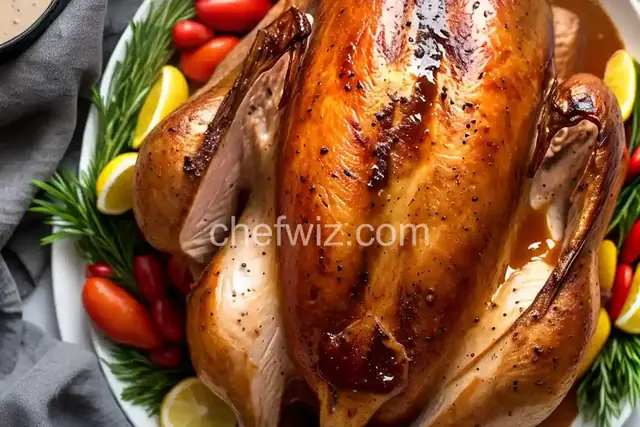
The Best Simple Roast Turkey With Gravy Recipe
Rate this recipeBe the first to rate
 By AprilPublished
 Are you ready to dive into the world of mouthwatering, succulent roast turkey with a rich and flavorful gravy?
 By AprilPublished
 Are you ready to dive into the world of mouthwatering, succulent roast turkey with a rich and flavorful gravy?
Begin by setting the oven rack to the lowest position and placing a baking stone or baking steel on it.
Preheat the oven to 500°F (260°C) and allow it to preheat for at least 45 minutes.
In the meantime, rinse the turkey and carefully pat it dry with paper towels.
Season the turkey generously with salt and pepper. If the turkey has been dry-brined, skip the rinsing and salting steps.
Place the turkey breast side up in a V-rack over a foil-lined rimmed baking sheet.
Transfer the rimmed baking sheet with the turkey directly to the preheated baking stone in the oven.
Immediately close the oven and reduce the temperature to 300°F (150°C).
Roast the turkey until it is golden brown and the deepest part of the breast registers 150°F (66°C) on an instant-read thermometer, and the legs register at least 165°F (74°C). This will take approximately 3 to 4 hours in total.
Check on the turkey after 2 hours. If the skin doesn't look like it's browning fast enough, you can turn on convection or increase the oven temperature by 50°F/10°C.
Once the turkey is done, remove it from the oven and let it rest for at least 30 minutes before carving.
While the turkey is roasting, chop the reserved
Are you ready to dive into the world of mouthwatering, succulent roast turkey with a rich and flavorful gravy? Look no further! In this article, we'll guide you through the process of making the best simple roast turkey with gravy. Whether you're a seasoned chef or a novice in the kitchen, this recipe is perfect for anyone looking to impress their guests or simply enjoy a delicious turkey dinner. So let's get started!
Before we begin, it's essential to select the right turkey for your roast. When picking a turkey, consider its size, freshness, and whether it's been previously frozen. Fresh turkeys tend to have better flavor and texture, but frozen ones can be just as tasty if properly thawed. Remember to plan ahead and allow enough time for thawing if you opt for a frozen bird.
Now that you have your turkey, it's time to prepare it for roasting. Start by removing the giblets and neck from the cavity if they're included. These can be used later to make a savory turkey stock. Next, rinse the turkey inside and out with cold water, making sure to pat it dry with paper towels. This step helps remove any excess moisture that can affect the texture of the finished roast.
Seasoning is crucial for enhancing the flavor of your roast turkey. You can keep it simple with salt, pepper, and a sprinkle of your favorite herbs, or get creative with a blend of spices and aromatics. Rub the seasoning all over the turkey, including under the skin and inside the cavity, to ensure every bite is bursting with flavor.
Preheat your oven to the recommended temperature for roasting turkey. Place the seasoned turkey on a rack in a roasting pan, breast-side up. This positioning allows the heat to circulate evenly, resulting in a juicy and evenly cooked bird. Cover the turkey loosely with aluminum foil and roast according to the weight and cooking time guidelines. Remember to baste the turkey occasionally to keep it moist and tender.
While the turkey is roasting, let's talk about the star of the show: the gravy. The key to a luscious gravy is the pan drippings from the roast turkey. Once the turkey is cooked, remove it from the roasting pan and set it aside to rest. Pour the pan drippings into a separate container and let the fat rise to the top. Skim off the fat and return the drippings to the pan. Add flour or cornstarch to thicken the liquid, and slowly whisk in turkey or chicken broth until you achieve the desired consistency. Season with salt, pepper, and any additional herbs or spices for an extra burst of flavor.
Now that your roast turkey and gravy are ready, it's time to serve and enjoy the feast! Carve the turkey into slices, drizzle with the flavorful gravy, and arrange on a platter. Pair it with your favorite side dishes, such as roasted vegetables, mashed potatoes, or cranberry sauce, for a complete and satisfying meal. Don't forget to share this delicious recipe with your loved ones and savor every bite together.
Preparing a simple roast turkey with gravy doesn't have to be a daunting task. With the right ingredients, proper seasoning, and a little bit of patience, you can create a mouthwatering centerpiece for any special occasion or holiday gathering. The combination of a tender, juicy turkey and a flavorful gravy is a match made in culinary heaven. So go ahead and give this recipe a try. Your taste buds will thank you!
Q1: How do I know if my turkey is fully cooked?
A1: The best way to determine if a turkey is fully cooked is by using a meat thermometer. Insert the thermometer into the thickest part of the thigh, making sure it doesn't touch the bone. The turkey is done when the internal temperature reaches 165째F (74째C).
Q2: Can I stuff the turkey before roasting?
A2: While stuffing a turkey can add flavor, it also increases the cooking time and can affect the overall doneness of the bird. If you choose to stuff the turkey, ensure the stuffing reaches a safe internal temperature of 165째F (74째C).
Q3: How long should I let the turkey rest before carving?
A3: It's crucial to let the turkey rest for at least 20 minutes before carving. This allows the juices to redistribute, resulting in a moister and more flavorful roast.
Q4: Can I use the pan drippings for other recipes?
A4: Absolutely! The pan drippings can be used as a base for soups, stews, or gravies, adding depth and richness to your dishes.
Q5: What should I do if my turkey is browning too quickly?
A5: If your turkey is browning too quickly, cover it loosely with aluminum foil to prevent further browning while allowing it to continue cooking.
Q6: Can I use chicken broth instead of turkey broth for the gravy?
A6: Yes, you can substitute chicken broth for turkey broth in the gravy recipe. The flavor might differ slightly, but it will still be delicious.
Q7: How long can I store leftover roast turkey?
A7: Leftover roast turkey can be stored in the refrigerator for up to 4 days. Make sure to cover it tightly to maintain its quality and freshness.
Q8: Can I freeze leftover roast turkey?
A8: Absolutely! Leftover roast turkey can be frozen for up to 3 months. Divide it into portions and place them in airtight containers or freezer bags for easy thawing and reheating.
AprilCook, recipe developer and the heart of Chefwiz. More about April