Sukhothai Pad Thai
Rate this recipeBe the first to rate
 By AprilPublished
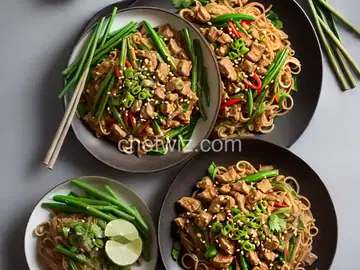
 Are you craving a plate of delectable noodles that are bursting with flavors?
 By AprilPublished
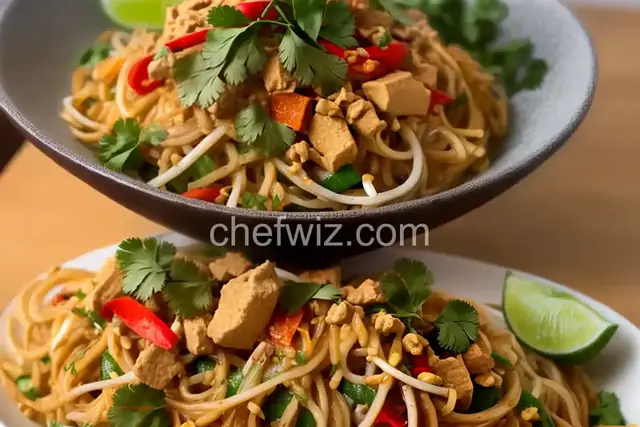
 Are you craving a plate of delectable noodles that are bursting with flavors?
To prepare the pad thai sauce, combine sugar, vinegar, soy sauce, and tamarind pulp in a medium saucepan over medium heat.
For the pad thai, start by soaking the rice noodles in cold water until they become soft. Then, drain the noodles.
In a large skillet or wok over medium heat, warm the oil and add the garlic and eggs. Scramble the eggs until cooked.
Next, add the tofu and stir until it is well mixed. Then, add the drained noodles and continue to stir until they are cooked.
Now, stir in the prepared pad thai sauce, along with 1 1/2 tablespoons of sugar and 1 1/2 teaspoons of salt. Also, add the peanuts and ground radish. Mix everything together.
Remove the skillet or wok from the heat and add the chives and paprika.
Finally, serve the pad thai with lime and bean sprouts on the side.
Are you craving a plate of delectable noodles that are bursting with flavors? Look no further than Sukhothai Pad Thai! This iconic Thai dish is a favorite amongst food lovers worldwide for its unique combination of tanginess, sweetness, and spiciness. In this article, we will explore the origins of Sukhothai Pad Thai and delve into why it has become a beloved staple in Thai cuisine.
Sukhothai Pad Thai hails from the historical city of Sukhothai in Thailand. Just like the city itself, this dish is steeped in tradition and history. It is believed that Sukhothai Pad Thai was created during World War II, as a result of a rice shortage in Thailand. To combat this scarcity, the Thai government encouraged the consumption of noodles, which were more readily available.
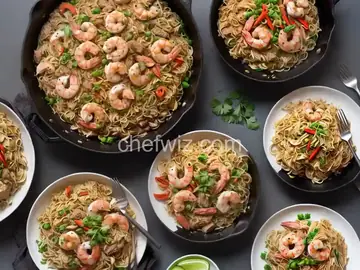
Over time, Sukhothai Pad Thai evolved into a flavorful combination of rice noodles, stir-fried with a variety of ingredients such as shrimp, tofu, bean sprouts, and crushed peanuts. The dish is then seasoned with a tangy tamarind sauce, adding a burst of flavor that sets it apart from other noodle dishes.
What makes Sukhothai Pad Thai truly exceptional is the harmony of flavors that dance on your taste buds. Imagine the tanginess of tamarind sauce, the sweetness of palm sugar, the spiciness of chili flakes, and the umami of fish sauce, all coming together in perfect balance. Each bite offers a tantalizing symphony of flavors that will leave you craving more.
Just like a skilled conductor, the cook must balance these flavors with precision. Too much sweetness, and the dish becomes cloying. Too little tanginess, and it loses its distinctive character. It is this delicate balance that elevates Sukhothai Pad Thai to a culinary masterpiece.
When it comes to Thai cuisine, there is no shortage of delicious noodle dishes. So, what sets Sukhothai Pad Thai apart from the rest?
Firstly, it's the unique combination of ingredients. The addition of tamarind sauce adds a tangy twist that distinguishes Sukhothai Pad Thai from other variations. This tanginess perfectly complements the other flavors and creates a harmonious medley that is truly unforgettable.
Secondly, the versatility of Sukhothai Pad Thai makes it a crowd-pleaser. Whether you prefer succulent shrimp, tofu for a vegetarian option, or a combination of both, this dish can be customized to suit any palate. The vibrant colors and enticing aroma make it a feast for the senses.
Sukhothai Pad Thai is a culinary gem that showcases the complexity and artistry of Thai cuisine. Its tangy flavors, vibrant colors, and customizable nature make it a favorite among both Thai food enthusiasts and those new to the cuisine. Whether you're enjoying it at a street food stall in Sukhothai or recreating it in your own kitchen, Sukhothai Pad Thai is sure to satisfy your cravings for a delicious and memorable meal.
Sukhothai Pad Thai can be as spicy as you want it to be. The level of spiciness can be adjusted by adding more or less chili flakes according to your preference.
Absolutely! Sukhothai Pad Thai can be made without shrimp. Tofu is a popular substitute that adds a delightful texture to the dish. You can also experiment with other protein options or enjoy it as a vegetarian dish.
Sukhothai Pad Thai is naturally gluten-free as long as you use gluten-free rice noodles and ensure that the other ingredients are free from gluten. However, it's always a good idea to check the labels of the sauces and condiments you use.
Absolutely! Feel free to add your favorite vegetables to Sukhothai Pad Thai. Bell peppers, carrots, and broccoli are great options that add a delightful crunch and color to the dish.
Sukhothai Pad Thai is best served fresh and hot. Garnish it with a sprinkle of crushed peanuts, a squeeze of lime juice, and a handful of fresh cilantro for an extra burst of flavor. Enjoy it as a main course or as a side dish alongside other Thai delicacies.
Sukhothai Pad Thai is best enjoyed fresh, but you can prepare some of the ingredients in advance to save time. However, avoid cooking the noodles too early, as they tend to stick together and lose their texture.
While the traditional Sukhothai Pad Thai is a delight in itself, there are several variations you can explore. Some variations include adding pineapple for a fruity twist or using different types of noodles, such as glass noodles or wide rice noodles.
Sukhothai Pad Thai is best enjoyed fresh, and freezing may affect the texture of the noodles and the overall taste. It is recommended to consume it immediately or store any leftovers in the refrigerator for a day or two.
AprilCook, recipe developer and the heart of Chefwiz. More about April