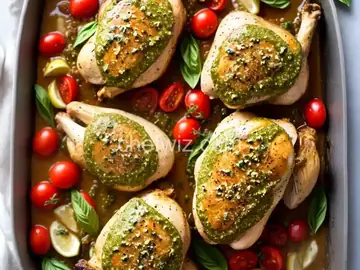
Spaghetti Squash with Summer Pesto and Chicken
Rate this recipeBe the first to rate
 By AprilPublished
 Imagine a plate full of flavorful spaghetti squash strands coated in a vibrant summer pesto sauce, topped with tender chicken.
 By AprilPublished
 Imagine a plate full of flavorful spaghetti squash strands coated in a vibrant summer pesto sauce, topped with tender chicken.
Preheat the oven to 375 degrees F (190 degrees C).
Place the spaghetti squash in a shallow baking dish that is non-reactive.
Roast the squash in the preheated oven until it becomes soft and can be easily punctured with a fork. This should take about 30 to 45 minutes.
Once the squash has cooled down enough to handle, cut it in half lengthwise and remove and discard the seeds.
Gently scoop out the flesh of the squash and place it in a bowl along with the shredded chicken.
In a food processor, combine the basil, olive oil, pine nuts, garlic, lemon juice, and 1 teaspoon of sea salt. Process the ingredients until they become smooth.
Add the pesto mixture to the bowl containing the spaghetti squash and chicken. Toss everything together to combine.
Season the dish with additional sea salt and pepper to taste.
Imagine a plate full of flavorful spaghetti squash strands coated in a vibrant summer pesto sauce, topped with tender chicken. It's a mouthwatering dish that not only satisfies your taste buds but also provides a healthy alternative to traditional pasta. In this article, we will explore the wonders of spaghetti squash, discuss how to make a delicious summer pesto, and discover the perfect way to complement it with juicy chicken.
Spaghetti squash is a versatile and delicious vegetable that can be used as a low-carb substitute for pasta. Its flesh, once cooked, separates into long, thin strands that resemble spaghetti noodles. This unique characteristic allows you to enjoy a pasta-like experience without the guilt of consuming excessive carbs. Think of it as nature's noodle!
To start, cut the spaghetti squash in half lengthwise and scoop out the seeds. Place the halves face down on a baking sheet and roast them in the oven until the flesh becomes tender. Once cooked, use a fork to scrape the flesh, and voila! You have a bowl full of spaghetti-like strands that are ready to be transformed into a culinary masterpiece.
Pesto is a classic Italian sauce that bursts with fresh flavors. By adding a summer twist to this traditional sauce, we can elevate the taste of our spaghetti squash dish. Gather a bunch of fresh basil leaves, garlic cloves, pine nuts, and grated Parmesan cheese. Blend them together with a drizzle of olive oil until you achieve a smooth and fragrant pesto. The vibrant green color and aromatic scent of the summer pesto will make your taste buds tingle with anticipation.
Once you have your spaghetti squash strands and summer pesto ready, it's time to bring them together. In a large bowl, toss the spaghetti squash with the pesto sauce until each strand is coated evenly. The combination of the light and delicate squash with the bold and flavorful pesto creates a harmonious balance that is sure to impress.
To make this dish a complete and satisfying meal, let's not forget about the protein-packed chicken. Tender and juicy chicken breasts or thighs can be cooked separately and added to the spaghetti squash and pesto combination. Whether you choose to grill, bake, or sauté the chicken, make sure it is seasoned to perfection. The addition of chicken not only enhances the overall flavor but also provides a satisfying and filling element to the dish.
Spaghetti squash with summer pesto and chicken is a delightful and healthy alternative to traditional pasta dishes. The combination of the spaghetti squash strands, vibrant summer pesto, and juicy chicken creates a symphony of flavors that will leave you craving more. So, why not give it a try and experience the magic yourself?
A1: While spaghetti squash is the star of this dish, you can experiment with other types of squash, such as butternut or acorn squash. However, keep in mind that the texture and taste will vary.
A2: Yes, spaghetti squash is low in calories compared to traditional pasta. It is an excellent option for those looking to reduce their calorie intake without sacrificing flavor.
A3: Absolutely! You can prepare the pesto ahead of time and store it in the refrigerator for up to a week. Just remember to give it a good stir before using it.
A4: Of course! If you prefer a vegetarian version, you can omit the chicken or substitute it with grilled tofu or roasted vegetables.
A5: Yes, you can freeze the cooked spaghetti squash for future use. Just make sure to store it in an airtight container or freezer bag to maintain its quality.
A6: Absolutely! Get creative and experiment with additional ingredients like sun-dried tomatoes, roasted red peppers, or even a handful of spinach to add extra flavor and nutrients to your pesto.
A7: The cooking time for chicken will vary depending on the method you choose and the size of the chicken pieces. It is best to use a meat thermometer to ensure the chicken reaches an internal temperature of 165°F (74°C).
A8: If you're short on time, store-bought pesto can be a convenient option. However, making your own pesto from scratch allows you to control the quality of the ingredients and customize the flavors to your liking.
AprilCook, recipe developer and the heart of Chefwiz. More about April