Spaghetti Sauce
Rate this recipeBe the first to rate
 By AprilPublished
 Who doesn't love a plate of perfectly cooked spaghetti drowned in a delicious sauce?
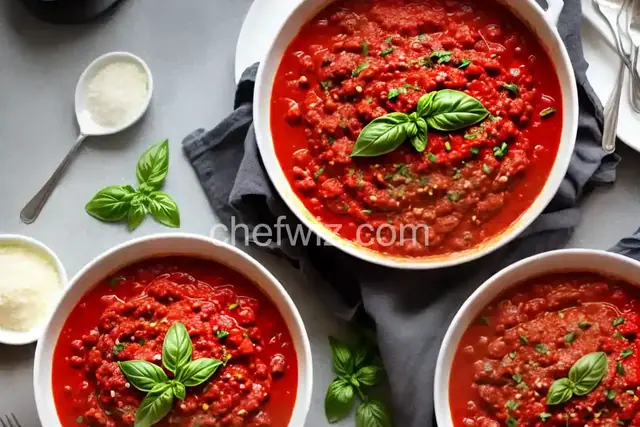 By AprilPublished
 Who doesn't love a plate of perfectly cooked spaghetti drowned in a delicious sauce?
In a large pot over medium-high heat, cook the ground beef until completely browned. Use a slotted spoon to transfer the cooked meat to a bowl. Set it aside.
Remove any excess grease from the pot, but do not clean it. Drizzle olive oil into the pot and heat it up. Add the diced onions and cook for about 1 1/2 minutes, stirring occasionally. Then, add the garlic and cook for an additional minute.
Add the crushed tomatoes, tomato paste, and marinara sauce to the pot. Stir everything together. Then, add the sugar, salt, oregano, thyme, crushed red pepper (if desired), and bay leaves. Stir again. Add the cooked ground beef back into the pot and mix everything together. Place the lid on the pot and let it simmer for 1 hour, stirring occasionally. If the mixture seems too dry, you can add a little water or low-sodium broth.
After 1 hour, add the minced parsley, basil, and Parmesan rind (if using). Stir everything together. Put the lid back on and let it simmer for another 30 minutes. Before serving, remove and discard the bay leaves.
Serve the spaghetti sauce with oiled noodles. Guests can help themselves. Garnish each serving with minced parsley and grated Parmesan (or Parmesan shavings). Serve with garlic-cheese bread.
Who doesn't love a plate of perfectly cooked spaghetti drowned in a delicious sauce? Spaghetti sauce, with its rich flavors and aromatic ingredients, has the power to transform a simple pasta dish into a culinary masterpiece. But have you ever wondered what goes into making the perfect spaghetti sauce? In this article, we will dive into the world of spaghetti sauce, uncovering its secrets and unraveling its tantalizing flavors.
Like any great dish, a spaghetti sauce needs a solid foundation. In this case, it starts with a combination of fresh tomatoes, onions, and garlic. These ingredients form the base upon which the flavors of the sauce are built. Just as a strong foundation supports a sturdy building, the right combination of tomatoes, onions, and garlic forms the backbone of a delicious spaghetti sauce.
Tomatoes are the star of the show when it comes to spaghetti sauce. Their natural sweetness and acidity provide the perfect balance of flavors. Just like a leading actor on stage, tomatoes take center stage in the sauce, captivating the taste buds with their vibrant taste. Whether you opt for fresh tomatoes or canned ones, make sure to choose ripe, juicy ones for the best results.
Onions and garlic play the supporting roles in the spaghetti sauce, adding depth and complexity to the flavors. Like a reliable sidekick, they enhance the taste of the tomatoes without overpowering them. The onions bring a subtle sweetness, while the garlic infuses the sauce with its distinctive aroma. Together, they create a harmonious blend of flavors that will leave you craving for more.
Just as a secret ingredient can elevate a dish to new heights, spices and herbs add that extra touch of magic to a spaghetti sauce. From oregano to basil, each herb and spice brings its unique flavor profile to the table. Like an orchestra conductor, you can play around with different combinations, adjusting the amounts of each spice to create a symphony of flavors that dance on your taste buds.
Oregano is the undisputed king of herbs when it comes to spaghetti sauce. Its earthy, slightly bitter taste adds depth and complexity to the sauce. Just a pinch of oregano can transform a mediocre sauce into a memorable one. Think of oregano as the secret ingredient that takes your spaghetti sauce from ordinary to extraordinary.
Basil, with its distinct aroma and slightly sweet taste, is another herb that pairs perfectly with spaghetti sauce. It brings a refreshing note to the sauce, balancing out the richness of the tomatoes. Just like a bouquet of flowers can brighten up a room, basil adds a burst of freshness to the sauce, making it even more irresistible.
Once you have gathered all the ingredients and combined them together, the next step is to let them simmer and mingle. Simmering allows the flavors to meld together, creating a harmonious symphony of tastes. Just like a slow dance, simmering brings out the best in each ingredient, allowing them to shine and create a sauce that is greater than the sum of its parts.
When it comes to simmering spaghetti sauce, patience is key. Allowing the sauce to cook low and slow lets the flavors intensify and develop. The longer you let it simmer, the richer and more complex the taste becomes. Think of it like aging a fine wine or brewing a cup of tea. The longer you wait, the more rewarding the end result will be.
Spaghetti sauce, with its tantalizing flavors and aromatic ingredients, is the perfect accompaniment to a plate of pasta. By combining fresh tomatoes, onions, and garlic as the base and adding a medley of spices and herbs, you can create a sauce that will transport you to culinary heaven. So the next time you are in the mood for a comforting and delicious meal, don't forget to whip up a batch of homemade spaghetti sauce that will leave everyone wanting more.
Yes, canned tomatoes can be used as a convenient alternative to fresh tomatoes. Just make sure to choose high-quality canned tomatoes for the best results.
The longer you let the sauce simmer, the better the flavors will develop. Aim for at least 30 minutes to an hour, but if you have the time, you can let it simmer for even longer to achieve a richer taste.
Absolutely! Spaghetti sauce freezes well and can be stored for future use. Just make sure to let it cool completely before transferring it to an airtight container and freezing.
Yes, you can certainly add meat to the sauce for an extra protein boost. Ground beef or sausage work particularly well and add a hearty touch to the sauce.
If you find your sauce to be too acidic, you can add a pinch of sugar to balance out the flavors. Alternatively, you can also add a splash of cream or butter to mellow out the acidity.
Absolutely! You can omit the meat and opt for a vegetable-based sauce instead. Add in your favorite veggies like mushrooms, bell peppers, or zucchini for a delicious vegetarian twist.
Spaghetti sauce pairs well with a variety of pasta shapes, such as spaghetti (of course!), fettuccine, penne, or even gnocchi. Choose the shape that you enjoy the most or try different ones to discover your favorite combination.
Yes, cheese can be a delightful addition to spaghetti sauce. Grated Parmesan or pecorino cheese sprinkled on top adds a savory touch and enhances the overall taste of the dish.
AprilCook, recipe developer and the heart of Chefwiz. More about April