Sous Vide: Beef Tenderloin with Lemon-Parsley Butter Recipe
Rate this recipeBe the first to rate
 By AprilPublished
 Have you ever wondered how chefs achieve that melt-in-your-mouth tenderness and perfectly cooked meat?
 By AprilPublished
 Have you ever wondered how chefs achieve that melt-in-your-mouth tenderness and perfectly cooked meat?
Use a sharp chef's knife or slicing knife to cut the tenderloin into four equal portions, each weighing approximately 6 ounces.
Place each portion on the cutting board, cut-side down, and gently flatten with your hand to a thickness of about two inches.
Season the flattened portions generously with salt and pepper.
Place the seasoned portions in a vacuum bag and add thyme sprigs.
Seal the bag and place it in a water oven that has been preheated to 130°F for medium rare or 140°F for medium doneness.
Cook the portions for at least 45 minutes, but you can cook them for up to 4 hours.
In the meantime, in a small bowl, combine 6 tablespoons of butter, parsley, garlic, lemon juice, and lemon zest.
Use a fork to beat the mixture until it is well mixed and smooth. Season with salt and pepper to taste.
When you are ready to cook the steaks, remove them from the vacuum bags and carefully dry them with paper towels.
In a heavy-bottomed skillet, melt the remaining tablespoon of butter and oil over high heat until the butter is browned and lightly smoking.
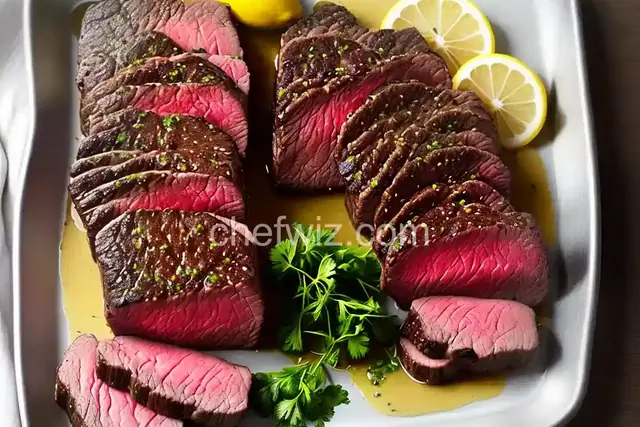
Add the steaks to the skillet and cook for about 1 minute on the first side, until they are well-browned.
Flip the steaks and brown them on the second side for about 1 minute
Have you ever wondered how chefs achieve that melt-in-your-mouth tenderness and perfectly cooked meat? The secret lies in a cooking technique called sous vide. In this article, we will explore the art of sous vide and how it can elevate your beef tenderloin to a whole new level of deliciousness.
Sous vide, which means "under vacuum" in French, is a cooking method that involves sealing food in an airtight bag and cooking it at a precise temperature in a water bath. This technique was originally developed in the 1970s by French chef Georges Pralus and has since gained popularity among professional chefs and home cooks alike.
By cooking food in a controlled environment, sous vide ensures that the meat is cooked evenly from edge to edge. This results in a tender and juicy texture that is hard to achieve with traditional cooking methods.
The key to sous vide is precision. To cook beef tenderloin sous vide, you will need a sous vide machine or immersion circulator. These devices regulate the water temperature with accuracy, allowing you to cook your meat to perfection.
First, season your beef tenderloin with your desired spices and herbs. Then, place it in a vacuum-sealed bag and remove any air to ensure proper cooking. Once your water bath is heated to the desired temperature, submerge the bagged meat into the water and let it cook for several hours.
The low and slow cooking process of sous vide allows the meat to tenderize gradually without overcooking. This results in a perfectly cooked beef tenderloin with a consistent level of doneness from edge to edge.
There are several reasons why sous vide has become a favorite cooking method among chefs:
Sous vide ensures that your meat is cooked to the exact temperature you desire. Say goodbye to overcooked or undercooked steaks!
Because the meat is cooked in its own juices, it retains maximum flavor and moisture. You'll be amazed at the depth of flavor you can achieve with sous vide.
With sous vide, you can achieve consistent results every time. No more worrying about unevenly cooked meat.
While sous vide requires longer cooking times, it is hands-off. You can set it and forget it while you attend to other tasks.
Here are some tips to help you get started with sous vide cooking:
A reliable sous vide machine or immersion circulator is essential for precise temperature control.
Season your meat before sealing it in the bag to enhance the flavor.
Sous vide works well with various cuts of meat, so don't be afraid to try something new.
After cooking sous vide, give your meat a quick sear in a hot pan to achieve a beautiful crust.
A1: Yes, you can use almost any type of meat for sous vide cooking. Just adjust the cooking time and temperature based on the cut of meat.
A2: The cooking time will depend on the thickness of your beef tenderloin. As a general guideline, you can cook it for 1-2 hours for medium-rare or 2-3 hours for medium.
A3: With sous vide, you can leave the meat in the water bath for a longer period without overcooking. However, it is recommended to follow the recommended cooking times for the best results.
A4: While a vacuum sealer is ideal for sous vide cooking, you can also use the water displacement method to remove air from the bag. Simply submerge the bag in water, allowing the water pressure to push out the air.
A5: Yes, sous vide is not only limited to meat. You can also cook vegetables, eggs, and even desserts using this technique.
A6: Sous vide is a safe cooking method as long as you follow proper food safety guidelines. It is important to cook meat at the recommended temperature to ensure that harmful bacteria are eliminated.
A7: Yes, you can sous vide frozen meat. Just make sure to adjust the cooking time accordingly.
A8: It is not recommended to reuse the sous vide cooking water as it may contain bacteria from the raw meat. It is best to discard the water after each use.
In conclusion, sous vide is a game-changer when it comes to cooking beef tenderloin. With its precise temperature control and gentle cooking process, you can achieve restaurant-quality results in the comfort of your own kitchen. So why not give sous vide a try and elevate your cooking to a whole new level?
AprilCook, recipe developer and the heart of Chefwiz. More about April