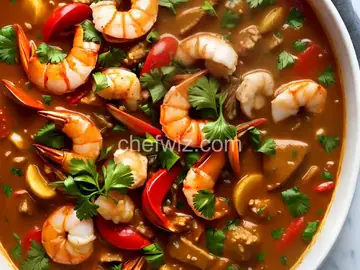
Shrimp and Sausage and Chicken Gumbo
Rate this recipeBe the first to rate
 By AprilPublished
 Are you a fan of rich and flavorful dishes that warm your soul?
 By AprilPublished
 Are you a fan of rich and flavorful dishes that warm your soul?
Cook the flour in a large pot over medium-low heat until it turns golden brown, approximately 15 minutes.
Transfer the browned flour to a bowl and place the pot back on the heat.
Increase the heat to medium and add oil to the pot. Cook and stir the onions and bell peppers in the hot oil until they slightly soften, around 7 minutes.
Stir in the garlic, thyme, and bay leaves into the onion mixture and cook for 1 minute.
Add the sausage to the onion mixture and cook until it is browned and crumbly, about 5 to 10 minutes.
Mix in the diced tomatoes with juice, shredded chicken, chicken broth, vegetable juice cocktail, browned flour, and Creole seasoning into the sausage mixture. Bring the mixture to a boil, then reduce the heat to low, cover the pot, and simmer for 20 to 30 minutes, stirring frequently.
Add the shrimp to the sausage-chicken mixture and bring it back to a simmer. Cook the shrimp until they turn pink on the outside and the meat is no longer transparent in the center, approximately 5 minutes.
Remove and discard the bay leaves. Season the gumbo with salt and pepper to taste.
Are you a fan of rich and flavorful dishes that warm your soul? Look no further than shrimp and sausage and chicken gumbo! This delicious Southern staple is a culinary masterpiece that combines the best of seafood, sausage, and chicken in a thick and aromatic broth. Each spoonful is a burst of flavors that will leave you craving for more. In this article, we will explore the wonders of gumbo and why it deserves a spot on your dining table.
Gumbo traces its roots back to the melting pot of cultures in Louisiana. This savory dish is a fusion of African, French, Spanish, and Native American influences, resulting in a unique blend of flavors and techniques. It is believed that the word "gumbo" itself comes from the West African Bantu word for okra, which is a key ingredient in the dish.
At the heart of any gumbo recipe lies the "holy trinity" of Cajun and Creole cooking – onions, bell peppers, and celery. These aromatic vegetables form the flavor foundation of the dish, providing a savory backdrop for the protein and spices to shine. Sauteed until tender, they release their natural sweetness and add depth to the gumbo.
While there are countless variations of gumbo, the trio of shrimp, sausage, and chicken is a classic combination that never fails to impress. The succulent shrimp adds a touch of sweetness, while the smoky and savory sausage brings a depth of flavor. The tender and juicy chicken completes the trio, adding heartiness to each spoonful.
If the holy trinity is the soul of gumbo, then the roux is its heart. A roux is a mixture of flour and fat that is cooked until it reaches a rich, caramel color. This magical concoction serves as a thickening agent and imparts a nutty flavor to the gumbo. The longer the roux is cooked, the darker and more complex the flavors become.
Gumbo is a labor of love that requires patience. After the roux is ready, the protein, vegetables, spices, and stock are added to the pot. The key to achieving a perfect gumbo is to let it simmer slowly over low heat, allowing the flavors to meld together and develop into a harmonious symphony. This slow-cooking process ensures that every bite is packed with deliciousness.
Before serving, gumbo is seasoned with a variety of spices, such as paprika, cayenne pepper, thyme, and bay leaves. These fragrant seasonings elevate the dish to new heights, adding complexity and a hint of spiciness. To complete the gumbo experience, it is often garnished with freshly chopped green onions and served over a bed of fluffy white rice.
Shrimp and sausage and chicken gumbo is a culinary delight that brings together the best of Southern flavors. From the rich and aromatic base to the trio of succulent proteins, every spoonful is a burst of deliciousness. Whether you enjoy it on a chilly winter evening or as a centerpiece for a festive gathering, gumbo is sure to impress. So, grab your apron, gather your ingredients, and embark on a flavorful gumbo adventure that will leave your taste buds craving for more.
Absolutely! Gumbo is a versatile dish that can be customized to your liking. Feel free to experiment with other proteins, such as crab, crawfish, or even vegetarian options like tofu or mushrooms.
Gumbo can be as mild or as spicy as you want it to be. Adjust the amount of cayenne pepper or hot sauce to suit your taste buds. Remember, it's always better to start with less spice and add more gradually.
Yes, gumbo actually tastes even better the next day! The flavors have more time to meld together, resulting in a more delicious and harmonious dish. Simply reheat it gently on the stovetop to enjoy.
Absolutely! Gumbo freezes well and can be stored in airtight containers or freezer bags for up to three months. When reheating, thaw it in the refrigerator overnight and then gently warm it on the stove.
While okra is a traditional ingredient in gumbo, you can certainly omit it if you're not a fan. The dish will still be flavorful and delicious without it.
Yes, using store-bought stock is perfectly fine. However, if you have the time, homemade stock will add an extra layer of richness to your gumbo.
Absolutely! Simply use a gluten-free flour (such as rice flour or a gluten-free all-purpose flour blend) for the roux. Be sure to check the labels of your sausage and stock to ensure they are gluten-free as well.
While rice is the traditional accompaniment to gumbo, you can certainly get creative with your sides. Cornbread, crusty French bread, or even a side salad would complement the dish beautifully.
AprilCook, recipe developer and the heart of Chefwiz. More about April