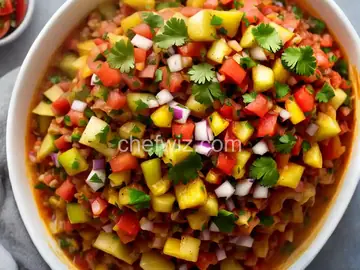
Salvadoran Salsa (Chimol)
Rate this recipeBe the first to rate
 By AprilPublished
 Are you a fan of spicy, tangy, and refreshing flavors? Look no further than Salvadoran salsa, also known as chimol!
 By AprilPublished
 Are you a fan of spicy, tangy, and refreshing flavors? Look no further than Salvadoran salsa, also known as chimol!
In a medium-sized bowl, mix together the radishes, cilantro, tomatoes, onion, salt, and red pepper flakes.
Add the lemon juice and stir well.
Allow the mixture to sit for 15 minutes before serving to allow the flavors to blend.
Are you a fan of spicy, tangy, and refreshing flavors? Look no further than Salvadoran salsa, also known as chimol! This zesty condiment is a staple in Salvadoran cuisine and pairs perfectly with a variety of dishes. In this article, we'll explore the origins of Salvadoran salsa, its ingredients, and how to enjoy it.
Salvadoran salsa has a rich history dating back to the indigenous Pipil people of El Salvador. They utilized fresh local ingredients to create a salsa that would enhance the flavors of their traditional dishes. Over time, this vibrant salsa gained popularity and became a beloved accompaniment to many Salvadoran meals.
Salvadoran salsa is made with simple yet flavorful ingredients that come together to create a burst of taste. The key components include:
Salvadoran salsa is incredibly versatile and can be enjoyed in various ways. Here are a few delicious suggestions:
Add a generous spoonful of Salvadoran salsa to your tacos, burritos, or quesadillas. The vibrant flavors will enhance each bite and elevate your favorite Mexican-inspired dishes.
Grab a bag of crispy tortilla chips and dip them into a bowl of freshly made Salvadoran salsa. The combination of the crunchy chips and the zesty salsa is a match made in snack heaven.
Grilled meats, such as chicken, beef, or fish, benefit greatly from the addition of Salvadoran salsa. The acidity and freshness of the salsa cut through the richness of the meat, creating a harmonious and mouthwatering experience.
Drizzle Salvadoran salsa over a bed of mixed greens or a chopped salad for a light and refreshing dressing. It adds a burst of flavor to the vegetables and makes your salad more exciting.
Salvadoran salsa, or chimol, is a delightful condiment that adds a burst of flavor to any dish. With its simple yet vibrant ingredients, it has become a beloved staple in Salvadoran cuisine. Whether you enjoy it on tacos, with tortilla chips, or as a salad dressing, this zesty salsa is sure to tantalize your taste buds and bring a taste of El Salvador to your plate.
Absolutely! You can control the level of spiciness by adjusting the amount of peppers you add. For a milder salsa, use fewer peppers or remove the seeds and membranes, where most of the heat resides.
Salvadoran salsa is best enjoyed fresh, but you can store it in an airtight container in the refrigerator for up to three days. However, keep in mind that the flavors will intensify over time.
While fresh tomatoes are preferred for their vibrant flavor, you can use canned tomatoes if fresh ones are not available. Just make sure to drain them before using to avoid a watery salsa.
Salvadoran salsa and pico de gallo share some similarities, but they have distinct differences. Salvadoran salsa typically includes lime juice and is often spicier, while pico de gallo is usually milder and may contain additional ingredients like garlic or avocado.
If you're not a fan of cilantro, you can substitute it with parsley. While the flavor will be slightly different, parsley still adds a fresh and herbaceous element to the salsa.
Yes, Salvadoran salsa is naturally gluten-free as it is made with fresh vegetables and lime juice. Just make sure to check the labels of any store-bought ingredients you use to ensure they are gluten-free as well.
While the traditional recipe for Salvadoran salsa focuses on tomatoes, onions, and cilantro, you can certainly get creative and add other vegetables like bell peppers, corn, or even mango for a unique twist.
If you find your salsa too acidic, you can balance it out by adding a pinch of sugar or a drizzle of honey. This will help to mellow out the acidity while still maintaining the overall flavor profile.
AprilCook, recipe developer and the heart of Chefwiz. More about April