Round Challah
Rate this recipeBe the first to rate
 By AprilPublished
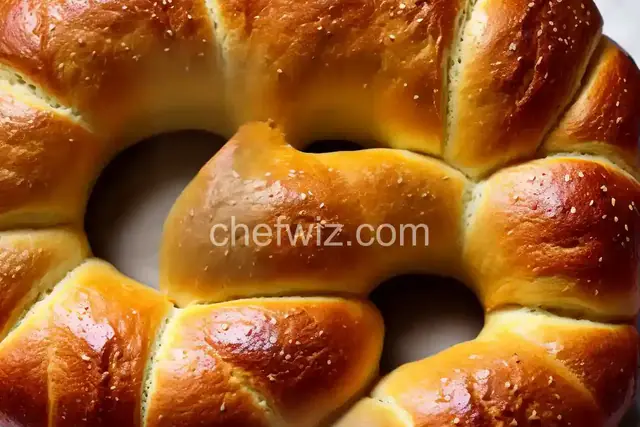
 Have you ever marveled at the beauty of a round challah? This delicious Jewish bread holds a significant place in holiday celebrations and is a staple on the Shabbat table.
 By AprilPublished
 Have you ever marveled at the beauty of a round challah? This delicious Jewish bread holds a significant place in holiday celebrations and is a staple on the Shabbat table.
In the bowl of a stand mixer fitted with a dough hook, combine flour, salt, 2 eggs, egg yolks, and vegetable oil.
In a medium bowl, combine 1/2 cup warm water, honey, and yeast.
Pour the yeast mixture into the stand mixer and mix on low.
Knead the dough on low speed until it pulls away from the bowl and is slightly sticky, for about 6 to 8 minutes.
Turn the dough onto a lightly floured surface and knead with your hands until the outside is smooth and springs back when pressed with your fingers.
Spray the inside of a large bowl with cooking spray, place the dough in the bowl, and cover it with plastic wrap.
Let the dough proof until it nearly doubles in size, which should take about 90 minutes.
Line a large baking sheet with parchment paper.
Punch the dough down once, then turn it out onto a work surface.
For swirl challah: Roll the dough out into a rope that is approximately 20-22 inches long, then spiral the rope to create a round loaf. Tuck the remaining end under the challah to secure the spiral shape.
For a 6-strand braid: Divide the dough into 6 equal pieces and roll them into ropes that are about 15 inches long. Lay 3 ropes horizontally, 1/2 inch apart,
Have you ever marveled at the beauty of a round challah? This delicious Jewish bread holds a significant place in holiday celebrations and is a staple on the Shabbat table. It's not just about the taste; it's also about the symbolism behind it. Join me as we explore the meaning behind round challah and why it has become a cherished tradition.
Round challah holds a deep spiritual meaning for the Jewish community. Its circular shape represents the cyclical nature of life and the continuous cycle of the Jewish calendar. Just as the year is constantly renewing itself, so too is the challah. When we slice into the bread, it reminds us of the ever-turning wheel of time and the opportunity for personal growth and reflection.
Moreover, the round shape of challah symbolizes unity and harmony. Unlike braided challahs, which have separate strands woven together, the round challah is one continuous shape. It represents the interconnectedness of the Jewish people and the desire for unity among all. Breaking bread together, we come together as a community, sharing in the joy and celebration of Jewish traditions.
Baking round challah is not only a culinary delight but also an opportunity to connect with tradition and engage in a meaningful activity. As you knead the dough and shape it into a round, you can reflect on the significance of the bread and the values it represents. The process of baking challah can be a meditative experience, allowing you to slow down and appreciate the beauty of the moment.
Furthermore, the aroma of freshly baked challah filling your home is simply irresistible. It brings a sense of warmth and comfort, reminding us of cherished memories and the love shared around the Shabbat table. Whether you are a seasoned baker or just starting out, the process of making round challah can be a rewarding and fulfilling experience.
Round challah takes center stage during Jewish holidays and special occasions. Rosh Hashanah, the Jewish New Year, is a time when round challah is particularly significant. The circular shape represents the hope for a sweet and abundant year ahead. It is customary to dip the challah in honey, symbolizing our desire for a sweet and fruitful year. The round challah becomes a symbol of our hopes and aspirations for the coming year.
Additionally, round challah is a beloved tradition during Sukkot, a holiday that commemorates the Jews' forty years of wandering in the desert. The round shape of the challah represents the protective sukkah, a temporary structure built during the holiday. Sharing a meal with round challah in the sukkah is a reminder of our connection to our ancestors and the importance of gratitude.
Round challah is not just a bread; it is a symbol of tradition, unity, and hope. Baking and sharing round challah connects us to our heritage and brings joy to our celebrations. So next time you see a round challah on the table, take a moment to appreciate the beauty and significance behind this beloved Jewish bread.
Round challah symbolizes the cyclical nature of life and the continuous cycle of the Jewish calendar. It also represents unity and harmony within the Jewish community.
Round challah is particularly significant during Rosh Hashanah, the Jewish New Year, and Sukkot, a holiday that commemorates the Jews' wandering in the desert.
Absolutely! Making round challah at home is a wonderful way to connect with tradition and enjoy the process of baking. There are many recipes and tutorials available online to guide you.
While braided challah has separate strands woven together, round challah is one continuous shape. The round shape symbolizes unity, while the braided shape represents the intertwining of different aspects of life.
Round challah is often dipped in honey during Rosh Hashanah to symbolize the hope for a sweet and abundant year ahead.
Absolutely! Round challah can be used for sandwiches just like any other bread. Its soft and fluffy texture makes it a delicious choice.
Yes, you can freeze round challah. Wrap it tightly in plastic wrap or place it in a freezer bag before freezing. When ready to enjoy, thaw it at room temperature or briefly warm it in the oven.
Yes, there are various toppings and fillings you can add to round challah to enhance its flavor. Popular options include sesame seeds, poppy seeds, raisins, or cinnamon-sugar swirls.
AprilCook, recipe developer and the heart of Chefwiz. More about April