Pot Stickers
Rate this recipeBe the first to rate
 By AprilPublished
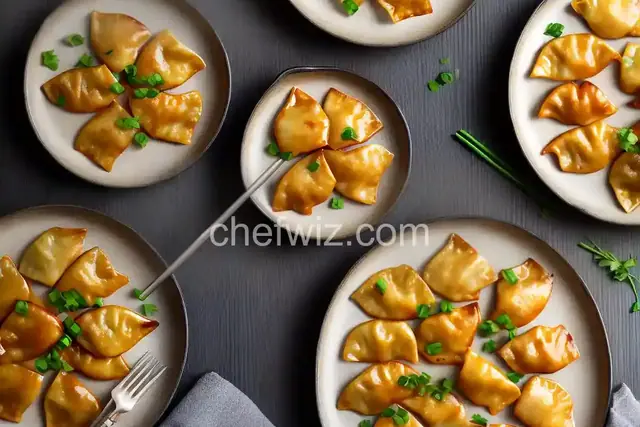
 Have you ever tried pot stickers? These delicious dumplings are a popular dish in Asian cuisine, known for their savory filling and crispy exterior.
 By AprilPublished
 Have you ever tried pot stickers? These delicious dumplings are a popular dish in Asian cuisine, known for their savory filling and crispy exterior.
In a large bowl, mix together pork, broth, the white parts of the green onions, garlic, soy sauce, sesame oil, ginger, fish sauce (if using), and egg until fully combined.
Prepare a small baking sheet by lining it with parchment paper and lightly dusting it with flour.
Take 4 dumpling wrappers and place them on your work surface, keeping the remaining wrappers covered with a clean kitchen towel.
Spoon a heaping teaspoon of the pork filling just below the center of each wrapper.
Moisten the edge of each wrapper with water and fold the top half over the bottom half, pinching the border to seal. Alternatively, pleat the dumplings by making small folds starting on one edge and ending on the other, pinching firmly after each fold.
Place the prepared dumplings on the baking sheet and continue stuffing and sealing until all the pork mixture is used.
Heat 1 tablespoon of vegetable oil in a large skillet over medium heat.
Add the dumplings to the skillet in an even layer, sealed side up. (It's okay if they touch each other!)
Fry the dumplings for 1 to 2 minutes, or until golden on the underside.
Add 1/3 cup of water to the skillet, lower the heat to medium-low, and cover with a tight-fitting lid.
Allow the dumplings to steam
Have you ever tried pot stickers? These delicious dumplings are a popular dish in Asian cuisine, known for their savory filling and crispy exterior. Whether you're a fan of Chinese, Japanese, or Korean food, pot stickers are sure to satisfy your taste buds. In this article, we'll explore the origins of pot stickers and why they have become a beloved dish worldwide.
Pot stickers have a rich history that dates back centuries. Legend has it that a Chinese chef accidentally invented them when he was cooking dumplings. He got distracted and left them on the stove for too long, causing the bottoms to brown and stick to the pot. Instead of discarding the dumplings, he decided to serve them, and thus, pot stickers were born.
What makes pot stickers so delicious is the perfect combination of the filling and the wrapper. The filling can be made with various ingredients, such as ground pork, shrimp, or vegetables, mixed with spices and seasonings. The wrapper, usually made from dough, is thin and delicate, providing a delightful contrast to the flavorful filling. Together, they create a harmonious blend of textures and flavors that make pot stickers irresistible.
When it comes to cooking pot stickers, you have a few options. Steamed pot stickers are light and tender, while pan-fried ones have a crispy exterior and a juicy filling. Boiled pot stickers are a healthier alternative and are often served in soups. Whichever cooking method you choose, you'll end up with a delicious plate of pot stickers.
No pot sticker is complete without a dipping sauce. The sauce adds an extra layer of flavor and enhances the overall experience. Traditional pot sticker sauce is a combination of soy sauce, vinegar, sesame oil, and chili oil. However, you can get creative and experiment with different ingredients to create your own unique sauce.
While pot stickers are undeniably delicious, they also offer some health benefits. The filling often includes vegetables, which are packed with essential vitamins and minerals. Additionally, the cooking method can be modified to reduce the amount of oil used, making pot stickers a healthier choice compared to deep-fried alternatives.
In conclusion, pot stickers are a delightful dish that has captivated the taste buds of people around the world. With their rich history, perfect combination of filling and wrapper, and various cooking techniques, pot stickers offer a unique culinary experience. So, why not give them a try and savor the flavors of Asia?
Traditional pot stickers are not gluten-free as they are made with wheat flour wrappers. However, there are gluten-free alternatives available, such as wrappers made from rice flour or tapioca starch.
Yes, you can freeze pot stickers. Simply arrange them in a single layer on a baking sheet and place them in the freezer until they are frozen solid. Then, transfer them to a freezer bag or container for long-term storage.
Absolutely! You can make delicious vegetarian pot stickers by replacing the meat with ingredients like tofu, mushrooms, or shredded cabbage. The filling options are endless, so get creative!
To prevent pot stickers from sticking to the pan, make sure to use a non-stick pan and coat it with oil before adding the dumplings. Also, avoid overcrowding the pan and give them enough space to cook evenly.
Yes, you can reheat leftover pot stickers. Simply place them in a steamer or microwave for a few minutes until they are heated through. However, note that they may not be as crispy as when they were freshly cooked.
While pot stickers are a type of dumpling, not all dumplings are pot stickers. Pot stickers are specifically known for their pan-fried cooking method and crispy bottom.
Yes, you can make pot stickers in advance. Prepare the dumplings as usual, but instead of cooking them immediately, place them on a baking sheet and freeze them. Once frozen, transfer them to a freezer bag or container for future use.
Yes, you can use store-bought wrappers for pot stickers. They are convenient and save time, especially if you're short on time or prefer not to make the wrappers from scratch. Just make sure to follow the instructions on the packaging for best results.
AprilCook, recipe developer and the heart of Chefwiz. More about April