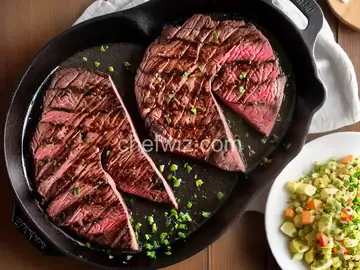
Reverse Sear Steak
Rate this recipeBe the first to rate
 By AprilPublished
 Do you ever wonder how restaurants manage to serve steaks that are perfectly cooked from edge to edge?
 By AprilPublished
 Do you ever wonder how restaurants manage to serve steaks that are perfectly cooked from edge to edge?
Preheat the oven to 225°F.
Season the steak with salt and pepper.
Place the steak on a wire rack set in a sheet tray.
Roast the steak in the oven for 50 to 55 minutes, or until the internal temperature reaches 125°F for medium rare. Adjust the timing if you prefer a more well-done steak.
Heat oil in a medium cast iron skillet over medium-high heat until it is almost smoking.
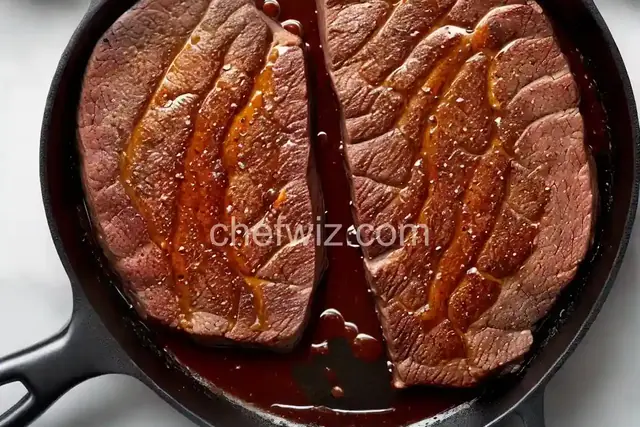
Add the steak to the skillet and cook for about 1 minute on each side, until a deep golden crust forms.
Reduce the heat to medium-low and add butter, garlic, and rosemary to the pan.
Carefully tilt the skillet towards you so that the melting butter forms a pool at the bottom.
Baste the steak with the melted butter using a spoon, making sure the rosemary and garlic are submerged in the butter.
If there is excess fat around the sides of the steak, use tongs to hold up the steak and render out the fat.
Transfer the steak to a cutting board and let it rest for about 10 minutes to retain the juices.
Slice the steak against the grain at a slight angle.
Sprinkle with flaky salt and additional pepper.
Do you ever wonder how restaurants manage to serve steaks that are perfectly cooked from edge to edge? The secret lies in a cooking technique known as the reverse sear. In this article, we will explore what reverse searing is, how it works, and why it's the best method for achieving that juicy and tender steak you dream of sinking your teeth into.
Reverse searing is a cooking technique that involves slow-cooking the steak at a low temperature first, and then finishing it off with a quick sear at high heat. Unlike traditional methods where the steak is seared first and then cooked, the reverse sear method ensures that the steak is evenly cooked throughout, resulting in a perfectly tender and juicy piece of meat.
When you reverse sear a steak, you start by cooking it in a low-temperature environment, such as an oven or a smoker. This slow and gentle cooking allows the steak to heat up slowly and evenly, breaking down the collagen and connective tissues without overcooking the meat. As a result, you get a steak that is tender and moist.
Once the steak reaches the desired internal temperature, it's time for the sear. The sear is done at a high temperature, either on a stovetop or a grill. This step gives the steak a beautiful crust on the outside while keeping the inside tender and juicy.
Reverse searing offers several advantages over traditional cooking methods. Firstly, it allows for precise control of the cooking temperature, ensuring that the steak is cooked to perfection. Secondly, it eliminates the risk of overcooking the steak, as the slow cooking process prevents the meat from becoming dry and tough. Lastly, reverse searing gives you that coveted edge-to-edge doneness, resulting in a steak that is uniformly cooked.
Imagine sinking your knife into a steak that is perfectly pink throughout, with a caramelized crust on the outside. The tenderness and juiciness are unparalleled, making every bite a sensory delight. That's what you can achieve with the reverse sear method.
Now that you understand the concept behind reverse searing, it's time to put it into practice. Here are the steps to master this cooking technique:
The reverse sear method works well with thick cuts of steak, such as ribeye, striploin, or tenderloin. The thickness allows for even cooking.
Generously season the steak with salt and pepper or your favorite steak rub. This will enhance the flavors of the meat.
Preheat your oven or smoker to a low temperature, around 200째F (93째C). Place the steak on a wire rack over a baking sheet and cook until it reaches your desired internal temperature. Use a meat thermometer for accuracy.
Heat a cast-iron skillet or grill over high heat. Add a bit of oil to prevent sticking. Sear the steak for a couple of minutes on each side until you achieve a beautiful crust.
Allow the steak to rest for a few minutes before slicing. This allows the juices to redistribute, ensuring a moist and flavorful steak. Serve with your favorite side dishes and enjoy!
Yes, you can! Simply preheat one side of the grill on low heat and place the steak on the other side. Follow the same steps as you would in the oven.
The ideal internal temperature for a medium-rare steak is around 135째F (57째C). Adjust cooking times accordingly for different levels of doneness.
Yes, you can. However, it's recommended to thaw the steak first for more even cooking.
Cooking times will vary depending on the thickness of the steak and the desired doneness. As a general guideline, plan for around 45 minutes to 1 hour.
Absolutely! The reverse sear method works well with other cuts, such as pork chops and lamb racks.
While it's not mandatory, using a meat thermometer will ensure that you cook the steak to the perfect internal temperature, resulting in a consistent and delicious outcome.
Yes, you can. Set up the grill for indirect cooking by placing the coals on one side and the steak on the other. Monitor the temperature closely to maintain the desired heat.
Definitely! Many pitmasters swear by the reverse sear technique when smoking steaks. Just ensure you have a reliable thermometer to monitor the temperature inside the smoker.
In conclusion, the reverse sear method is a game-changer when it comes to cooking steaks. It allows for precise control over the cooking process, resulting in a perfectly cooked steak that is tender, juicy, and packed with flavor. So, why not give it a try? Elevate your steak game and impress your friends and family with a restaurant-quality meal right in the comfort of your own home!
AprilCook, recipe developer and the heart of Chefwiz. More about April