Cast-Iron Skillet Steak
Rate this recipeBe the first to rate
 By AprilPublished
 Calling all meat lovers! Are you ready to experience the ultimate sizzling delight?
 By AprilPublished
 Calling all meat lovers! Are you ready to experience the ultimate sizzling delight?
Pat the steak dry on both sides and season generously with salt and pepper, using approximately ½ to 1 teaspoon of salt per side.
Heat vegetable oil in a cast-iron skillet over medium-high heat until it starts to shimmer.
Place the steak in the skillet and reduce the heat to medium. Cook without disturbing the steak until a deep golden brown crust forms on the bottom, which should take about 2 minutes. (You can check the color by lifting the edge of the steak if necessary.)
Flip the steak and immediately add butter to the side of the skillet closest to you. Add garlic and thyme to the opposite side of the skillet.
Using an oven mitt to hold the skillet handle, tilt the skillet towards you at a 30-degree angle. Spoon the melting butter over the garlic, thyme, and steak, basting the steak with the butter. Continue basting until the steak is glossy and reaches an internal temperature of 125°F (for medium-rare).
Transfer the steak to a plate and allow it to rest for at least 5 minutes before slicing and serving.
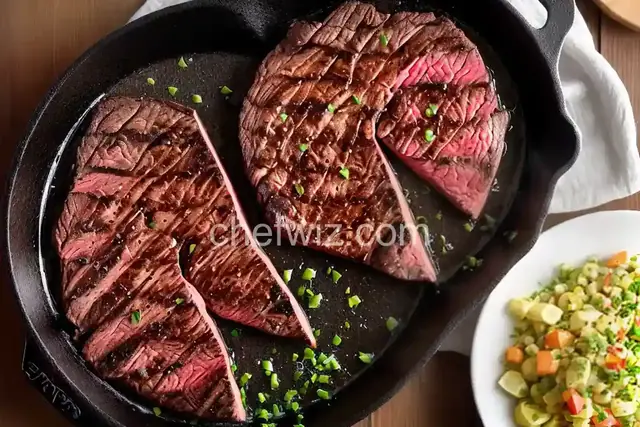
Calling all meat lovers! Are you ready to experience the ultimate sizzling delight? Look no further than the cast-iron skillet steak. Picture this: a thick, juicy steak cooked to perfection, with a mouthwatering sear on the outside and a tender, succulent center. It's a steak lover's dream come true.
What makes the cast-iron skillet the perfect tool for cooking steak? Well, imagine a superhero with superpowers. That's the cast-iron skillet. Its ability to distribute heat evenly and retain it for a longer period of time is unparalleled. This means you get that beautiful, caramelized crust on the outside while keeping the steak juicy and flavorful on the inside.
Not only does the cast-iron skillet provide exceptional heat retention, but it also imparts a unique flavor to the steak. As the fat from the steak renders and drips onto the hot surface, it creates a delicious crust that adds depth and richness to the overall taste. It's like adding a secret ingredient that takes your steak to a whole new level.
Before you embark on your culinary journey, it's important to prepare your steak properly. Start by choosing a high-quality cut of meat. Whether it's a ribeye, New York strip, or filet mignon, make sure it's well-marbled with fat. This marbling not only enhances the flavor but also helps keep the steak moist and tender during cooking.
Remember to bring the steak to room temperature before cooking. This allows for more even cooking and ensures the steak cooks to your desired level of doneness. Season the steak generously with salt and pepper or your favorite steak seasoning. Let the flavors infuse into the meat for at least 30 minutes before cooking.
Now comes the exciting part – searing the steak. Heat your cast-iron skillet over high heat until it's smoking hot. This is crucial for achieving that beautiful crust. Carefully place the steak in the skillet and let it sear for a few minutes on each side. Resist the temptation to move it around too much. Let it develop that golden crust before flipping.
Once you've achieved a nice sear on both sides, you can finish cooking the steak to your desired doneness. For a rare steak, aim for an internal temperature of around 125°F (52°C). If you prefer medium-rare, go for 135°F (57°C). Use a meat thermometer to ensure accuracy and avoid overcooking.
Cooking a steak in a cast-iron skillet is a culinary adventure that every meat lover should embark on. The combination of the skillet's heat retention and the steak's natural flavors creates a truly memorable dining experience. So grab your cast-iron skillet, choose your favorite cut of steak, and get ready to savor a sizzling delight that will leave you craving for more.
While a cast-iron skillet is the ideal choice for cooking steak, you can still achieve decent results with other types of skillets. Just make sure the skillet is oven-safe and can withstand high heat.
Resting the steak is crucial for locking in the juices and allowing the meat to relax. Let it rest for about 5-10 minutes before slicing into it. This will ensure a tender and juicy steak.
It's best to thaw the steak completely before cooking. This ensures even cooking and prevents the steak from becoming tough. If you're short on time, you can use the defrost function on your microwave or thaw it in the refrigerator overnight.
The possibilities are endless! Pair your steak with classic side dishes like mashed potatoes, roasted vegetables, or a fresh green salad. You can also elevate your meal with a decadent sauce or compound butter.
After each use, clean your cast-iron skillet with hot water and a stiff brush. Avoid using soap, as it can strip away the seasoning. Dry it thoroughly and apply a thin layer of oil to prevent rust. With proper care, your cast-iron skillet will become even more seasoned and develop a natural non-stick surface.
Absolutely! Preheat your gas grill to high heat and follow the same steps for searing the steak. Once seared, move the steak to indirect heat and continue cooking until your desired doneness is reached.
Marinating the steak can add extra flavor and tenderness. However, due to the high heat of the cast-iron skillet, it's best to keep the marinade simple to avoid excessive charring. Opt for a marinade with minimal sugar content and avoid acidic ingredients that can break down the meat too much.
Definitely! The cast-iron skillet is versatile and can be used to cook various types of meat, such as chicken, pork chops, or even fish fillets. Adjust the cooking time accordingly to ensure proper doneness.
AprilCook, recipe developer and the heart of Chefwiz. More about April