Pickled Garlic
Rate this recipeBe the first to rate
 By AprilPublished
 Have you ever wondered how to make pickled garlic? Well, you're in luck!
 By AprilPublished
 Have you ever wondered how to make pickled garlic? Well, you're in luck!
In a medium bowl, place the garlic cloves, making sure to cut the larger cloves in half.
Add the red bell pepper to the bowl and mix everything together.
In a large saucepan, set the heat to medium-high and add the distilled white vinegar and white sugar.
Take the ground dry mustard and celery seed and wrap them in a spice bag. Place the spice bag into the liquid mixture.
Bring the liquid mixture to a boil and let it boil for 5 minutes.
Stir in the garlic and pepper into the boiling mixture.
Continue boiling for an additional 5 minutes.
Remove the saucepan from the heat and discard the spice bag.
Take sterile containers and place the garlic and peppers into them, leaving about 1 inch of space from the top.
Fill the containers with the remaining liquid, making sure to leave about 1/4 inch of space from the top.
Seal the containers and store them in the refrigerator for approximately three weeks before serving.
Have you ever wondered how to make pickled garlic? Well, you're in luck! In this article, we will explore the art of pickling garlic and share a simple yet delicious recipe. So, let's dive in and discover the wonders of pickled garlic!
Pickling is like a magical transformation for fruits and vegetables. It takes ordinary ingredients and elevates them to new heights of flavor and tanginess. Just like a caterpillar turning into a beautiful butterfly, pickling turns raw garlic into a delightful treat that bursts with unique flavors.
Garlic is already a versatile ingredient, adding depth and aroma to countless dishes. But when you pickle garlic, it becomes even more versatile. The pickling process mellows the sharpness of raw garlic, resulting in a more subtle and complex flavor profile. It adds a tangy twist to your favorite recipes and can be enjoyed on its own as a savory snack.
Now, let's get down to business and learn how to make pickled garlic. The recipe is simple, and you'll only need a few ingredients: garlic cloves, white vinegar, water, sugar, and salt. With these humble ingredients, you can create a jar full of pickled garlic goodness.
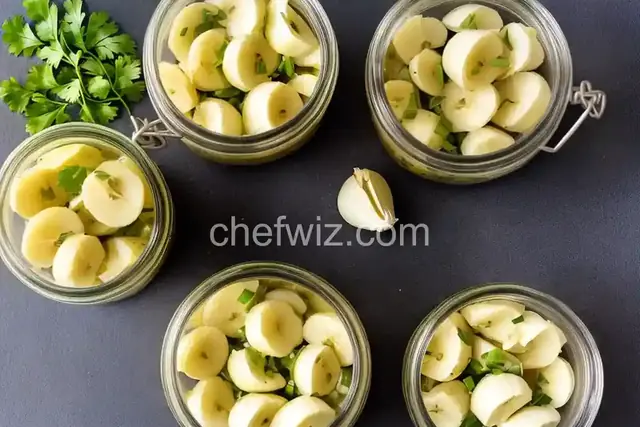
Start by peeling the garlic cloves and placing them in a clean jar. You can use as many cloves as you like, depending on your preference for garlic intensity.
In a saucepan, combine the white vinegar, water, sugar, and salt. Bring the mixture to a boil, stirring until the sugar and salt dissolve completely. This pickling liquid will infuse the garlic cloves with its tangy goodness.
Pour the hot pickling liquid over the garlic cloves in the jar, making sure they are fully submerged. Seal the jar tightly and let it cool to room temperature. Once cooled, refrigerate the jar for at least a week to allow the flavors to develop. The longer you wait, the more flavorful the pickled garlic will become.
Pickled garlic is a delightful condiment that adds a zesty twist to any dish. Its tangy flavor and versatility make it a must-have in your pantry. So, why not give it a try? With a few simple ingredients and some patience, you can create your own jar of pickled garlic magic. Happy pickling!
A1: Properly stored pickled garlic can last for several months in the refrigerator.
A2: Absolutely! Pickled garlic adds a unique tangy flavor to various dishes, such as pasta, salads, or stir-fries.
A3: Yes, you can reuse the pickling liquid to pickle other vegetables or even make salad dressings.
A4: Of course! Feel free to experiment with the amount of sugar and vinegar to achieve your desired flavor profile.
A5: While pickled garlic is delicious, it is not a substitute for medical advice or treatment.
A6: Absolutely! Experiment with adding herbs like rosemary or spices like chili flakes to customize the flavor of your pickled garlic.
A7: Yes, you can use different types of vinegar, such as apple cider vinegar or rice vinegar, to create unique flavors.
A8: While it's possible to pickle whole garlic bulbs, keep in mind that the pickling process may take longer due to their larger size.
AprilCook, recipe developer and the heart of Chefwiz. More about April