Perfect Roast Turkey
Rate this recipeBe the first to rate
 By AprilPublished
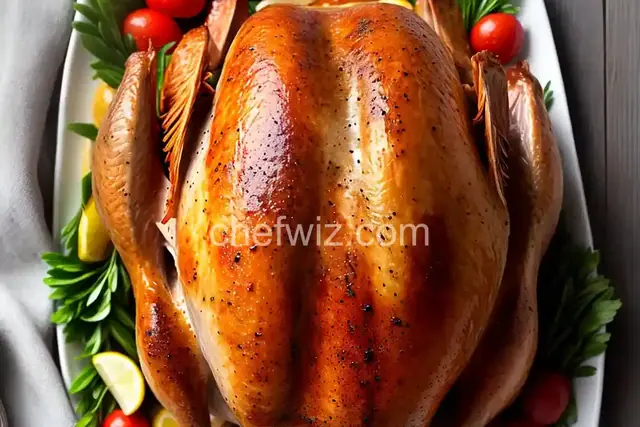
 Who doesn't love a delicious roast turkey? The golden brown skin, the juicy meat, and the aroma that fills the entire house - it's a meal that brings everyone together.
 By AprilPublished
 Who doesn't love a delicious roast turkey? The golden brown skin, the juicy meat, and the aroma that fills the entire house - it's a meal that brings everyone together.
Preheat the oven to 350 degrees F.
Remove the giblets from the turkey and rinse the turkey thoroughly inside and out. Discard any excess fat and remove any remaining pin feathers. Pat the outside of the turkey dry.
Place the turkey in a large roasting pan.
Season the inside of the turkey cavity generously with salt and pepper.
Stuff the cavity with thyme, lemon, 1 onion (quartered), and garlic.
Brush the outside of the turkey with butter and sprinkle with salt and pepper.
Tie the legs together with kitchen string and tuck the wing tips under the body of the turkey.
Peel and slice the remaining onions. Toss them with olive oil and scatter them around the turkey.
Roast the turkey in the preheated oven for 1 hour.
Toss carrots, potatoes, and fennel with olive oil. Add them to the roasting pan.
Return the pan to the oven and continue roasting for approximately 1 1/2 hours, or until the juices run clear when you cut between the leg and thigh of the turkey.
Transfer the turkey to a cutting board and cover it with foil for 20 minutes.
Stir the vegetables in the roasting pan and return the pan to the oven. Cook the vegetables while the turkey rests.
Slice the turkey and arrange it on a serving platter with the
Who doesn't love a delicious roast turkey? The golden brown skin, the juicy meat, and the aroma that fills the entire house - it's a meal that brings everyone together. Whether it's Thanksgiving or any other special occasion, a perfectly roasted turkey is the star of the show. In this article, we'll explore some tips and tricks to help you achieve a perfect roast turkey every time.
When it comes to roasting a turkey, choosing the right bird is crucial. Look for a turkey that is plump, with a good amount of fat under the skin. This will ensure that your turkey stays moist and flavorful throughout the cooking process. Don't forget to factor in the size of your turkey - you'll need to allow enough time for it to cook thoroughly.
Before you start roasting, make sure to properly prepare the turkey. This involves removing the giblets and neck from the cavity, rinsing the turkey under cold water, and patting it dry with paper towels. Season the bird generously with salt and pepper, and if desired, you can also add some herbs and spices for extra flavor.
Now it's time to get that turkey in the oven! Preheat your oven to the recommended temperature, usually around 325°F. Place the turkey on a rack in a roasting pan, breast side up. This allows the heat to circulate evenly around the bird, ensuring that it cooks evenly. Cover the turkey loosely with foil to prevent the skin from burning, and roast according to the recommended cooking time based on the weight of your turkey.
While the turkey is roasting, basting is an important step to keep the meat moist and flavorful. Basting involves spooning the juices from the bottom of the pan over the turkey periodically throughout the cooking process. This helps to prevent the meat from drying out and adds extra flavor to the skin. But be careful not to open the oven door too often, as this can cause the temperature to drop and affect the cooking time.
How do you know when your turkey is done? The best way to determine doneness is by using a meat thermometer. Insert the thermometer into the thickest part of the thigh without touching the bone. The turkey is ready when the internal temperature reaches 165°F. If you don't have a meat thermometer, you can also check for doneness by piercing the thigh with a fork. If the juices run clear, your turkey is done.
Once your turkey is done, resist the temptation to carve it right away. Let it rest for at least 30 minutes before slicing. This allows the juices to redistribute throughout the meat, resulting in a more flavorful and tender turkey. Cover the turkey with foil to keep it warm during this resting period.
Now comes the exciting part - carving and serving your perfectly roasted turkey! Use a sharp carving knife to slice the turkey into thin, even slices. Arrange the slices on a platter and garnish with fresh herbs for a beautiful presentation. Serve with your favorite side dishes and enjoy the fruits of your labor with your loved ones.
Roasting a turkey may seem intimidating, but with the right techniques and a little bit of practice, you can achieve a perfect roast every time. Remember to choose the right turkey, properly prepare it, and follow the recommended cooking time and temperature. Don't forget to baste the turkey and let it rest before carving. With these tips in mind, you'll be well on your way to serving a delicious roast turkey that will be the highlight of any meal.
The cooking time for a turkey depends on its weight. As a general rule, you'll need to roast the turkey for about 15 minutes per pound. However, it's always best to refer to a reliable recipe or cooking chart for specific cooking times.
While it's traditional to stuff the turkey, it's not recommended for food safety reasons. Stuffing the turkey can create a breeding ground for bacteria, as the stuffing may not reach a safe temperature. It's safer to cook the stuffing separately.
Basting the turkey throughout the cooking process helps to keep the meat moist. You can also consider brining the turkey before roasting, as this adds moisture and enhances the flavor.
It's not recommended to roast a frozen turkey, as it will take much longer to cook and may result in uneven cooking. It's best to thaw the turkey completely before roasting.
Leftover turkey can be used in a variety of delicious recipes, such as turkey sandwiches, turkey soup, or turkey pot pie. Get creative and enjoy the leftovers in different ways!
To achieve crispy skin, you can brush the turkey with melted butter or oil before roasting. You can also remove the foil during the last 30 minutes of cooking to allow the skin to brown and crisp up.
Yes, a convection oven can be used to roast a turkey. Just remember to adjust the cooking time and temperature accordingly, as convection ovens cook faster than conventional ovens.
Leftover turkey should be stored in an airtight container in the refrigerator. It's best to consume the leftovers within 3-4 days or freeze them for future use.
AprilCook, recipe developer and the heart of Chefwiz. More about April