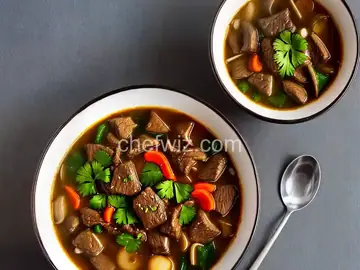
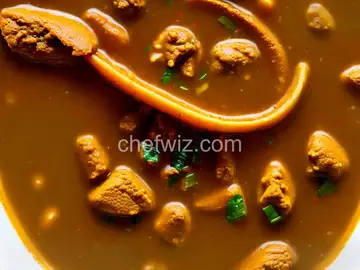
Pepper soup
Rate this recipeBe the first to rate
 By AprilPublished
 Do you enjoy the sensation of heat and spice dancing on your tongue?
 By AprilPublished
 Do you enjoy the sensation of heat and spice dancing on your tongue?
Cut the meat into pieces of a reasonable size and wash it thoroughly.
Place the meat in a deep saucepan and dice the onions.
Add the diced onions, maggie cube, tomato puree, salt, 1 1/2 cups of water, and the scotch bonnet pepper (use two for extra spiciness!). Cook on medium-high heat for 10 minutes, stirring occasionally.
Remove the scotch bonnet pepper and blend it with the plum tomato.
Pour the blended tomato mixture onto the meat. Rinse the blender with 2 cups of water and add it to the saucepan. If the consistency is too thick, add additional water. Simmer on medium-low heat for about 20 minutes.
Serve, relax, and enjoy!
Do you enjoy the sensation of heat and spice dancing on your tongue? If so, then pepper soup is the perfect dish for you! This flavorful and aromatic soup is a staple in many African cuisines, known for its fiery kick and rich blend of spices. In this article, we will explore the wonders of pepper soup, from its origins to its diverse variations. So, let's dive into the world of this tantalizing dish!
Like many traditional dishes, the exact origins of pepper soup are difficult to trace. However, it is believed to have originated in West Africa, where it quickly gained popularity due to its unique flavor profile. Over time, pepper soup has become a beloved dish in many African countries, with each region adding its own twist to this culinary delight.
What makes pepper soup so special? It's the combination of carefully selected ingredients that come together to create a symphony of flavors. Common ingredients include meat (such as goat, chicken, or fish), a variety of spices (such as cloves, ginger, and garlic), and of course, an assortment of hot peppers. These ingredients work harmoniously to deliver a spicy and aromatic experience that is truly unforgettable.
Not only is pepper soup a treat for your taste buds, but it also offers several health benefits. The spices used in pepper soup, such as ginger and garlic, are known for their anti-inflammatory properties and may help boost your immune system. Additionally, the heat from the peppers can help clear sinuses and improve digestion. So, you can enjoy this delicious soup while nourishing your body at the same time!
Just like any popular dish, pepper soup has evolved over time, resulting in numerous regional variations. In Nigeria, for example, you'll find a spicy goat meat pepper soup known as "Nkwobi," while in Cameroon, fish pepper soup is a beloved choice. Each variation adds its own unique twist, making the world of pepper soup even more exciting to explore.
Nkwobi is a popular variation of pepper soup in Nigeria, specifically in the Igbo culture. It is made with goat meat, which is simmered in a flavorful broth until tender. The broth is infused with an array of spices, including utazi leaves, which add a bitter yet refreshing taste. Nkwobi is often enjoyed with a cold drink, making it the perfect dish for gatherings and celebrations.
If you prefer seafood, then fish pepper soup is the variation for you. In this version, fresh fish, such as tilapia or catfish, is used as the main ingredient. The fish is simmered in a fragrant broth infused with spices and herbs like scent leaf and uziza. The result is a delightful bowl of soup that showcases the natural flavors of the fish while incorporating the signature spiciness of pepper soup.
Pepper soup is more than just a soup; it's a culinary adventure that combines heat, spice, and a multitude of flavors. Whether you prefer the traditional version or one of the exciting variations, pepper soup is sure to satisfy your cravings for a truly vibrant and delicious dish. So, why not embark on this spicy journey and discover the wonders of pepper soup for yourself?
No, pepper soup is not just about the heat. While it does have a spicy kick, it also offers a complex blend of flavors from the various spices used. The heat is balanced with aromatic ingredients, resulting in a well-rounded taste experience.
Absolutely! While traditional pepper soup includes meat or fish, you can easily create a vegetarian version by substituting the animal protein with vegetables or tofu. The key is to incorporate the same aromatic spices and peppers to achieve the distinctive flavor of pepper soup.
If you prefer a milder version of pepper soup, you can reduce the amount of hot peppers used or remove the seeds, which contain most of the heat. You can also balance the spiciness by adding more broth or coconut milk to dilute the intensity of the spices.
Absolutely! Pepper soup freezes well, making it a convenient option for meal prep. Allow the soup to cool completely before transferring it to a freezer-safe container. When you're ready to enjoy it, simply thaw and reheat on the stove or in the microwave.
Pepper soup is often enjoyed on its own as a light meal or appetizer. However, if you're looking to make it a heartier meal, you can serve it with a side of boiled yam, plantains, or rice. These accompaniments help balance the spiciness of the soup and add a satisfying element to the dish.
While pepper soup is known for its spiciness, you can adjust the level of heat to make it suitable for children. Use milder peppers or reduce the amount of spice in the broth. It's always a good idea to let children gradually develop a taste for spiciness, starting with milder flavors.
If you have leftover pepper soup, store it in an airtight container in the refrigerator. It will stay fresh for up to 3-4 days. When reheating, you may need to add a splash of water or broth as the soup may thicken slightly in the fridge.
Absolutely! One of the beauties of pepper soup is its versatility. Feel free to experiment with different spices and herbs to create a flavor profile that suits your taste buds. Just remember to balance the flavors and not overpower the dish with any one spice.
AprilCook, recipe developer and the heart of Chefwiz. More about April