Pad Thai
Rate this recipeBe the first to rate
 By AprilPublished
 Are you a fan of Thai cuisine? Do you crave the perfect balance of sweet, sour, salty, and spicy flavors?
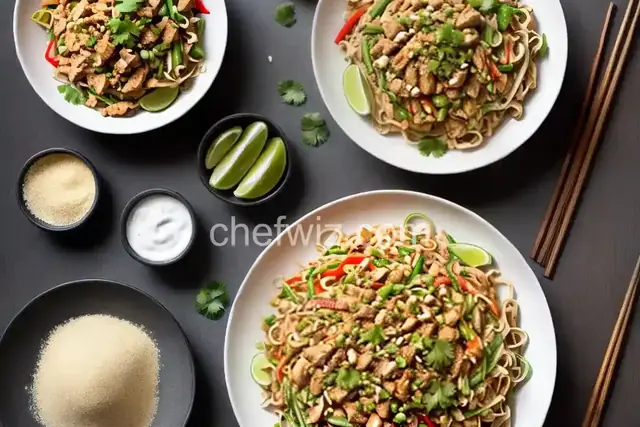 By AprilPublished
 Are you a fan of Thai cuisine? Do you crave the perfect balance of sweet, sour, salty, and spicy flavors?
Collect all the necessary ingredients.
Place the rice noodles in cold water and let them soak until they become soft, which usually takes around 30 to 50 minutes. Once they are soft, drain them and set them aside.
In the meantime, heat the butter in a wok and add the chicken. Cook the chicken until it turns brown, then remove it from the wok and set it aside.
Heat the oil in the wok over medium-high heat. Crack the eggs into the hot oil and cook them until they become firm. Once firm, stir in the cooked chicken and continue cooking for 5 minutes.
Add the softened noodles, sugar, fish sauce, vinegar, and red pepper to the wok. Mix everything well until the noodles become tender. Taste and adjust the seasonings if needed.
Stir the bean sprouts into the wok and cook for an additional 3 minutes.
Serve the dish topped with green onions, crushed peanuts, and a wedge of lemon.
Are you a fan of Thai cuisine? Do you crave the perfect balance of sweet, sour, salty, and spicy flavors? Look no further than Pad Thai, the iconic Thai dish that has captured the hearts and taste buds of people all over the world. In this article, we will explore what makes Pad Thai so special and how you can recreate this mouthwatering dish at home.
Pad Thai is a stir-fried noodle dish that originated in Thailand. It is made with rice noodles, eggs, tofu or shrimp, bean sprouts, and a combination of vegetables. The dish is typically flavored with fish sauce, tamarind paste, sugar, and chili powder, giving it a unique and delicious taste.
One of the reasons why Pad Thai is so popular is its perfect balance of flavors. The sweetness from the sugar, the tanginess from the tamarind paste, the saltiness from the fish sauce, and the spiciness from the chili powder all come together to create a harmonious explosion of taste in every bite.
Imagine biting into a forkful of soft rice noodles coated in a savory sauce that is both sweet and sour. The crunch of fresh bean sprouts and the richness of scrambled eggs or succulent shrimp add layers of texture and flavor to the dish. It's a symphony of flavors that will leave you craving for more.
Want to try your hand at making Pad Thai at home? It's easier than you might think. Start by soaking rice noodles in warm water until they are soft and pliable. In a hot wok or skillet, scramble some eggs and set them aside. In the same pan, stir-fry tofu or shrimp, followed by the vegetables of your choice.
Next, add the soaked noodles to the pan and toss everything together. Pour in the sauce made from a combination of fish sauce, tamarind paste, sugar, and chili powder. Mix well to ensure that every strand of noodle is coated in the flavorful sauce. Finally, garnish with crushed peanuts, fresh cilantro, and a squeeze of lime juice.
Now, sit back and enjoy the fruits of your labor. The homemade Pad Thai may not be exactly like the one you find in a Thai restaurant, but it will certainly satisfy your craving for this delectable dish.
Pad Thai is a dish that tantalizes the taste buds with its perfect combination of flavors. Whether you're a fan of Thai cuisine or simply looking for a delicious and satisfying meal, Pad Thai is sure to please. With its balance of sweet, sour, salty, and spicy tastes, it's no wonder that Pad Thai has become a beloved dish around the world. So why not try making your own Pad Thai at home and experience the magic for yourself?
Yes, you can experiment with different types of noodles such as flat rice noodles or even spaghetti if you don't have rice noodles on hand. Each type of noodle will give a slightly different texture to the dish.
While fish sauce is a key ingredient in Pad Thai, you can substitute it with soy sauce or tamari if you prefer a vegetarian or vegan version of the dish. The taste will be slightly different, but still delicious.
Absolutely! Feel free to add your favorite vegetables to Pad Thai. Some popular choices include bell peppers, carrots, and broccoli. Be creative and make it your own!
If you like your Pad Thai with an extra kick of heat, you can increase the amount of chili powder or add some chopped fresh chilies to the dish. Adjust the spiciness according to your taste.
Yes, you can substitute tofu or shrimp with chicken if you prefer. Simply cook the chicken until it is no longer pink, and then proceed with the rest of the recipe.
Pad Thai is best enjoyed immediately after cooking, as the noodles may become soggy if left for too long. However, you can prepare the ingredients in advance and stir-fry them just before serving.
Pad Thai can be as spicy as you want it to be. The level of spiciness can be adjusted by adding more or less chili powder or fresh chilies.
While it is possible to freeze leftover Pad Thai, the noodles may lose their texture and become mushy upon thawing. It is best to consume Pad Thai fresh for the best taste and texture.
AprilCook, recipe developer and the heart of Chefwiz. More about April