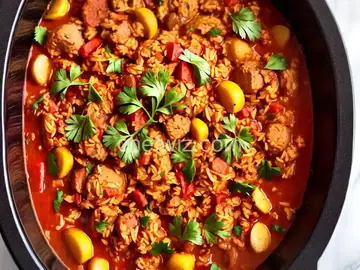
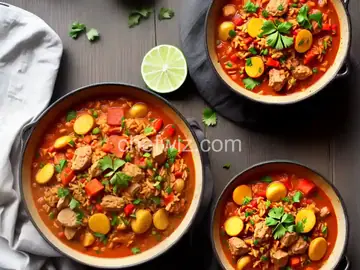
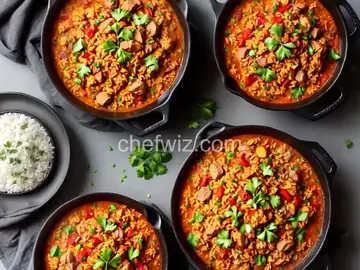
My Jambalaya
Rate this recipeBe the first to rate
 By AprilPublished
 Have you ever tasted a dish that bursts with flavors and captivates your taste buds?
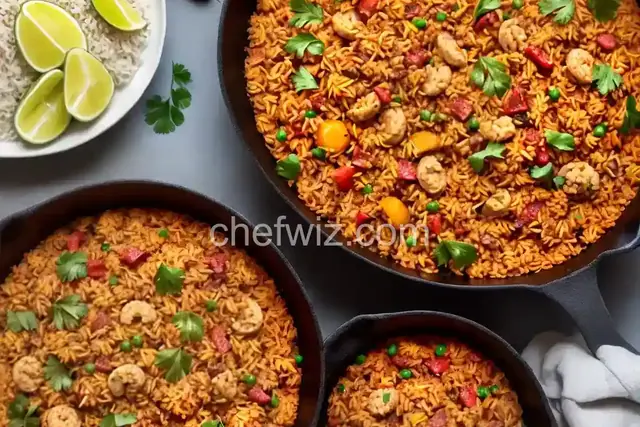 By AprilPublished
 Have you ever tasted a dish that bursts with flavors and captivates your taste buds?
Heat olive oil and butter in a large saucepan over medium heat. Cook and stir sausage and onion until the onion starts to brown, which should take around 10 minutes.
Add garlic to the saucepan. Cook and stir until it becomes fragrant, which should take around 1 to 2 minutes.
In the same saucepan, mix green bell peppers, zucchini, tomatoes, chicken broth, rice, Worcestershire sauce, and bay leaf into the onion-sausage mixture. Bring the mixture to a boil.
Reduce the heat and let it simmer until the rice is tender and the mixture thickens. This should take around 15 minutes.
Stir in chicken and shrimp into the tomato-sausage mixture. Simmer until the chicken and shrimp are heated through, which should take around 1 to 2 minutes.
Have you ever tasted a dish that bursts with flavors and captivates your taste buds? Look no further than my delicious jambalaya recipe. This Southern classic is a mouthwatering combination of spicy and savory, creating a symphony of flavors that will leave you craving for more. Whether you're a seasoned chef or a beginner in the kitchen, this recipe is sure to impress your friends and family. So, let's dive into the world of jambalaya and discover the magic it holds!
Before we dig into the recipe, let's take a moment to appreciate the rich history behind jambalaya. This iconic Louisiana dish is a melting pot of culinary influences, reflecting the diverse cultures that have shaped the region's cuisine. With roots in Spanish, French, and West African cooking, jambalaya embodies the spirit of fusion cuisine.
Just like the vibrant culture of Louisiana, jambalaya is a harmonious blend of flavors. The marriage of spices, meats, and vegetables creates a symphony on your plate, transporting you to the heart of the Deep South. Each bite tells a story, weaving together the traditions and heritage of the people who have passed down this recipe through generations.
Now that we've delved into the history of jambalaya, let's explore the steps to create this culinary masterpiece. Like any great dish, jambalaya requires a balance of ingredients and a dash of love. The foundation of jambalaya lies in the holy trinity of Cajun and Creole cooking: onions, bell peppers, and celery. These aromatic vegetables form the base of the flavor profile.
Next, we add a medley of meats, such as smoked sausage, chicken, and shrimp. The combination of proteins adds depth and richness to the dish. To elevate the spice level, we sprinkle in a generous amount of Cajun seasoning, paprika, and cayenne pepper. This trio of spices creates a fiery kick that will awaken your taste buds.
To complete the jambalaya experience, we incorporate long-grain rice and chicken broth. As the rice cooks, it absorbs the flavors from the meats and spices, resulting in a mouthwatering amalgamation of textures and tastes. The final touch is a sprinkle of fresh herbs, such as parsley or green onions, to add a burst of freshness to the dish.
When you take that first bite of jambalaya, you embark on a culinary adventure. The flavors dance on your tongue, taking you on a journey through the streets of New Orleans and the bayous of Louisiana. Each spoonful is a celebration of the vibrant culture and rich history that make jambalaya an iconic dish.
Just like the diverse ingredients that come together to create jambalaya, this dish brings people together. It's a symbol of community, a testament to the power of food to unite people from all walks of life. Whether you're enjoying jambalaya at a lively family gathering or savoring it alone, it has the power to transport you to a place of warmth and togetherness.
Yes, absolutely! You can substitute the meats with plant-based alternatives, such as tofu or tempeh. The spices and vegetables will still create a delightful flavor profile.
Yes, jambalaya is known for its spicy kick. However, you can adjust the spice level according to your preference. Feel free to add more or less cayenne pepper and Cajun seasoning.
Yes, jambalaya freezes well. Simply store it in an airtight container and freeze for up to three months. When ready to enjoy, thaw it in the refrigerator and reheat on the stovetop or in the microwave.
Jambalaya is a complete meal on its own, but you can serve it with a side of crusty French bread or a fresh green salad for a well-rounded dining experience.
Yes, jambalaya can be made in a slow cooker. Simply follow the same steps and cook on low heat for 4-6 hours or on high heat for 2-3 hours.
The main difference lies in the order of ingredients. Cajun jambalaya typically includes meat and vegetables cooked together before adding the rice, while Creole jambalaya incorporates tomatoes and cooks the rice and ingredients simultaneously.
Absolutely! Seafood, such as shrimp or crawfish, can be added to jambalaya for a delightful twist. Just make sure to adjust the cooking time accordingly to prevent overcooking the seafood.
Yes, jambalaya can be made ahead of time and reheated when needed. The flavors tend to develop even more when the dish is allowed to sit overnight in the refrigerator.
In conclusion, my jambalaya recipe is a celebration of flavors, history, and togetherness. With its spicy kick and comforting textures, it's a dish that will transport you to the heart of Louisiana. So, gather your ingredients, embrace the culinary adventure, and savor every bite of this iconic Southern classic. Bon appétit!
AprilCook, recipe developer and the heart of Chefwiz. More about April