Jen's Jambalaya
Rate this recipeBe the first to rate
 By AprilPublished
 Have you ever wanted to transport your taste buds to the vibrant streets of New Orleans?
 By AprilPublished
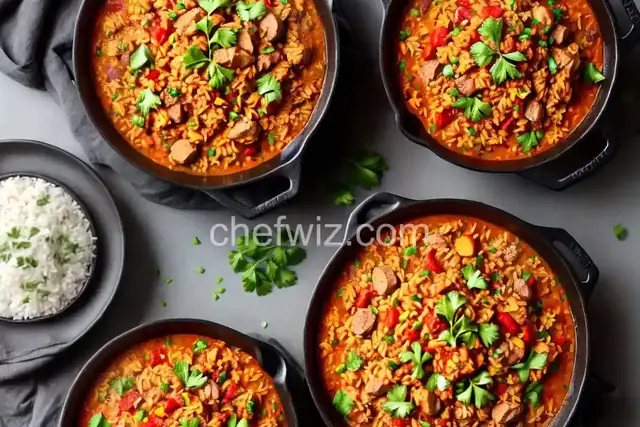
 Have you ever wanted to transport your taste buds to the vibrant streets of New Orleans?
Heat margarine in a large saucepan on medium heat until melted.
Stir in onion, celery, and green pepper and cook for about 5 minutes, or until softened.
Add diced tomatoes, chicken broth, and rice to the saucepan.
Season with basil, garlic, pepper, hot sauce, and bay leaf.
Increase heat to medium-high and bring the mixture to a boil.
Reduce heat to medium-low, cover the saucepan, and let it simmer for about 20 minutes, or until the rice is cooked.
Once the rice is done, add chicken, sausage, and shrimp to the saucepan.
Simmer for a few minutes until the chicken, sausage, and shrimp are heated through.
Before serving, remember to remove the bay leaf.
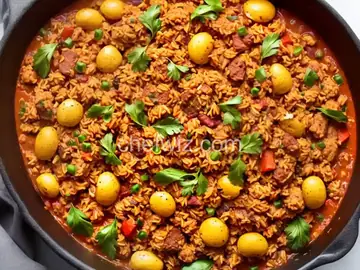
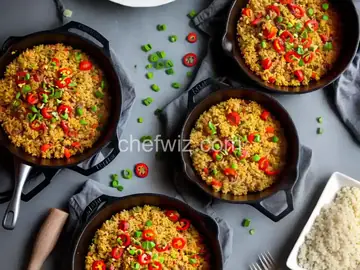
Have you ever wanted to transport your taste buds to the vibrant streets of New Orleans? Look no further than Jen's Jambalaya! This iconic Southern dish is a celebration of flavors, combining influences from French, African, and Spanish cuisines. Join me as we explore the history, ingredients, and cultural significance of this mouthwatering masterpiece.
Like a gumbo of diverse cultures, jambalaya itself is a fusion dish. Its roots can be traced back to the multicultural city of New Orleans, where diverse communities coexisted and shared their culinary traditions. The dish evolved from Spanish paella, African jollof rice, and French Provençal jambalaia. It's a true testament to the melting pot of flavors that defines Southern cuisine.
At the heart of any jambalaya recipe are the holy trinity of Southern cooking: onions, bell peppers, and celery. These aromatic vegetables create a flavor base that forms the foundation of the dish. Combined with garlic, they bring a symphony of savory notes that dance on your palate.
While there are countless variations of jambalaya, the cornerstone proteins are usually smoked sausage, chicken, and shrimp. The smoky richness of the sausage, the tender juiciness of the chicken, and the succulent sweetness of the shrimp create a harmonious medley of flavors.
No jambalaya is complete without a robust blend of spices and seasonings. The Cajun trinity of flavors includes paprika, thyme, oregano, and cayenne pepper. These spices add depth and complexity, infusing the dish with a fiery kick that awakens your taste buds.
Just like a family gathering around a table, jambalaya brings people together. It's a dish that symbolizes unity, as it reflects the harmonious coexistence of different cultures and flavors. Jambalaya is often associated with festive occasions, such as Mardi Gras and family gatherings, where it becomes the centerpiece of the celebration.
Moreover, jambalaya tells a story. It speaks of the resilience and creativity of the people who created it. Each bite is a taste of history, a reminder of the diverse influences that have shaped Southern cuisine.
Jen's Jambalaya is more than just a dish; it's a culinary journey through the rich tapestry of Southern cuisine. From its multicultural origins to its cultural significance, jambalaya is a true representation of unity and celebration. So, gather your ingredients, embrace the flavors, and let Jen's Jambalaya transport you to the vibrant streets of New Orleans. Bon appétit!
Jambalaya and gumbo share some similarities, but they are distinct dishes. While jambalaya is a rice-based dish, gumbo is a thick stew made with a roux and served with rice. Both dishes feature a rich combination of flavors, but their textures and cooking methods differ.
Absolutely! You can replace the meat with plant-based alternatives like tofu or tempeh, and enhance the flavors with a variety of vegetables. The essence of jambalaya lies in the spices and seasonings, so you can still enjoy a delicious vegetarian version.
Traditionally, jambalaya has a mild to medium level of spiciness. However, you can adjust the heat level according to your preference. If you prefer a milder version, simply reduce the amount of cayenne pepper or omit it altogether.
Absolutely! Jambalaya freezes well and can be enjoyed at a later date. Just make sure to store it in an airtight container and thaw it thoroughly before reheating.
Of course! Jambalaya is a versatile dish that can accommodate various proteins. You can experiment with different combinations, such as using seafood like crawfish or adding a touch of smoky flavor with ham or bacon.
Long-grain rice, such as basmati or jasmine rice, works well for jambalaya. The grains remain separate and fluffy, allowing them to absorb the flavors of the dish without becoming mushy.
Absolutely! Jambalaya can be easily adapted for slow cooker cooking. Simply combine all the ingredients in the slow cooker and cook on low heat for 6-8 hours or on high heat for 3-4 hours. The result will be a flavorful and tender jambalaya.
Definitely! Jambalaya pairs well with a variety of side dishes, such as cornbread, collard greens, or a fresh salad. The combination of flavors and textures creates a well-rounded meal that satisfies all your taste buds.
AprilCook, recipe developer and the heart of Chefwiz. More about April