My Favorite Sesame Noodles
Rate this recipeBe the first to rate
 By AprilPublished
 Do you ever find yourself craving a dish that is both comforting and full of flavor?
 By AprilPublished
 Do you ever find yourself craving a dish that is both comforting and full of flavor?
Boil a large pot of lightly salted water over high heat.
Once the water is boiling, add the spaghetti and return to a boil.
Cook the pasta uncovered for about 12 minutes, stirring occasionally, until it is cooked through but still firm to the bite.
Drain the pasta well in a colander placed in the sink.
In a microwave-safe glass or ceramic bowl, melt the peanut butter for 15 to 20 seconds in the microwave.
Whisk in the honey, tamari, and chili sauce into the melted peanut butter.
Stir in the sesame oil and ginger.
Add the garlic and green onions to the mixture.
Toss the cooked spaghetti with the peanut butter sauce.
Sprinkle sesame seeds on top.
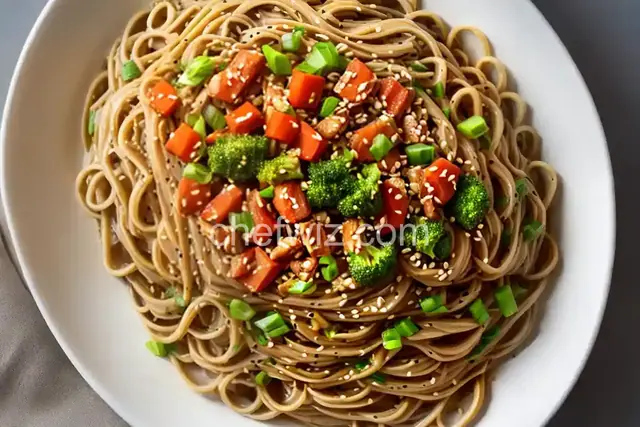
Do you ever find yourself craving a dish that is both comforting and full of flavor? Look no further than sesame noodles! This delectable dish is a staple in many Asian cuisines and can be easily enjoyed at home. In this article, I will share my favorite sesame noodle recipe and provide some insights into what makes these noodles so irresistible.
Imagine a plate of perfectly cooked noodles, coated in a rich and creamy sesame sauce. Each bite is a symphony of flavors - the nuttiness of the sesame, the tanginess of the soy sauce, and the slight heat from the chili oil. It's a dish that satisfies your cravings and warms your soul.
But what sets sesame noodles apart from other noodle dishes? It's all in the sauce. The combination of toasted sesame oil, soy sauce, garlic, and ginger creates a harmonious blend of flavors that elevates the noodles to a whole new level. The sauce clings to the noodles, ensuring that every bite is packed with deliciousness.
The key to a great sesame noodle dish lies in the choice of noodles. While traditional Chinese egg noodles are commonly used, you can experiment with different varieties like soba noodles or even spaghetti. The key is to cook them al dente, so they have a slight bite to them and don't become mushy when mixed with the sauce.
Once your noodles are cooked, rinse them with cold water to stop the cooking process and remove excess starch. This step ensures that the noodles stay firm and separate, allowing the sauce to cling to them without becoming clumpy.
Sesame noodles are incredibly versatile and can be customized to suit your taste. You can add a variety of toppings such as thinly sliced cucumbers, shredded chicken, or even sautéed vegetables. These additions not only add texture and flavor but also make the dish more filling and nutritious.
For those who prefer a bit of heat, a sprinkle of chili flakes or a drizzle of chili oil will give the noodles an extra kick. And if you're a fan of crunch, don't forget to garnish your sesame noodles with some toasted sesame seeds or chopped peanuts. These little touches add a delightful contrast to the creamy noodles.
Sesame noodles are a true delight for the senses. The combination of silky noodles and a flavorful sesame sauce is simply unbeatable. Whether you enjoy them as a main dish or as a side, these noodles are sure to please everyone at the table. So go ahead, give this recipe a try, and let the magic of sesame noodles transport you to a world of culinary bliss.
Absolutely! Sesame noodles can be made in advance and stored in the refrigerator for up to 3 days. Just make sure to give them a good stir before serving to loosen up the sauce.
Yes, you can! Simply substitute regular soy sauce with tamari or a gluten-free soy sauce alternative. You can also use gluten-free noodles such as rice noodles or gluten-free spaghetti.
While sesame paste is the traditional choice for sesame noodles, you can experiment with other nut butters like peanut butter or almond butter. Just keep in mind that the flavor will be slightly different.
Absolutely! If you like a bit of heat, feel free to add some chili flakes or a drizzle of chili oil to your sesame noodles. Adjust the amount according to your spice tolerance.
Yes, fresh garlic and ginger will add a more intense flavor to your sesame noodles. Simply mince or grate them finely and add them to the sauce.
While you can technically freeze sesame noodles, the texture of the noodles may change slightly upon thawing. It's best to enjoy them fresh or refrigerate them for a few days.
Absolutely! Sesame noodles can be made with various proteins such as shredded chicken, beef, or even tofu. Simply cook your choice of protein separately and mix it in with the noodles and sauce.
While sesame oil adds a distinct flavor to sesame noodles, you can substitute it with other oils like peanut oil or vegetable oil. Just keep in mind that the taste will be slightly different.
AprilCook, recipe developer and the heart of Chefwiz. More about April