Mille-Feuille
Rate this recipeBe the first to rate
 By AprilPublished
 When it comes to decadent pastries, few can rival the elegance and complexity of a Mille-Feuille.
 By AprilPublished
 When it comes to decadent pastries, few can rival the elegance and complexity of a Mille-Feuille.
Step 1: In a medium bowl, vigorously whisk together the egg yolks and sugar until they become lighter in color.
Step 2: Whisk in the cornstarch.
Step 3: In a saucepan, warm the milk along with the vanilla seeds and pod.
Step 4: Slowly pour the milk mixture into the egg mixture while whisking constantly.
Step 5: Pour the entire mixture back into the saucepan and cook over medium heat, whisking constantly, until it becomes very thick (about 5 minutes).
Step 6: Remove and discard the vanilla pod.
Step 7: Soak the gelatin sheets in a bowl of cold water for 10 minutes. (If using powdered gelatin, sprinkle it over ¼ cup plus 2½ Tbsp. cold water and let it soften for 5 minutes.)
Step 8: Squeeze the water from the gelatin sheets and add them to warm water, stirring until dissolved. (Alternatively, if using powdered gelatin, stir in the softened powdered gelatin until fully melted.)
Step 9: Stir the gelatin into the warm custard and let it cool slightly.
Step 10: Add the butter pieces to the custard and blend with an immersion blender until smooth.
Step 11: Cover the surface of the custard with plastic wrap and refrigerate until cooled.
Step 12: Whip the cream and gently fold it into the cooled custard using a silicone spatula or whisk
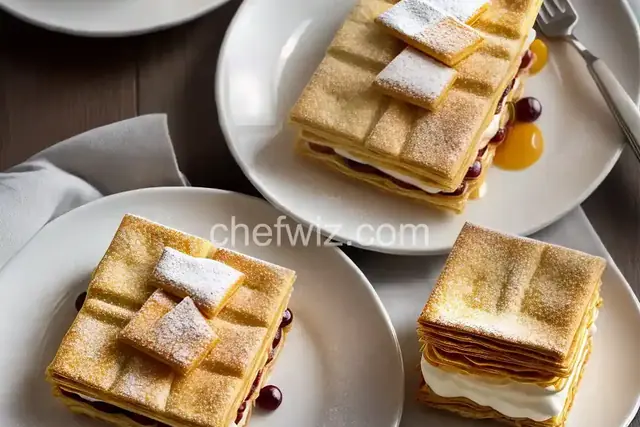
When it comes to decadent pastries, few can rival the elegance and complexity of a Mille-Feuille. This French delicacy, also known as a Napoleon, is a true work of art that combines layers of flaky puff pastry, velvety pastry cream, and a delicate dusting of powdered sugar. But what makes a Mille-Feuille so special? Let's dive into the world of this exquisite dessert and discover its secrets.
The origins of the Mille-Feuille can be traced back to France in the 18th century, where it was first created by French pastry chefs. The name "Mille-Feuille" translates to "thousand leaves," referring to the countless layers of pastry that make up this dessert. It quickly became a staple in French patisseries and has since gained popularity worldwide.
The key to a perfect Mille-Feuille lies in its layers. Each layer of puff pastry is carefully baked to golden perfection, creating a crisp and flaky texture that contrasts beautifully with the smooth and creamy pastry cream. The process of layering requires precision and skill, as each layer must be evenly spread with a generous amount of cream.
Think of a Mille-Feuille as a symphony of textures and flavors. The crispness of the pastry, the silkiness of the cream, and the delicate sweetness of the powdered sugar all come together to create a harmonious dessert experience. It's like biting into a cloud of deliciousness.
One of the things that sets a Mille-Feuille apart from other pastries is its perfect balance of flavors. The buttery richness of the pastry is complemented by the lusciousness of the pastry cream, creating a combination that is both indulgent and light. The powdered sugar adds a touch of sweetness without overpowering the delicate flavors.
Imagine taking a bite of a Mille-Feuille and experiencing a burst of flavors. The buttery notes of the pastry dance with the creamy custard, and just when you think it can't get any better, the sweetness of the sugar comes in and takes the whole experience to another level. It's a journey for your taste buds.
The Mille-Feuille is more than just a dessert. It's a culinary masterpiece that showcases the skill and artistry of pastry chefs. From the precise layering to the intricate decoration on top, every element of a Mille-Feuille is carefully crafted to create a visually stunning and mouthwatering treat.
Like a painter creating a masterpiece on canvas, a pastry chef creates a work of art on a plate. The layers of the Mille-Feuille are like brushstrokes, each one adding depth and dimension to the final creation. And just like a masterpiece, a Mille-Feuille is meant to be admired and savored.
The Mille-Feuille is a pastry that captivates not only with its exquisite appearance but also with its delicate flavors and textures. It's a testament to the artistry of French pastry chefs and a true indulgence for anyone fortunate enough to savor it. Whether enjoyed at a fancy patisserie or created in the comfort of your own kitchen, a Mille-Feuille is a treat that will leave you craving for more.
To keep your Mille-Feuille fresh, it's best to store it in the refrigerator. However, be aware that the pastry may lose some of its crispness over time.
Absolutely! While it may require some patience and skill, making a Mille-Feuille at home is a rewarding experience. There are many recipes available online to guide you through the process.
Unfortunately, traditional Mille-Feuille is not gluten-free due to the use of puff pastry. However, there are gluten-free alternatives available that can still deliver a similar taste and texture.
Definitely! The beauty of a Mille-Feuille is its versatility. You can experiment with different flavors for the pastry cream, such as chocolate, coffee, or fruit-infused creams.
While it may seem intimidating, making a Mille-Feuille is not as difficult as it appears. With the right recipe and a bit of patience, you can create your own masterpiece.
It's not recommended to freeze a Mille-Feuille, as the texture of the pastry and cream may be compromised. It's best enjoyed fresh.
The key to a crisp puff pastry is to ensure that the layers are well-separated and that the pastry is baked at the right temperature. Follow the recipe instructions carefully and keep an eye on the oven to avoid over-browning.
Absolutely! Adding fresh fruit to your Mille-Feuille can elevate its visual appeal and add a burst of freshness to the flavors. Consider using berries, sliced peaches, or even edible flowers.
AprilCook, recipe developer and the heart of Chefwiz. More about April