Ligurian Pesto with Spaghetti
Rate this recipeBe the first to rate
 By AprilPublished
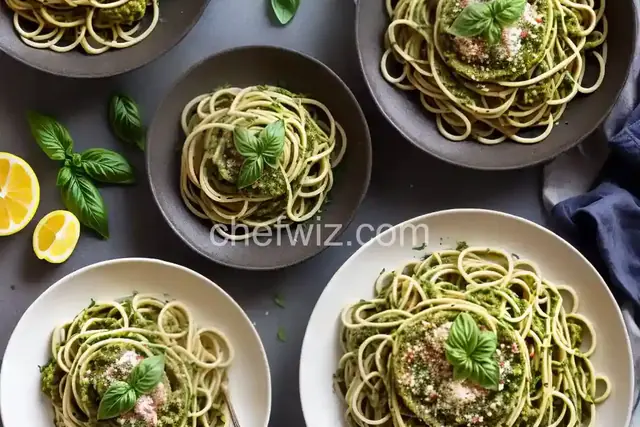
 The Ligurian region of Italy is famous for its delicious cuisine, and one dish that stands out is Ligurian Pesto with Spaghetti.
 By AprilPublished
 The Ligurian region of Italy is famous for its delicious cuisine, and one dish that stands out is Ligurian Pesto with Spaghetti.
Bring a large pot of water to a boil and add a pinch of salt.
Place a colander in a large bowl filled with ice water.
Blanch the basil in batches for 10 seconds.
Using a slotted spoon, transfer the blanched basil to the colander in the ice water and let it cool completely.
Set aside 1/2 cup of the water used for blanching.
Drain the basil by lifting the colander from the ice water and squeeze out any excess water using your hands. Place the basil on paper towels and set aside (approximately 1/2 cup).
In a food processor, combine the blanched basil, 1/2 cup Parmesan cheese, pine nuts, and garlic. Pulse until well combined, adding the reserved blanching water by tablespoonfuls to thin the mixture if necessary. Scrape down the sides of the food processor occasionally. Process until a smooth and thick puree forms (about 1 minute).
Transfer the basil mixture to a medium bowl and stir in 1/2 cup of oil. Season with salt to taste.
Bring the pot of water used for blanching back to a boil and add more salt. Cook the spaghetti until it is al dente, stirring occasionally.
In a large bowl, spoon 1/2 cup of the pesto mixture and 1/4 cup of the pasta cooking liquid
The Ligurian region of Italy is famous for its delicious cuisine, and one dish that stands out is Ligurian Pesto with Spaghetti. This simple yet flavorful dish brings together fresh ingredients to create a vibrant and fragrant sauce that elevates the humble spaghetti to new heights. In this article, we will explore the origins of Ligurian Pesto, the key ingredients that make it so special, and how to prepare this mouthwatering dish.
Ligurian Pesto originated in Genoa, the capital city of the Liguria region. It is believed to have been created in the 16th century and has since become a beloved staple of Italian cuisine. The word "pesto" comes from the Italian verb "pestare," which means to crush or pound. This refers to the traditional method of making pesto by grinding the ingredients together in a mortar and pestle.
Ligurian Pesto is known for its simplicity and reliance on fresh, high-quality ingredients. The star of the show is the fragrant basil leaves, which give the sauce its vibrant green color and distinctive flavor. Other essential ingredients include pine nuts, garlic, Parmesan cheese, and extra-virgin olive oil. These ingredients are combined to create a smooth and creamy sauce that perfectly coats the spaghetti.
Basil is the heart and soul of Ligurian Pesto. It is essential to use fresh basil leaves, preferably picked from your own herb garden. The aroma and taste of freshly picked basil are unmatched, adding a burst of freshness to the dish. Just like gold, basil is a precious ingredient that brings value and richness to Ligurian Pesto.
Pine nuts are another crucial ingredient that adds a delightful nuttiness to the pesto sauce. These little gems are packed with flavor and provide a pleasant crunchy texture. Just like puzzle pieces, pine nuts fit perfectly into the overall composition of Ligurian Pesto, completing the flavor profile.
A touch of garlic brings a bold and pungent flavor to Ligurian Pesto. It adds depth and complexity to the sauce, enhancing the overall taste experience. Think of garlic as the secret ingredient that adds a little spark to the dish, like a firework illuminating the night sky.
Parmesan cheese, known for its rich and creamy texture, contributes to the luxuriousness of Ligurian Pesto. It adds a savory note and helps bind the ingredients together. The cheese acts as the glue that brings all the flavors together, like a master conductor leading a symphony.
Extra-virgin olive oil is the final touch that brings everything together in Ligurian Pesto. It adds a smooth and silky texture, coating the spaghetti strands with a luscious sheen. The olive oil acts as the golden river that flows through the dish, connecting all the elements and infusing them with its distinctive aroma.
Now that we've explored the origins and ingredients of Ligurian Pesto, let's dive into the preparation of this delectable dish. The first step is to gather all the necessary ingredients and ensure they are fresh and of the highest quality.
Next, start by grinding the basil leaves, pine nuts, garlic, and Parmesan cheese together in a mortar and pestle. This traditional method helps release the full flavors of the ingredients and creates a creamy and well-blended sauce.
Once the ingredients are ground into a fine paste, slowly drizzle in the extra-virgin olive oil while continuing to grind and mix. This will emulsify the sauce, creating a smooth and glossy texture.
Meanwhile, cook the spaghetti in a large pot of salted boiling water until al dente. Once cooked, drain the spaghetti and transfer it to a serving bowl. Pour the Ligurian Pesto sauce over the spaghetti and toss until every strand is evenly coated.
Finally, garnish with a few fresh basil leaves and a sprinkle of Parmesan cheese. Serve immediately and enjoy the flavors of Liguria in every bite!
Ligurian Pesto with Spaghetti is a dish that captures the essence of the Liguria region in Italy. Its simplicity and reliance on fresh ingredients make it a crowd-pleaser that can be enjoyed by all. The fragrant basil, nutty pine nuts, pungent garlic, creamy Parmesan cheese, and golden olive oil come together to create a symphony of flavors that will transport you to the sun-kissed shores of Italy.
Yes, you can use a food processor to make Ligurian Pesto. However, using a mortar and pestle allows you to release the full flavors of the ingredients and create a more authentic and well-blended sauce.
Yes, if you have allergies or prefer a different nutty flavor, you can substitute pine nuts with walnuts or almonds. This will give your pesto a unique twist while still maintaining its deliciousness.
Ligurian Pesto can be stored in an airtight container in the refrigerator for up to a week. Make sure to cover the top with a thin layer of olive oil to prevent oxidation.
Yes, Ligurian Pesto can be frozen in ice cube trays or small containers for up to three months. This allows you to enjoy the flavors of summer basil even during the colder months.
Ligurian Pesto is incredibly versatile and can be used in various dishes. It can be spread on bruschetta, stirred into risotto, or used as a marinade for grilled vegetables or meats.
Yes, if you prefer a dairy-free version or are lactose intolerant, you can omit the Parmesan cheese. The pesto will still be delicious and packed with flavor.
No,
AprilCook, recipe developer and the heart of Chefwiz. More about April