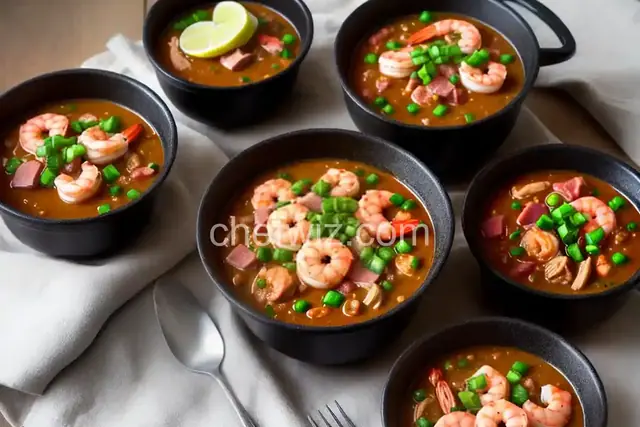
Leftover Ham and Shrimp Slow Cooker Gumbo
Rate this recipeBe the first to rate
 By AprilPublished
 Are you tired of eating the same leftover ham and shrimp after a holiday feast?
 By AprilPublished
 Are you tired of eating the same leftover ham and shrimp after a holiday feast?
In a small saucepan, combine garlic, turmeric, chili powder, basil, and cayenne pepper. Heat the mixture over medium heat for about 1 minute until it becomes aromatic.
Add butter to the saucepan and let it melt. Then, add the onion and cook for approximately 5 minutes until it becomes softened and translucent.
Transfer the onion mixture from the saucepan into a slow cooker, making sure to leave as much butter in the saucepan as possible.
Increase the heat under the saucepan to medium-high. Saute the frozen shrimp in the hot butter for about 2 minutes until it becomes just firm. Then, transfer the shrimp mixture to the slow cooker.
Into the slow cooker, add ham, ham bone, black beans, and tomatoes.
Cook on High heat for 4 to 6 hours, or on Low heat for 6 to 8 hours, until the ham on the bone is falling off.
Remove and discard the ham bone. Stir coconut milk into the mixture in the slow cooker.
Continue cooking on Low heat for about 30 minutes until the coconut milk is warmed.
Are you tired of eating the same leftover ham and shrimp after a holiday feast? Why not transform them into a delicious slow cooker gumbo? This Cajun-inspired dish is packed with flavor and will have your taste buds dancing with delight. Don't let those leftovers go to waste - let's turn them into something amazing!
Gumbo is a traditional Louisiana dish that originated in West Africa. It is a thick and hearty soup-like stew that usually consists of a meat or seafood base, a roux, and a combination of vegetables and spices. Gumbo is typically served with rice and is known for its rich flavors and complex taste profiles.
Using a slow cooker for this gumbo recipe is a game-changer. The slow cooking process allows all the flavors to meld together and develop into a harmonious symphony of taste. Plus, it's incredibly convenient - simply throw all the ingredients into the slow cooker, set it, and forget it until it's time to eat. The result is a tender and flavorful gumbo that will have everyone asking for seconds.
Making leftover ham and shrimp slow cooker gumbo is a breeze. First, gather your ingredients - leftover ham, shrimp, onions, bell peppers, celery, garlic, tomatoes, chicken broth, and a variety of spices and seasonings. Chop the vegetables and combine them with the ham, shrimp, and spices in the slow cooker. Pour in the chicken broth and stir everything together. Cook on low for 6-8 hours or on high for 3-4 hours. Serve the gumbo over rice and enjoy the deliciousness!
There are so many reasons to make this leftover ham and shrimp slow cooker gumbo. Firstly, it's a great way to use up those holiday leftovers and avoid food waste. Secondly, it's a crowd-pleaser - the combination of ham and shrimp in a flavorful gumbo is sure to impress your family and friends. Lastly, it's a comforting and hearty dish that warms you up from the inside out, making it perfect for chilly evenings or lazy weekends.
Absolutely! Gumbo is a versatile dish that welcomes creativity. Feel free to add your favorite vegetables, such as okra or corn, or experiment with different spices to suit your taste preferences. You can also adjust the spiciness level by adding more or less Cajun seasoning or hot sauce. Make this gumbo your own and let your culinary imagination run wild!
While gumbo is delicious on its own, it pairs perfectly with a few classic Southern sides. Serve your leftover ham and shrimp slow cooker gumbo with a side of freshly cooked white rice, cornbread, and a refreshing green salad. The combination of flavors and textures will create a well-rounded and satisfying meal.
If you have any leftovers (which is rare because this gumbo is so good), you can store them in an airtight container in the refrigerator for up to 3 days. To reheat, simply transfer the gumbo to a saucepan and warm it up over medium heat until heated through. You may need to add a splash of water or broth to loosen up the gumbo if it has thickened in the fridge.
Yes, gumbo is a great dish to freeze for future meals. Allow the gumbo to cool completely before transferring it to freezer-safe containers or bags. Label and date the containers, then freeze for up to 3 months. When you're ready to enjoy the gumbo, thaw it overnight in the refrigerator and reheat it following the same instructions as mentioned earlier.
Absolutely! In fact, gumbo tastes even better when made in advance. The flavors have more time to develop and intensify, resulting in an even more delicious dish. Simply follow the recipe instructions, let the gumbo cool, and refrigerate it overnight. When you're ready to serve, reheat the gumbo on the stovetop or in the slow cooker until hot. Your taste buds will thank you!
Don't let your leftover ham and shrimp go to waste - transform them into a mouthwatering slow cooker gumbo. This Cajun-inspired dish is flavorful, comforting, and a great way to use up holiday leftovers. With the convenience of a slow cooker and the flexibility to customize the recipe to your liking, this gumbo is a winner. Serve it with rice, cornbread, and a salad for a complete and satisfying meal. Whether you're a gumbo enthusiast or new to the dish, this recipe is sure to impress.
Absolutely! Feel free to substitute the shrimp with other seafood options like crab meat or crawfish tail meat.
Absolutely! Simply omit the ham and shrimp and replace them with your favorite vegetables or plant-based protein alternatives like tofu or tempeh.
Yes, you can make this gumbo gluten-free by using a gluten-free flour or cornstarch as a thickening agent instead of a roux.
To make the gumbo spicier, add more Cajun seasoning or hot sauce. To make it milder, reduce the amount of these ingredients or omit them altogether.
Absolutely! You can use fresh ham and shrimp instead of leftovers. Simply cook them before adding them to the slow cooker gumbo.
Yes, you can make this gumbo on the stovetop. Simply follow the same steps but cook the gumbo over
AprilCook, recipe developer and the heart of Chefwiz. More about April