Kicked-Up Jambalaya
Rate this recipeBe the first to rate
 By AprilPublished
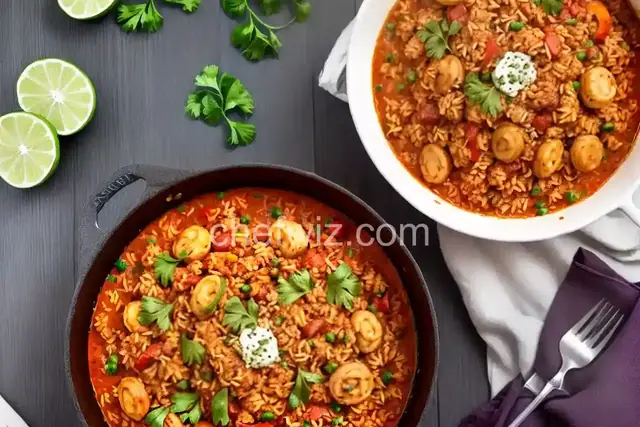
 Are you ready to indulge in a flavorful explosion of Cajun cuisine?
 By AprilPublished
 Are you ready to indulge in a flavorful explosion of Cajun cuisine?
Heat 2 tablespoons of olive oil in a large Dutch oven over medium-high heat.
Season the shrimp with Creole seasoning and sauté them for about 4 minutes, until almost cooked through.
Use a slotted spoon to remove the shrimp from the pot and set them aside for later.
Season the chicken pieces with Creole seasoning.
Add the remaining olive oil to the Dutch oven and heat it up. Then, add the chicken pieces and sauté them for about 8 minutes, until they are browned on both sides.
Remove the chicken from the pot and set it aside.
Add the sausage to the pot and cook it until it is browned.
Add the onion, celery, bell pepper, garlic, bay leaves, cayenne, and thyme to the pot, and cook them until the vegetables are wilted, which should take about 6 minutes.
Add the tomatoes and water to the pot, and return the chicken pieces to the pot.
Season with salt and pepper, cover the pot, and let it simmer for 20 minutes.
Add the rice to the pot, stir well, and bring it back to a boil.
Reduce the heat to low, cover the pot, and let it cook for 15 minutes.
Add the shrimp, green onions, and parsley to the Dutch oven, and carefully mix them in.
14.
Are you ready to indulge in a flavorful explosion of Cajun cuisine? Look no further than this mouthwatering dish called Kicked-Up Jambalaya. Get prepared to tantalize your taste buds as we dive into the world of savory spices, perfectly cooked rice, and a medley of meats. In this article, we will explore the origins of Jambalaya, discuss the key ingredients that make it so special, and provide some tips on how to make the best version of this Southern classic.
Imagine yourself in the vibrant streets of New Orleans, where the air is filled with the enticing aroma of spices and the sounds of jazz music. Jambalaya, a dish deeply rooted in Creole and Cajun culture, is believed to have originated in this very place. It is a reflection of the diverse influences that have shaped the culinary landscape of Louisiana, blending French, Spanish, African, and Caribbean flavors into one delectable pot.
What sets Jambalaya apart from other rice-based dishes is its unique combination of ingredients. The holy trinity of Creole cooking - bell peppers, onions, and celery - forms the flavor base, providing a harmonious balance. The star of the show is the trio of meats: succulent shrimp, tender chicken, and spicy sausage. These proteins infuse the dish with layers of complexity and richness, making every bite a delight.
Now that you know the essence of Jambalaya, let's dive into some tips that will help you take your culinary skills to the next level:
By following these tips, you'll be well on your way to creating a Jambalaya that will impress even the most discerning palate.
Jambalaya is a true taste of the South, bringing together a melting pot of flavors in one satisfying dish. Whether you're a seafood lover or prefer a meat-centric version, the versatility of Jambalaya allows you to tailor it to your preferences. So gather your ingredients, embrace the spirit of New Orleans, and let your taste buds embark on a culinary adventure like no other. Get ready to savor each spoonful of this soulful Southern classic!
Absolutely! While seafood is a traditional component of Jambalaya, you can customize the dish according to your dietary preferences. Substitute the shrimp with additional chicken or sausage for a hearty, meat-centric version.
Yes, you can! In fact, Jambalaya tends to taste even better the next day as the flavors have had time to meld together. Simply reheat it gently on the stovetop or in the microwave, and you're good to go.
It can be, depending on how much heat you prefer. The spicy sausage and Cajun seasoning add a kick to the dish, but you can adjust the spice level to your liking by reducing or increasing the amount of seasoning.
Absolutely! Skip the meat and seafood altogether and load up on vegetables instead. Bell peppers, onions, celery, and okra are all great additions that will add texture and flavor to your vegetarian Jambalaya.
While both dishes are staples of Louisiana cuisine, Jambalaya and Gumbo differ in their texture and preparation. Jambalaya is a one-pot rice dish, whereas Gumbo is a thick stew made with a roux base and often served over rice.
Yes, Jambalaya freezes well. Allow the dish to cool completely before transferring it to freezer-safe containers. When you're ready to enjoy it, simply thaw and reheat, and you'll have a convenient meal ready in no time.
While long-grain white rice is the most commonly used variety for Jambalaya, you can experiment with other types of rice, such as brown or wild rice, for a nuttier flavor and added nutritional value.
Yes, you can adapt Jambalaya for the slow cooker. Simply follow the same steps for sautéing the ingredients before transferring them to the slow cooker. Cook on low heat for 6-8 hours or on high heat for 3-4 hours, and voila!
AprilCook, recipe developer and the heart of Chefwiz. More about April