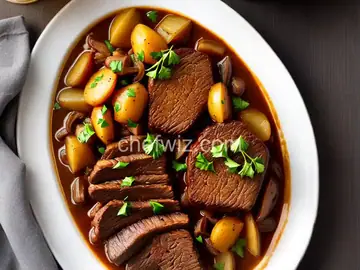
Kan Kan
Rate this recipeBe the first to rate
 By AprilPublished
 Kan Kan is a traditional dance originating from the vibrant culture of a small island in the Pacific.
 By AprilPublished
 Kan Kan is a traditional dance originating from the vibrant culture of a small island in the Pacific.
Prepare a deep pot by filling it with 2 gallons of water and adding 1 tablespoon of salt.
Place the pork chops in the water and allow them to sit for approximately 1 hour. For optimal results, it is recommended to brine the pork chops overnight in the refrigerator.
Preheat the oven to 350 degrees F (175 degrees C).
Take the pork chops out of the brine and transfer them to a large sheet pan.
In a bowl, combine the sofrito, olive oil, garlic powder, oregano, ground pepper, and the remaining 2 tablespoons of salt. Mix well.
Coat the pork chops with the mixture, ensuring that they are evenly seasoned. Then, rub the annatto powder onto the skin of the pork chops.
Place the pork chops in the preheated oven and roast them for 15 minutes.
Heat the oil in a deep-fryer to 350 degrees F (175 degrees C).
Fry the pork chops in the hot oil until the skin becomes crispy, resembling chicharron. This should take approximately 5 minutes.
Kan Kan is a traditional dance originating from the vibrant culture of a small island in the Pacific. It is a celebration of life, community, and heritage. The rhythmic movements and energetic beats of Kan Kan captivate everyone who witnesses it, making it a truly unique and mesmerizing experience.
The origins of Kan Kan can be traced back to the ancient rituals and ceremonies of the island's indigenous people. It was initially performed as a way to honor the gods and express gratitude for bountiful harvests and good fortune. Over time, Kan Kan evolved into a form of entertainment, bringing people together in joyous celebration.
What sets Kan Kan apart is its infectious energy and the strong sense of community it fosters. The synchronized movements, colorful costumes, and pulsating music create a mesmerizing spectacle that brings people of all ages and backgrounds together. It is a powerful expression of unity, joy, and cultural pride.
Kan Kan is typically performed by a group of dancers who move in sync with the rhythm of the drums and other traditional instruments. The dancers wear vibrant costumes adorned with feathers, shells, and intricate designs that reflect the island's natural beauty. The movements are graceful, yet dynamic, reflecting the harmony between humans and nature.
Kan Kan holds great cultural and historical significance for the island's community. It serves as a reminder of their ancestors' traditions and values, and it helps to preserve and pass on their unique heritage to future generations. Kan Kan also serves as a form of expression and identity for the island's people, keeping their cultural identity alive and thriving.
While Kan Kan has deep roots in tradition, it has also evolved over time. Today, it incorporates modern elements while still staying true to its origins. New choreography, music, and costumes have been introduced, adding a contemporary twist to the timeless dance. However, the essence of Kan Kan remains the same - a celebration of life, unity, and cultural richness.
If you want to witness the captivating beauty of Kan Kan, you can experience it on the island where it originated. Many cultural festivals and events showcase the dance, allowing visitors to immerse themselves in the vibrant energy and rich heritage of the island. It is an experience that will leave you in awe and with a deeper appreciation for the power of culture and community.
Kan Kan offers numerous benefits, both for the dancers and the audience. It promotes physical fitness, as the energetic movements require strength, agility, and coordination. It also fosters a sense of belonging and unity, as participants work together to create a harmonious performance. Additionally, Kan Kan serves as a creative outlet for self-expression and a way to connect with one's cultural roots.
Kan Kan is more than just a dance - it is a celebration of life, culture, and community. It brings people together in joyous harmony, showcasing the beauty and power of human expression. The vibrant rhythms, colorful costumes, and synchronized movements create an enchanting experience that leaves a lasting impact. So, immerse yourself in the world of Kan Kan and let its energy ignite your spirit.
The duration of a Kan Kan performance can vary, but it usually lasts between 30 minutes to an hour.
Yes, Kan Kan is open to anyone who has a passion for dance and is willing to learn the movements and rhythms.
Kan Kan welcomes participants of all ages, from young children to the elderly. It is a dance that transcends generations.
Yes, the costumes in Kan Kan often have symbolic meanings related to nature, spirituality, and cultural traditions.
Yes, Kan Kan has gained popularity worldwide, and it can be performed in different countries and cultural events.
While physical fitness is beneficial, there are no specific training or fitness requirements to participate in Kan Kan. It is open to all levels of fitness.
Yes, Kan Kan might have slight variations in different regions, reflecting the unique cultural nuances of each place.
You can support the preservation of Kan Kan by attending cultural events, sharing its beauty with others, and respecting its cultural significance.
AprilCook, recipe developer and the heart of Chefwiz. More about April