Hummus Without A Food Processor
Rate this recipeBe the first to rate
 By AprilPublished
 Have you ever craved creamy, flavorful hummus but found yourself without a food processor?
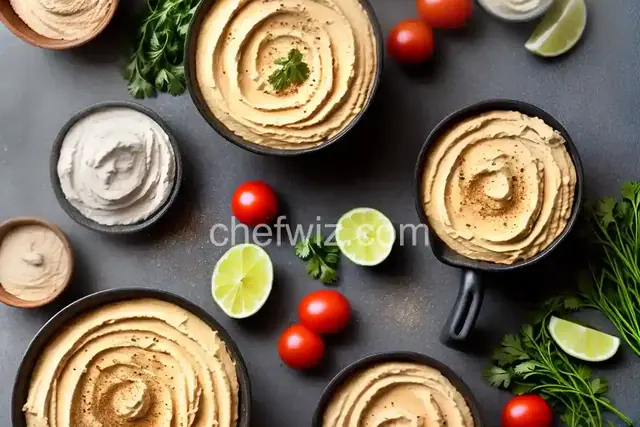 By AprilPublished
 Have you ever craved creamy, flavorful hummus but found yourself without a food processor?
- Mash chickpeas in a bowl using a potato masher.
- Add 2 tablespoons of reserved chickpea liquid, tahini, sesame oil, red pepper flakes, and garlic powder to the bowl.
- Mash the ingredients together using a potato masher.
- Add more reserved liquid if desired, until the hummus reaches the desired consistency.
- Continue mashing for 50 to 100 strokes.
- Make sure your potato masher has enough surface area to effectively crush the chickpeas.
- Place the bowl or pot on a cutting board or towel to protect your counter or work surface.
- Avoid using a non-stick pot as it may get damaged.
- You can double the recipe if desired.
- For a variation, you can substitute cayenne pepper to taste instead of crushed red pepper flakes.
Have you ever craved creamy, flavorful hummus but found yourself without a food processor? Don't worry! In this article, we will explore alternative methods to create delicious hummus without the use of a food processor. So, let's dive in and discover the art of handcrafted hummus!
When it comes to making hummus without a food processor, your hands can become your greatest tools. Just like a painter uses brushes to create a masterpiece, you can use your hands to create a delicious hummus recipe.
Imagine whisking together the ingredients for hummus just like you would whip up a batch of scrambled eggs. This hand method allows you to control the consistency of your hummus while incorporating all the flavors.
Picture yourself mashing the chickpeas and other ingredients with a fork, creating a rustic, chunky texture that adds an extra layer of enjoyment to your hummus. This method works perfectly for those who prefer a more textured hummus.
If you have a blender but no food processor, fear not! You can still create creamy hummus by utilizing your blender's capabilities.
Just like a race car speeds on the track, a high-speed blender can swiftly blend your hummus ingredients into a velvety-smooth consistency. It's like having a miniature food processor in your kitchen.
Imagine immersing a handheld blender into a bowl filled with chickpeas, lemon juice, and tahini. With a quick flick of the switch, the immersion blender transforms the ingredients into a creamy hummus dip. It's as simple as that!
In some cultures, traditional methods are used to make hummus without modern kitchen appliances. These techniques allow you to connect with the roots of hummus-making while creating a unique culinary experience.
Imagine grinding the ingredients for hummus in a mortar and pestle, just like ancient civilizations did. As you crush and blend the ingredients together, you can feel a sense of connection to the past, adding an extra layer of depth to your hummus.
Picture yourself finely chopping the ingredients for hummus using a sharp knife, just like a skilled chef. This method allows you to finely control the texture of your hummus while infusing it with your own personal touch.
Creating hummus without a food processor opens up a world of possibilities and allows you to explore different techniques and flavors. Whether you choose to use your hands, a blender, or embrace traditional methods, the end result will be a delicious and satisfying hummus that you can proudly serve to family and friends.
Absolutely! A hand mixer can be a great alternative to a food processor. It allows you to blend the ingredients together smoothly, creating a creamy hummus.
While blending or mashing the ingredients is the traditional way to make hummus, you can experiment with finely chopping the ingredients and mixing them together for a unique chunky hummus texture.
Yes, you can! Feel free to explore different legumes like white beans or black beans to create a unique twist on traditional hummus.
When stored in an airtight container in the refrigerator, homemade hummus can last up to one week. Just make sure to give it a good stir before serving.
Yes, you can freeze hummus! Transfer it to a freezer-safe container and store it for up to three months. Thaw it in the refrigerator overnight before enjoying.
Absolutely! You can customize your hummus by adding spices like cumin, paprika, or even roasted garlic to enhance the flavor profile to your liking.
While tahini is a traditional ingredient in hummus, you can substitute it with other ingredients like Greek yogurt or even avocado for a unique twist on the classic recipe.
Yes, you can omit garlic if you're not a fan of its flavor. Alternatively, you can experiment with other ingredients like roasted red peppers or sun-dried tomatoes to add a burst of flavor to your hummus.
AprilCook, recipe developer and the heart of Chefwiz. More about April