Homemade Whole Milk Ricotta Cheese
Rate this recipeBe the first to rate
 By AprilPublished
Are you tired of store-bought ricotta cheese that lacks flavor and freshness?
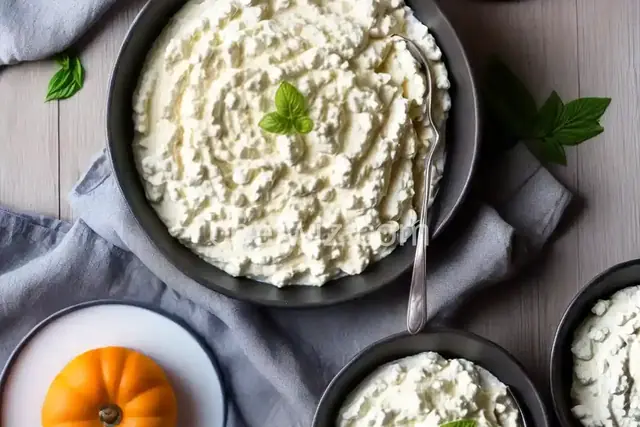 By AprilPublished
Are you tired of store-bought ricotta cheese that lacks flavor and freshness?
Dampen a double layer of cheesecloth by running it under warm water, then gently squeeze out any excess water. Line a colander with the damp cheesecloth and place it in the sink.
In a small bowl, combine the vinegar and lemon juice.
In a medium heavy-bottomed saucepan, heat the milk and cream over medium-low heat until it reaches a temperature of 190 degrees F. Stir frequently to prevent scorching on the bottom.
Add half of the vinegar mixture and 1 tablespoon of salt to the milk mixture. Stir for 10 seconds, and you will notice the milk mixture starting to curdle slightly. Remove from heat, cover the saucepan with a lid, and let it sit for 20 minutes.
Remove the lid and you will see that the milk mixture has separated into small curds. Stir in the remaining vinegar mixture, and the milk mixture will continue to curdle. Stir for a few minutes.
Pour the entire mixture into the prepared colander in the sink.
Allow the mixture to drain until it reaches the desired texture. This will take about 15 minutes for soft ricotta, 20 minutes for firm and creamy ricotta, and 30 minutes for firm and slightly dry ricotta.
For soft ricotta, serve it warm or chilled in a small decorative bowl. For firm ricottas, gather the excess cheesecloth and shape the ricotta
Are you tired of store-bought ricotta cheese that lacks flavor and freshness? Why not try making your own homemade whole milk ricotta cheese? It's surprisingly easy, and the taste is out of this world! In this article, we'll guide you through the process of making creamy and delicious ricotta cheese from scratch.
When you make your own ricotta cheese, you have full control over the ingredients and the quality of milk used. You can choose to use organic, hormone-free milk, ensuring a healthier cheese for you and your family. Additionally, homemade ricotta cheese has a fresher taste compared to store-bought options, making it the perfect addition to your favorite recipes.
To make homemade ricotta cheese, you'll need just a few simple ingredients - whole milk, lemon juice, and salt. The process involves heating the milk, adding the lemon juice, and allowing the mixture to curdle. Once the curds have formed, they are strained, resulting in a creamy and luscious ricotta cheese.
Start by pouring the whole milk into a large pot and placing it on the stove over medium heat. Heat the milk slowly, stirring occasionally to prevent it from scorching. You want to bring the milk to a temperature of around 200°F (93°C), just below boiling point.
Once the milk has reached the desired temperature, remove it from the heat and add the lemon juice. Stir gently to combine, and let the mixture sit undisturbed for about 10 minutes. The acid in the lemon juice will cause the milk to curdle, forming the ricotta cheese curds.
After the 10-minute rest, you'll notice that the milk has separated into curds and whey. Line a colander with cheesecloth or a clean kitchen towel, and carefully pour the curds and whey into the colander. Allow the whey to drain off, leaving behind the creamy ricotta cheese curds.
Homemade ricotta cheese can be stored in an airtight container in the refrigerator for up to one week.
While it is possible to use low-fat milk, the resulting ricotta cheese may not be as creamy and rich. Whole milk is recommended for the best flavor and texture.
Homemade ricotta cheese is incredibly versatile. You can use it in a variety of dishes, such as lasagna, stuffed shells, pancakes, or even as a spread on toast.
Yes, you can freeze ricotta cheese. However, the texture may change slightly upon thawing. It's best to use frozen ricotta cheese in cooked dishes rather than consuming it as is.
Yes, lime juice can be used as a substitute for lemon juice in this recipe. The acidity of lime juice will also cause the milk to curdle.
Absolutely! Feel free to experiment with different herbs and spices to customize the flavor of your ricotta cheese. Fresh basil, thyme, or even a sprinkle of red pepper flakes can add a delicious twist.
Yes, homemade ricotta cheese is naturally gluten-free. Just make sure to check the labels of any additional ingredients you add for gluten content.
Yes, vinegar can be used as a substitute for lemon juice. However, keep in mind that the flavor of the ricotta cheese may be slightly different compared to using lemon juice.
In conclusion, making your own homemade whole milk ricotta cheese is a rewarding and delicious experience. With a few simple steps, you can create a creamy and flavorful cheese that will elevate your dishes to a whole new level. So why not give it a try? Your taste buds will thank you!
AprilCook, recipe developer and the heart of Chefwiz. More about April