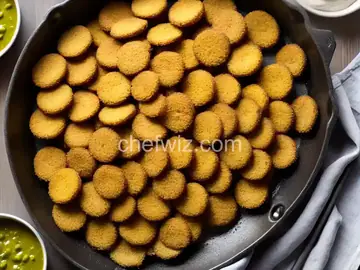
Rice Balls
Rate this recipeBe the first to rate
 By AprilPublished
 Have you ever tried rice balls? These delectable treats are a staple in many cultures around the world.
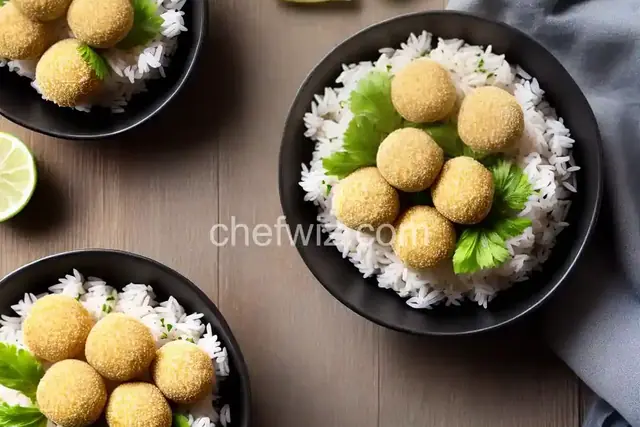 By AprilPublished
 Have you ever tried rice balls? These delectable treats are a staple in many cultures around the world.
In a large pot, melt the butter.
Add the uncooked rice and cook for 2 minutes.
If using saffron, add it to the pot.
Pour in the wine and let it evaporate.
Begin stirring in boiling water until the rice becomes tender.
Cook the rice uncovered.
Add salt and pepper to taste.
Once the rice is cooked, remove from heat.
Mix in the cheese and 2 eggs.
Cover the pot and place it in the refrigerator for 2 hours or overnight to chill the rice.
In a large frying pan over medium heat, add oil.
Saute the onions and chopped garlic for 2 minutes.
Add the beef and pork to the pan and brown them.
Remove any excess grease.
Stir in the basil, tomato paste, tomato sauce, water, and sugar until the mixture thickens.
While still warm, add the peas to the pan.
Take off the heat and set aside.
Add salt and pepper to taste.
Take 2 tablespoons of the chilled rice mixture and shape it into a small cup in your hand.
Place 1/2 teaspoon of the meat mixture in the center of the rice cup.
Add 1 teaspoon of rice on top of the meat mixture and roll it into a ball.
Roll the rice ball in the
Have you ever tried rice balls? These delectable treats are a staple in many cultures around the world. Whether you call them onigiri, arancini, or simply rice balls, they are a delicious and versatile dish that can be enjoyed as a snack, appetizer, or even a main course. In this article, we will explore the fascinating world of rice balls, from their origins to the different variations you can try. So, grab a seat and let's dive in!
Rice balls have a rich history that dates back centuries. In Japan, onigiri has been a beloved food for over a thousand years. It was originally created as a portable and convenient meal for travelers and warriors. The rice balls were often wrapped in seaweed to keep the rice fresh and add a burst of umami flavor. Today, onigiri is a popular snack that can be found in convenience stores all over Japan.
In Italy, arancini is a similar dish that has its own unique history. Legend has it that arancini was first made by Sicilian women who would use leftover rice to create a delicious snack. The name "arancini" means "little oranges" in Italian, which refers to their round shape and golden color. These delightful rice balls are now a beloved street food in Sicily and can be found in various flavors.
One of the great things about rice balls is that they come in a wide variety of flavors and fillings. In Japan, you can find onigiri filled with everything from pickled plums to grilled salmon. Each region and family has its own unique recipe, resulting in endless possibilities. Similarly, arancini in Italy can be filled with ingredients like cheese, meat ragu, or even mushrooms, creating a flavorful explosion with every bite.
But it's not just Japan and Italy that have their own versions of rice balls. In Korea, there's a popular dish called "bap" that is similar to onigiri. In Latin America, there's a dish called "pastel de arroz" that features rice balls stuffed with various fillings. These delightful treats have truly become a global phenomenon, each with its own twist and flavor.
Now that you know about the fascinating history and variations of rice balls, you may be wondering how to make them at home. The good news is that it's relatively simple! All you need is cooked rice, your choice of fillings, and a little bit of creativity. You can shape the rice balls by hand or use a special mold to achieve a perfect shape. And don't forget to wrap them in seaweed for that authentic touch!
Rice balls are a delightful treat that brings together different cultures and flavors. Whether you prefer the simplicity of Japanese onigiri, the richness of Italian arancini, or any other variation, there's no denying the appeal of these bite-sized snacks. So, why not try making your own rice balls at home and explore the world of flavors that await you?
While short-grain rice is traditionally used for rice balls, you can experiment with different types of rice to achieve different textures and flavors.
Yes, rice balls can be made in advance and stored in the refrigerator. Just make sure to wrap them tightly to keep them fresh.
Yes, rice balls are gluten-free as long as you use gluten-free ingredients for the fillings.
Yes, you can freeze rice balls for future enjoyment. Just make sure to wrap them tightly and thaw them before eating.
Absolutely! Rice balls can be easily customized to suit vegetarian diets by using vegetable-based fillings.
While traditional rice balls are enjoyed plain, you can certainly add a drizzle of soy sauce or any other sauce of your choice for added flavor.
Rice balls are best enjoyed within a day or two of making them. After that, they may start to dry out.
Absolutely! Rice balls are a fun and tasty snack that children of all ages can enjoy. Plus, they are great for lunchboxes!
AprilCook, recipe developer and the heart of Chefwiz. More about April