Herman Bread
Rate this recipeBe the first to rate
 By AprilPublished
 Are you tired of store-bought bread that lacks the warmth and flavor of homemade goodness?
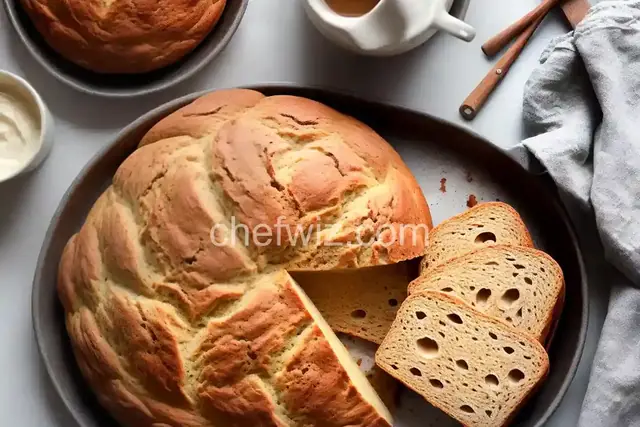 By AprilPublished
 Are you tired of store-bought bread that lacks the warmth and flavor of homemade goodness?
In a small mixing bowl, mix yeast with warm water and let it sit for about 10 minutes until it becomes creamy.
In a large mixing bowl, combine the yeast mixture with Herman Starter, oil, 2 cups of flour, and salt. Mix everything well.
Gradually add the remaining flour, 1/2 cup at a time, stirring after each addition.
Once the dough comes together, transfer it onto a lightly floured surface and knead for about 8 minutes until it becomes smooth and elastic.
Lightly oil a large bowl and place the dough in it, turning it to coat with oil. Cover the bowl with a damp cloth and leave it in a warm place to rise for about 1 hour or until it doubles in volume.
Grease a 9x5 inch loaf pan.
Deflate the dough and transfer it onto a lightly floured surface. Shape it into a loaf and place it into the prepared pan.
Cover the pan with a damp cloth and let it rise again for about 40 minutes or until it doubles in volume.
Preheat the oven to 375 degrees F (190 degrees C).
Bake the loaf in the preheated oven for 30 to 35 minutes or until the top turns golden brown and the bottom sounds hollow when tapped.
Are you tired of store-bought bread that lacks the warmth and flavor of homemade goodness? Look no further than Herman Bread, the perfect recipe for creating your own delicious loaf right in your kitchen. In this article, we will explore the wonders of Herman Bread, its unique characteristics, and why it has become a favorite among baking enthusiasts.
Unlike regular bread, Herman Bread is a sourdough-based recipe that adds a tangy twist to the traditional loaf. The secret lies in the starter, a fermented mixture of flour, sugar, and yeast that gives Herman Bread its distinct flavor and texture.
One of the most intriguing aspects of Herman Bread is its ability to be passed on from one baker to another, just like a friendship. This starter, also known as the "Herman," is often shared among friends and family, creating a sense of community and connection through the love of baking.
Imagine Herman Bread as a living organism. It starts as a small, humble mixture of ingredients, but with proper care and feeding, it grows and develops into a vibrant and flavorful bread. The fermentation process that occurs within the starter creates a beautiful harmony of flavors that can't be replicated in any other bread.
Just like a friendship, Herman Bread requires time, patience, and attention. It needs to be nurtured and cared for, providing an opportunity for bakers to slow down and appreciate the art of breadmaking. The result is a loaf that is not only delicious but also a testament to the dedication and love put into its creation.
Baking Herman Bread is an art form. It's about understanding the balance between science and intuition, knowing when to let the dough rest and rise, and when to shape and bake it to perfection. The process may seem daunting at first, but with practice and guidance, anyone can master the art of Herman Bread.
As you knead the dough, you'll feel its texture change and evolve under your hands. It's like molding clay, shaping it to your desires and watching it transform into a beautiful creation. The aroma that fills your kitchen as it bakes is a reward in itself, a sensory experience that will make you fall in love with Herman Bread over and over again.
Herman Bread is more than just a loaf of bread; it's a journey, a connection, and a labor of love. From the creation of the starter to the final slice, every step is an opportunity to savor the art of baking. So, why settle for store-bought bread when you can have a homemade delight that fills your home with warmth and love? Start your Herman Bread adventure today and experience the joy of creating something truly special.
The process of making Herman Bread typically takes around 10 days, including the time needed to cultivate the starter. However, the actual hands-on time is minimal, with only a few minutes of active preparation required each day.
Absolutely! Sharing Herman starters is a common practice among bakers. Simply follow the instructions provided with the starter and enjoy the journey of creating your own unique loaf of Herman Bread.
Yes, you can! Herman Bread is highly versatile and allows for endless variations. From adding nuts and dried fruits to experimenting with herbs and spices, feel free to let your creativity shine and create a bread that suits your taste buds.
Absolutely! Once baked, Herman Bread can be frozen for future enjoyment. Simply slice the loaf, wrap it tightly in plastic wrap, and place it in the freezer. When you're ready to eat, thaw the slices at room temperature or toast them for a delicious treat.
While the traditional Herman Bread recipe contains gluten, there are gluten-free alternatives available. Experiment with gluten-free flours and follow specific recipes designed for gluten-free breadmaking to create a Herman Bread that suits your dietary needs.
The best way to determine if your Herman Bread is fully baked is by tapping the bottom of the loaf. If it sounds hollow, your bread is ready. Additionally, the crust should be golden brown, and the internal temperature should measure around 190°F (88°C) with a food thermometer.
Absolutely! The Herman starter can be used as a base for various bread recipes. Explore different flavors and textures by incorporating the starter into your favorite bread recipes and enjoy the unique twist it adds.
If your Herman starter has been neglected or stored in the refrigerator for an extended period, it may become dormant. To revive it, discard half of the starter, feed it with fresh flour and water, and continue with the regular feeding schedule. With a little patience and care, your Herman starter will come back to life.
Absolutely! Herman Bread is perfect for sandwiches and toast. Its tangy flavor and soft texture make it an excellent choice for your favorite fillings or a crispy, golden slice of toast topped with butter or your preferred spreads.
AprilCook, recipe developer and the heart of Chefwiz. More about April