Hard-Boiled Eggs
Rate this recipeBe the first to rate
 By AprilPublished
 Have you ever struggled to peel a hard-boiled egg without damaging its delicate white exterior?
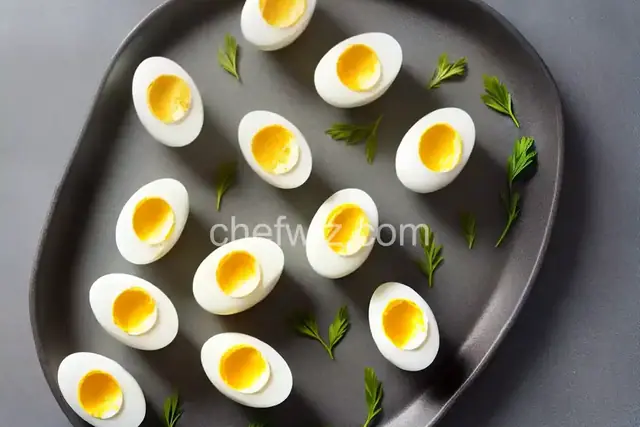 By AprilPublished
 Have you ever struggled to peel a hard-boiled egg without damaging its delicate white exterior?
In a large saucepan, bring water to a boil over medium-high heat.
Using a slotted spoon, carefully place the eggs into the boiling water one at a time.
Cook the eggs for 10 minutes, ensuring the water maintains a gentle boil.
Carefully transfer the cooked eggs to a bowl of ice water and allow them to cool for approximately 2 minutes until they are slightly warm.
Gently crack the eggs all over and begin peeling from the fat end that contains the air pocket.
If you prefer, you can cook and peel the eggs up to 3 days in advance. Simply transfer them to an airtight container and refrigerate.
Have you ever struggled to peel a hard-boiled egg without damaging its delicate white exterior? Or maybe you've ended up with an overcooked yolk that's dry and chalky? Fear not, because in this article, we'll guide you through the art of cooking hard-boiled eggs to perfection. Whether you're a novice in the kitchen or a seasoned cook, these tips and tricks will ensure that your hard-boiled eggs turn out just the way you like them – with a creamy, golden yolk and an easy-to-peel shell.
Hard-boiled eggs are a versatile ingredient that can be enjoyed in various dishes. From deviled eggs and egg salad sandwiches to a simple snack on its own, the possibilities are endless. They are also a great source of protein and essential nutrients, making them a healthy addition to your diet. But achieving the perfect hard-boiled egg is not always as easy as it seems. Let's dive into the process of cooking them just right.
To understand how to cook the perfect hard-boiled egg, let's take a quick look at the science behind it. When you cook an egg, the proteins in the egg whites denature and coagulate, resulting in a solid texture. The longer you cook the egg, the more the proteins will coagulate, leading to a firmer texture. The yolk, on the other hand, contains fats and proteins that undergo chemical reactions when exposed to heat. Overcooking the yolk can cause it to become dry and crumbly.
1. Start by placing your eggs in a single layer in a saucepan and covering them with cold water.
2. Place the saucepan on the stovetop over medium heat and bring the water to a gentle boil.
3. Once the water reaches a boil, reduce the heat to low and let the eggs simmer for about 9-12 minutes, depending on your desired level of doneness.
4. While the eggs are simmering, prepare an ice bath – a bowl filled with cold water and ice cubes.
5. After the desired cooking time, carefully transfer the eggs to the ice bath using a slotted spoon.
6. Let the eggs sit in the ice bath for at least 5 minutes to cool down and stop the cooking process.
7. Once cooled, gently tap the eggs on a hard surface to crack the shell, then roll them between your hands to loosen the shell.
8. Peel the eggs under running water to make it easier to remove any remaining shell fragments.
9. Your perfectly cooked hard-boiled eggs are now ready to be enjoyed!
Cooking the perfect hard-boiled egg may require a bit of practice, but with the right techniques, you'll be able to achieve consistent results every time. Remember to control the cooking time and promptly cool the eggs to avoid overcooking. And don't forget to have fun experimenting with different cooking times to find your preferred level of doneness. Now go ahead, grab some eggs, and enjoy the satisfaction of peeling back that shell to reveal a delicious hard-boiled egg!
A1: The cooking time for hard-boiled eggs depends on the level of doneness you prefer. For a slightly soft center, 9 minutes should suffice, while 12 minutes will result in a fully cooked yolk.
A2: The greenish-gray ring that sometimes appears around the yolk is the result of overcooking. It occurs when the iron in the yolk reacts with sulfur compounds in the egg white. To prevent this, avoid overcooking the eggs and promptly cool them down after cooking.
A3: Adding a teaspoon of baking soda to the boiling water can help make the eggs easier to peel by increasing the pH level of the egg whites.
A4: While it's possible to use fresh eggs, using eggs that are a week to ten days old will yield better results. The aging process causes the eggs to lose moisture, making them easier to peel.
A5: Yes, you can reheat hard-boiled eggs, but they may become rubbery and lose some of their texture. It's best to consume them immediately after cooking.
A6: Hard-boiled eggs can be stored in the refrigerator for up to one week. Make sure to keep them in a covered container to prevent any odors from being absorbed.
A7: It is not recommended to freeze hard-boiled eggs, as the texture and quality may be altered upon thawing.
A8: Yes, a pressure cooker can be used to cook hard-boiled eggs. Follow the manufacturer's instructions for cooking times and release methods.
AprilCook, recipe developer and the heart of Chefwiz. More about April