French Toast
Rate this recipeBe the first to rate
 By AprilPublished
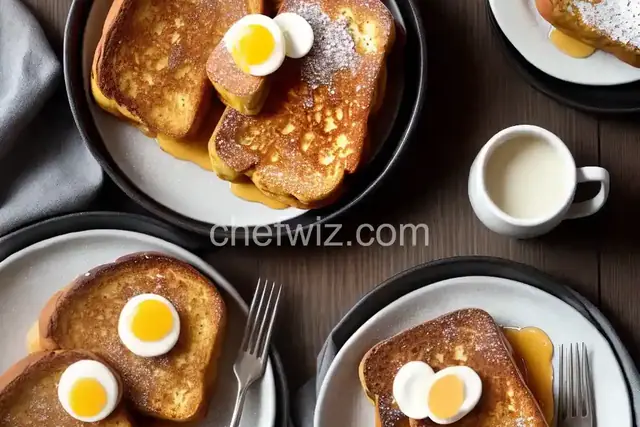
 Who doesn't love waking up to the warm aroma of French toast wafting through the kitchen?
 By AprilPublished
 Who doesn't love waking up to the warm aroma of French toast wafting through the kitchen?
Gather all the necessary ingredients.
In a shallow bowl, whisk together the milk, eggs, vanilla, cinnamon, and salt.
Lightly butter a griddle or skillet and heat it over medium-high heat.
Dip the bread slices into the egg mixture, making sure to soak both sides.
Transfer the soaked bread slices to the hot skillet and cook until they turn golden, which usually takes about 3 to 4 minutes per side.
Serve the French toast hot.
If desired, you can use nutmeg instead of cinnamon.
Who doesn't love waking up to the warm aroma of French toast wafting through the kitchen? It's a classic breakfast dish that has been cherished by families for generations. In this article, we will explore the origins of French toast, the different variations you can try, and some tips to make the perfect batch every time.
French toast, also known as "pain perdu" or "lost bread" in French, is believed to have originated in medieval Europe. It was a clever way to repurpose stale bread that would otherwise go to waste. By soaking the bread in a mixture of eggs and milk and then frying it, the bread became soft and flavorful. It quickly became a popular dish among both the rich and the poor.
While the classic French toast recipe involves dipping slices of bread in a mixture of beaten eggs and milk, there are countless variations you can try to add your own twist to this beloved breakfast treat. For a richer flavor, you can use cream instead of milk or add a splash of vanilla extract. If you have a sweet tooth, sprinkle some cinnamon and sugar on top before serving. And for a fruity twist, you can serve your French toast with a side of fresh berries or a drizzle of maple syrup.
French toast doesn't always have to be sweet. You can also experiment with savory flavors to create a unique and delicious breakfast or brunch dish. Instead of using sugar and cinnamon, try adding some herbs and spices to the egg mixture. You can also top your savory French toast with ingredients like bacon, cheese, or avocado for a more filling meal.
If you're feeling adventurous, why not try making stuffed French toast? Cut a pocket into each slice of bread and fill it with your favorite ingredients. It could be a sweet filling like Nutella and bananas or a savory filling like ham and cheese. Once you've filled the bread, dip it in the egg mixture and cook it as you would with regular French toast. The result is a delightful surprise in every bite.
To make the perfect batch of French toast every time, here are some tips to keep in mind:
French toast is a timeless breakfast dish that is loved by people of all ages. Whether you prefer the classic sweet version or like to experiment with savory flavors, there's no denying the comfort and satisfaction that comes with a plate of warm, golden-brown French toast. So, the next time you're looking to treat yourself to a delicious breakfast, why not whip up a batch of French toast?
Yes, you can use any type of bread for French toast. However, thicker bread like brioche or challah tends to work best as it holds its shape and absorbs the egg mixture well.
While French toast is best enjoyed fresh, you can make a large batch and freeze the leftovers. Simply reheat them in the toaster or oven when you're ready to eat.
Yes, you can use dairy-free milk alternatives like almond milk or coconut milk in place of regular milk. The taste and texture may vary slightly, but it will still be delicious.
Yes, you can make French toast without eggs. You can use alternatives like mashed bananas or applesauce as a binder in the egg mixture to achieve a similar result.
The French toast should be golden brown on both sides and cooked through. You can check by pressing lightly on the bread – if it springs back, it's done.
Yes, you can use frozen bread for French toast. Just make sure to thaw it completely before dipping it in the egg mixture.
Yes, you can use day-old French toast for other recipes. You can turn it into delicious French toast casserole or bread pudding.
Yes, you can make French toast without butter. You can use cooking spray or a neutral oil like vegetable oil to prevent sticking.
AprilCook, recipe developer and the heart of Chefwiz. More about April