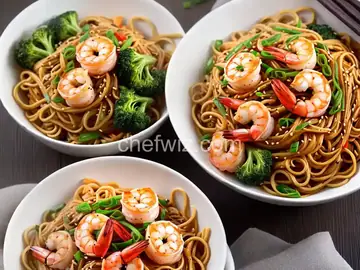
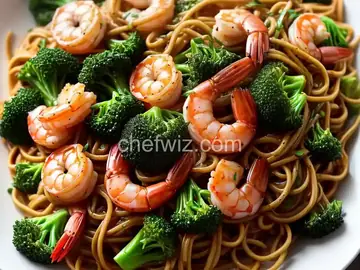
Classic Pad Thai
Rate this recipeBe the first to rate
 By AprilPublished
 Are you a fan of Thai cuisine? Do you crave the perfect balance of flavors - sweet, sour, salty, and spicy?
 By AprilPublished
 Are you a fan of Thai cuisine? Do you crave the perfect balance of flavors - sweet, sour, salty, and spicy?
Pour boiling water over the noodles and let them sit for 5 minutes. Then, drain the noodles and set them aside.
In a wok or deep skillet over high heat, heat half of the oil. Crumble the chicken into the pan and add the hot sauce. Stir-fry for 3 to 5 minutes until the chicken is browned. Transfer the cooked chicken to a platter and set aside.
Add the remaining oil and peppers to the pan. Stir-fry for 3 minutes. Then, add the shrimp and stir-fry for an additional 2 minutes.
Stir in the garlic, ginger, broth, ketchup, lime juice, sugar, and fish sauce. Bring the mixture to a boil.
Add the cooked noodles and reserved chicken to the pan. Toss everything together to combine and heat through.
Add the sprouts and gently toss them with the other ingredients.
Sprinkle the dish with onions, coriander, and peanuts.
Variation 1: Instead of ground chicken, you can use ground pork for a different twist on the recipe.
Variation 2: If you prefer a meatless version, substitute chopped firm tofu for the chicken and a chopped 3-egg omelet for the shrimp.
Variation 3: To simplify the recipe, you can omit the hot pepper sauce and use Heinz Hot & Spicy Ketchup instead of regular ketchup
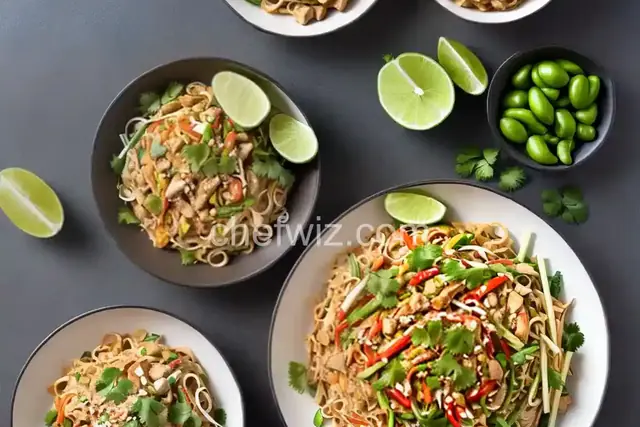
Are you a fan of Thai cuisine? Do you crave the perfect balance of flavors - sweet, sour, salty, and spicy? Look no further! Classic Pad Thai is the answer to your taste buds' desires. This iconic dish is a harmonious blend of stir-fried rice noodles, savory sauce, and an array of vibrant toppings. Let's dive into the world of Pad Thai and discover the secrets behind this beloved Thai street food.
Did you know that Pad Thai has an interesting history? It was originally created in the 1930s as part of a national campaign to promote Thai identity and unify the country. The government wanted to introduce a national dish that would reflect the unique flavors of Thailand. Combining Chinese stir-frying techniques with local ingredients, Pad Thai was born. Since then, it has become a staple in Thai cuisine and gained popularity worldwide.
Pad Thai is all about achieving the perfect balance of flavors. The sauce is the heart and soul of this dish, made from a harmonious blend of tamarind paste, fish sauce, palm sugar, and lime juice. The sweetness of the palm sugar, the tanginess of the tamarind, and the umami of the fish sauce create a symphony of flavors that dance on your palate. The addition of crushed peanuts adds a delightful crunch and nuttiness to each bite.
Pad Thai traditionally uses thin rice noodles, which are soaked in water to soften before cooking. These noodles have a delicate texture that complements the other ingredients. They absorb the flavors of the sauce, creating a mouthwatering base for the dish. You can find rice noodles in most Asian grocery stores or online, making it easy to recreate this classic dish at home.
What sets Pad Thai apart from other noodle dishes is the variety of toppings that are added. From bean sprouts and chives to tofu and shrimp, the possibilities are endless. The toppings not only add texture and visual appeal but also contribute to the overall flavor profile. The combination of fresh herbs, crunchy vegetables, and protein creates a well-rounded and satisfying meal.
Creating the perfect Pad Thai requires swift and precise cooking techniques. The rice noodles should be stir-fried over high heat to achieve that wonderful smoky flavor. The key is to continuously toss and stir the noodles, allowing them to cook evenly and preventing them from sticking together. The addition of the sauce and toppings at the right moment ensures that every ingredient is cooked to perfection.
Pad Thai is like a passport to Thailand, allowing you to experience a world of flavors in a single dish. The combination of sweet, sour, salty, and spicy creates a taste explosion that keeps you coming back for more. Each bite tells a story of Thai culture, where food is not just sustenance but a celebration of life.
Classic Pad Thai is a culinary masterpiece that combines the best of Thai flavors in a single dish. From the origins of Pad Thai to the perfect balance of sweet, sour, salty, and spicy, this iconic street food dish has captured the hearts and palates of people all around the world. With its delicate rice noodles, vibrant toppings, and tantalizing sauce, Pad Thai is a journey of flavors that will transport you to the bustling streets of Thailand. So, why not embark on this gastronomic adventure and savor the magic of Pad Thai?
Yes, you can substitute fish sauce with soy sauce or tamari for a vegetarian or vegan version of Pad Thai. However, keep in mind that the flavor profile will be slightly different.
Absolutely! Pad Thai is a versatile dish, and you can customize it to your liking. Chicken, beef, or even tofu can be used as protein alternatives to shrimp.
Yes, you can use gluten-free tamari or coconut aminos instead of soy sauce to make Pad Thai gluten-free. Additionally, ensure that the rice noodles you use are certified gluten-free.
Of course! You can add a variety of vegetables like bell peppers, carrots, or mushrooms to enhance the nutritional value and add more color to your Pad Thai.
Absolutely! Thai cuisine is known for its spicy kick. You can add chili flakes, fresh chilies, or even Thai chili paste to give your Pad Thai that extra heat.
While Pad Thai is best enjoyed fresh, you can make the sauce and prepare the ingredients in advance to save time. Just make sure to cook the noodles and stir-fry everything together when you're ready to serve.
If you don't have palm sugar on hand, you can use brown sugar or coconut sugar as a substitute. However, keep in mind that the flavor might vary slightly.
The smoky flavor in Pad Thai comes from stir-frying the noodles over high heat. Make sure your pan or wok is hot before adding the noodles and continuously toss them to prevent sticking and achieve that desired smokiness.
AprilCook, recipe developer and the heart of Chefwiz. More about April