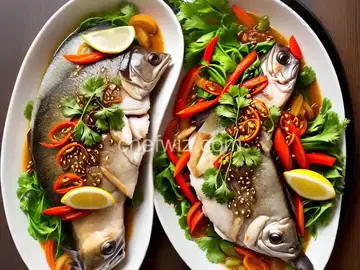
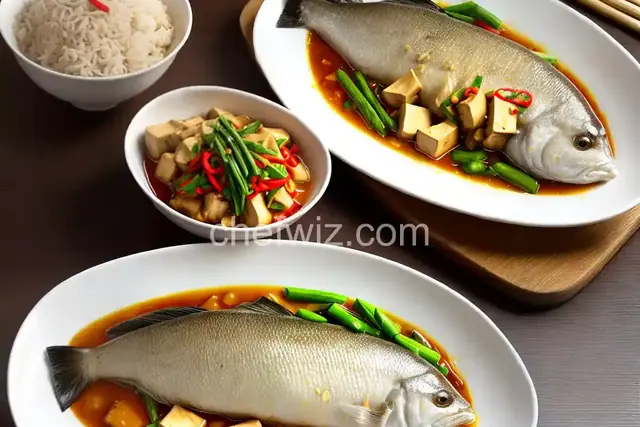
Chinese Steamed White Fish Fillet with Tofu (Cantonese Style)
Rate this recipeBe the first to rate
 By AprilPublished
 Have you ever craved a delicious and healthy Chinese meal that is both light and flavorful?
 By AprilPublished
 Have you ever craved a delicious and healthy Chinese meal that is both light and flavorful?
Boil about 1 1/2 inches of water in a pot with a steamer basket.
In a large bowl, mix together the chile, garlic, ginger, and black bean sauce.
Add dark and white soy sauces, vegetable oil, sugar, and white pepper to the bowl.
In a small cup, combine cornstarch and water. Stir it into the sauce mixture.
Cut the fish fillets into thin strips and add them to the bowl. Coat the fish well with the sauce.
Once the water in the steamer is boiling, carefully place the tofu cubes in a single layer in the steamer basket.
Cover the steamer and steam the tofu for 2 minutes.
Place the fish strips on top of the tofu in the steamer.
Cover the steamer again and steam the fish and tofu for another 3 minutes.
Remove the steamer from heat and garnish the dish with chopped green onion.
Serve the dish with steamed white rice and stir-fried or steamed Asian vegetables.
Have you ever craved a delicious and healthy Chinese meal that is both light and flavorful? Look no further! Chinese Steamed White Fish Fillet with Tofu, Cantonese Style, is the perfect dish for you. It combines the delicate taste of fresh fish fillet with the smoothness of tofu, creating a delectable combination that will leave you wanting more.
When it comes to cooking fish, steaming is a method that truly brings out the essence of the ingredients. Steaming allows the fish to retain its natural flavors and nutrients, resulting in a tender and moist texture. The process also ensures that the dish is low in fat, making it a healthy choice for those watching their waistline.
Imagine the fish fillet gently cooking in a steamer, enveloped in aromatic flavors that infuse every bite. The steam slowly penetrates the flesh, creating a dish that is both delicate and succulent. The tofu, on the other hand, adds a creamy and silky texture that complements the fish perfectly.
Cantonese cuisine is known for its emphasis on fresh ingredients and delicate flavors. This style of cooking allows the natural flavors to shine through, creating a harmonious balance of taste and texture. Chinese Steamed White Fish Fillet with Tofu perfectly embodies the essence of Cantonese cuisine.
With its subtle flavors and lightness, this dish is a testament to the Cantonese philosophy of cooking. Each bite is a journey of flavors, as the fish and tofu meld together in a symphony of taste. The simplicity of the dish allows the ingredients to take center stage, making it a favorite among seafood lovers.
Now that you're eager to try this mouthwatering dish, let's dive into the steps to make Chinese Steamed White Fish Fillet with Tofu (Cantonese Style). Remember, the key is to keep it simple and let the ingredients shine.
Start by selecting the freshest fish fillet available. Opt for white fish varieties such as cod, haddock, or sole, as they have a mild flavor that pairs well with tofu. Cut the fish into manageable-sized pieces and pat them dry.
Next, choose firm tofu and slice it into thin pieces. Tofu acts as a sponge, soaking up the flavors of the dish and adding a creamy texture.
Prepare a mixture of light soy sauce, ginger, garlic, and a touch of sesame oil. This combination will infuse the fish and tofu with a delightful aroma. Gently coat the fish fillet and tofu with this flavorful marinade, ensuring that each piece is covered evenly.
Place the marinated fish fillet and tofu on a heatproof dish that fits inside a steamer. Make sure the dish has sides to contain any liquids that may be released during the steaming process.
Fill a pot or wok with water and bring it to a boil. Once the water is boiling, carefully place the dish with the fish and tofu into the steamer and cover it tightly. Steam for about 10-15 minutes, or until the fish is cooked through and the tofu is heated.
While the fish and tofu are steaming, prepare a garnish of thinly sliced green onions and cilantro. Once the dish is cooked, remove it from the steamer and sprinkle the garnish on top. The vibrant colors and fresh flavors will elevate the dish to new heights.
Serve the Chinese Steamed White Fish Fillet with Tofu (Cantonese Style) with steamed rice, and you have a complete meal that is both satisfying and healthy.
Absolutely! While the recipe suggests white fish fillets, you can experiment with other fish varieties that suit your taste. Just ensure they have a similar texture and are suitable for steaming.
Tofu adds a unique creaminess and texture to the dish, but if you're not a fan, you can omit it. However, the combination of fish and tofu is what makes this recipe truly special.
If you want to add some greens to your meal, you can steam bok choy or broccoli alongside the fish and tofu. It will add some color and freshness to the dish.
If you prefer a spicy kick, you can add some chili flakes or a drizzle of chili oil to the marinade. It will give the dish a delightful heat that complements the flavors.
The fish should be opaque and flake easily with a fork. If you're unsure, you can use a meat thermometer to ensure it reaches an internal temperature of 145°F (63°C).
Absolutely! Bamboo steamers are a traditional and authentic way to steam food. They add their own unique flavor to the dish and are visually appealing.
While it's best to enjoy Chinese Steamed White Fish Fillet with Tofu immediately after cooking, you can prepare the fish and tofu in advance and steam them when you're ready to serve. Just make sure to store them separately in the refrigerator.
It's not recommended to freeze the leftovers as the texture of the fish and tofu may change upon thawing. It's best to enjoy this dish fresh.
For an extra burst of flavor, you can serve a side of soy sauce with a squeeze of fresh lime juice. It adds a tangy element that complements the dish beautifully.
So, why wait? Treat yourself to a delightful Chinese Steamed White Fish Fillet with Tofu (Cantonese Style) and experience the harmony of flavors and textures that will transport you to the heart of Cantonese cuisine.
AprilCook, recipe developer and the heart of Chefwiz. More about April