Congee
Rate this recipeBe the first to rate
 By AprilPublished
 Have you ever had a meal that felt like a warm hug? A dish that brings comfort and nourishment to both body and soul?
 By AprilPublished
 Have you ever had a meal that felt like a warm hug? A dish that brings comfort and nourishment to both body and soul?
In a large stockpot, combine chicken stock, water, rice, 1/4 cup of apple cider vinegar, fish sauce, ginger, salt, and sesame oil. Bring the mixture to a boil.
Once boiling, reduce the heat and let it simmer for about 3 hours or until the congee reaches a light porridge-like consistency.
Stir in the fish and continue simmering for approximately 10 minutes until it is cooked through.
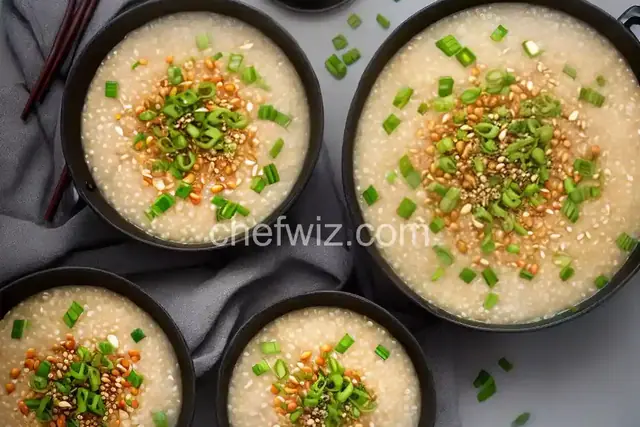
To serve, ladle the congee into bowls and top with pickled vegetables, roast pork, scallions, and peanuts.
Drizzle 1/2 teaspoon of vinegar and soy sauce over the toppings.
If desired, you can use rice wine vinegar instead of apple cider vinegar.
Additionally, pork floss (pork sung) can be used as a substitute for roast pork if preferred.
Have you ever had a meal that felt like a warm hug? A dish that brings comfort and nourishment to both body and soul? Look no further than congee. This humble and versatile dish has been a staple in many Asian cuisines for centuries. In this article, we will explore the wonders of congee, its origins, and some mouthwatering variations that will surely make you want to grab a spoon and dig in.
Congee, also known as rice porridge, is a simple yet satisfying dish made by cooking rice in a large amount of water or broth until it breaks down into a smooth and creamy consistency. It is a staple breakfast or comfort food in many Asian countries, including China, Japan, and Thailand. Imagine a warm and comforting bowl of porridge that can be enjoyed plain or topped with a variety of delicious ingredients.
The origins of congee can be traced back to ancient China, where it was first used as a medicinal dish. It was believed to have healing properties and was often prescribed to those who were sick or recovering from an illness. As time went on, congee became a popular everyday meal and spread to other parts of Asia, each country adding its own unique twist to the dish.
One of the best things about congee is its versatility. It can be enjoyed plain, acting as a blank canvas for a variety of toppings and flavorings. From savory options like shredded chicken, fried shallots, and soy sauce, to sweet additions like fresh fruit and honey, the possibilities are endless. It's like having a bowl of risotto, oatmeal, and soup all in one.
Making congee is a relatively simple and forgiving process. All you need is rice, water or broth, and a little bit of patience. The key is to cook the rice low and slow, allowing it to break down and release its starch, creating that creamy texture we all love.
Traditionally, long-grain white rice is used to make congee, but you can experiment with different types of rice, such as jasmine or sushi rice, to add a unique flavor and texture to your dish.
Before cooking the rice, it's important to rinse it thoroughly under cold water to remove any excess starch. Soaking the rice for at least 30 minutes or up to overnight will help it cook more evenly and quickly.
In a large pot, bring the soaked rice and water or broth to a boil. Reduce the heat to low and let it simmer, stirring occasionally, for about 1 to 2 hours or until the rice has broken down and the desired consistency is achieved.
Once your congee is ready, it's time to get creative with the toppings. From savory options like sliced green onions, minced ginger, and crispy fried shallots, to protein-rich additions like shredded chicken, beef, or seafood, the choice is yours. Don't forget to season with soy sauce, sesame oil, and a sprinkle of white pepper for that extra burst of flavor.
Congee, the ultimate comfort food. It's a dish that warms the heart and nourishes the soul. Whether you enjoy it plain or dressed up with an array of toppings, there's no denying the magic of a good bowl of congee. So next time you're in need of some comfort, grab a spoon and savor the goodness of this humble yet versatile dish.
Yes, you can definitely use brown rice to make congee. However, keep in mind that brown rice takes longer to cook and may require more liquid.
Yes, you can make congee in a rice cooker. Simply follow the same steps as cooking rice in a pot and set your rice cooker to the porridge setting.
Yes, congee is naturally gluten-free as long as you use gluten-free ingredients for the toppings and seasonings.
Yes, you can freeze congee. Allow it to cool completely, then transfer it to airtight containers or freezer bags. It will keep well in the freezer for up to 3 months. Thaw in the refrigerator overnight before reheating.
Yes, you can make congee in an Instant Pot. Simply follow the manufacturer's instructions for cooking rice and adjust the cooking time accordingly.
Absolutely! Congee is a great way to use up leftover rice. Simply add the rice to a pot with water or broth and cook until desired consistency is reached.
Yes, congee can be easily made vegetarian or vegan by using vegetable broth and choosing plant-based toppings like tofu, mushrooms, and vegetables.
Yes, congee can be enjoyed for breakfast, lunch, or dinner. It's a versatile dish that can be customized to suit your taste and cravings.
AprilCook, recipe developer and the heart of Chefwiz. More about April