Candied Apples
Rate this recipeBe the first to rate
 By AprilPublished
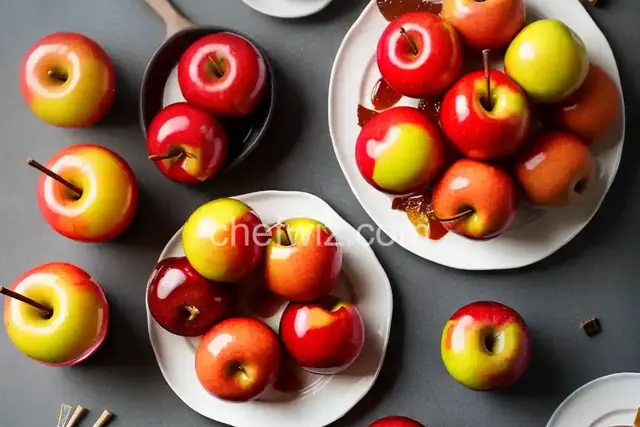
 Who doesn't love the crisp and juicy bite of a fresh apple? Now imagine that apple coated in a shiny layer of sweet, sticky goodness.
 By AprilPublished
 Who doesn't love the crisp and juicy bite of a fresh apple? Now imagine that apple coated in a shiny layer of sweet, sticky goodness.
Grease cookie sheets lightly.
Insert craft sticks into whole, stemmed apples.
In a medium saucepan, combine sugar, water, and corn syrup. Heat the mixture over medium-high heat until it reaches a temperature of 300 to 310 degrees F (149 to 154 degrees C). This can be tested by dropping a small amount of syrup into cold water and checking if it forms hard, brittle threads.
Remove the saucepan from heat and stir in food coloring.
Hold each apple by its stick and dip it into the syrup. Remove the apple from the syrup and turn it to evenly coat it.
Place the coated apples on the prepared sheets to allow them to harden.
Who doesn't love the crisp and juicy bite of a fresh apple? Now imagine that apple coated in a shiny layer of sweet, sticky goodness. That's what candied apples are all about - combining the natural goodness of apples with a delightful sugary twist. In this article, we'll explore the world of candied apples, from their history to different variations and even some fun facts. So, get ready to sink your teeth into this delicious topic!
Candied apples have a long and fascinating history. The tradition of coating apples in sugar syrup dates back to the late 19th century, where it was commonly done during autumn festivals and fairs. The practice gained popularity in the United States and quickly became associated with Halloween. Today, candied apples are enjoyed year-round and come in various flavors and styles.
Making candied apples is like performing a culinary magic trick. You start with a simple apple, add a sticky coating, and transform it into a delightful treat. The process involves first cleaning and drying the apples thoroughly. Then, a sugar syrup is prepared and heated to a specific temperature. The apples are dipped into the syrup, allowing it to coat the surface completely. The coated apples are then left to cool and harden, creating a glossy shell that gives them their signature look.
While the classic candied apple features a red-colored syrup coating, there are countless variations to explore. Some popular flavors include caramel, chocolate, and even sprinkles or nuts. These variations provide a delightful twist to the traditional candied apple, making them even more irresistible.
Did you know that candied apples are not only delicious but also have cultural significance? In some cultures, they are considered a symbol of good luck and prosperity. Additionally, candied apples are often associated with romantic gestures, making them a popular gift during Valentine's Day.
Candied apples are a delightful treat that combines the natural goodness of apples with a sweet and sticky twist. Whether enjoyed during a festive occasion or as a romantic gesture, these glossy and flavorful treats are sure to bring a smile to your face. So, why not try your hand at making your own candied apples and indulge in this timeless treat?
While any apple variety can be used, it is recommended to choose firm and crisp apples like Granny Smith or Honeycrisp for the best results.
Unfortunately, the sugar syrup is a crucial component of candied apples, as it creates the iconic glossy coating. However, there are alternative recipes available that use natural sweeteners like honey or maple syrup.
Candied apples can last for up to a week when stored in the refrigerator. However, for the best taste and texture, it is recommended to consume them within a few days of making.
Absolutely! Once the apple is coated in the sugar syrup, you can roll it in various toppings like crushed nuts, sprinkles, or even drizzle it with melted chocolate for an extra indulgence.
Yes, you can! There are alternative recipes available that use natural sweeteners and healthier coating options like dark chocolate or yogurt.
Yes, you can prepare candied apples ahead of time. Once they are fully coated and cooled, store them in an airtight container in the refrigerator until ready to serve.
Candied apples contain sugar and are not suitable for individuals with diabetes or other dietary restrictions. However, there are alternative recipes available that cater to specific dietary needs.
Absolutely! The leftover sugar syrup can be used as a sweetener in beverages, drizzled over pancakes or waffles, or even used as a glaze for baked goods.
AprilCook, recipe developer and the heart of Chefwiz. More about April