Cacio e Pepe (Spaghetti With Black Pepper and Pecorino Romano) Recipe
Rate this recipeBe the first to rate
 By AprilPublished
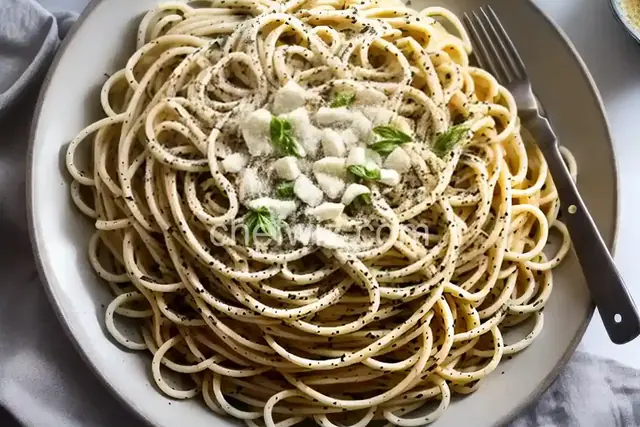
 Are you a fan of simple yet delicious pasta dishes? Look no further than the classic Italian recipe for Cacio e Pepe.
 By AprilPublished
 Are you a fan of simple yet delicious pasta dishes? Look no further than the classic Italian recipe for Cacio e Pepe.
In a medium skillet, heat 3 tablespoons of olive oil and approximately 1 teaspoon of black pepper over medium-low heat until fragrant and the pepper starts to sizzle slightly (about 1 minute). Set aside.
In a large skillet, place the spaghetti and cover it with water. Add a small pinch of salt and bring to a boil over high heat, occasionally stirring the spaghetti with a fork or wooden spoon to prevent clumping.
Cook the spaghetti until it is al dente (usually about 1 minute less than the recommended cooking time on the package).
Transfer 2 to 3 tablespoons of the pasta cooking water to the skillet with the olive oil and pepper mixture. Stir in the butter.
Using tongs, lift the cooked spaghetti and transfer it to the skillet with the oil and butter mixture.
Add the cheese and the remaining tablespoon of olive oil to the skillet. Use a fork to stir until the cheese is completely melted.
Adjust the consistency of the sauce by adding a few more tablespoons of pasta water to the skillet, reheating as needed until the sauce is creamy and coats each strand of spaghetti.
Season with salt and more black pepper to taste.
Serve immediately, and provide extra grated cheese and black pepper at the table for garnishing.
Are you a fan of simple yet delicious pasta dishes? Look no further than the classic Italian recipe for Cacio e Pepe. This timeless dish combines the bold flavors of black pepper and Pecorino Romano cheese to create a mouthwatering symphony of taste. Let's dive into the details of this beloved pasta recipe.
Before we delve into the recipe itself, let's take a moment to appreciate the origins of Cacio e Pepe. Hailing from Rome, this dish has been enjoyed for centuries by both locals and visitors alike. Its simplicity and incredible flavor have made it a staple in Italian cuisine.
Imagine a harmonious blend of the earthy, aromatic black pepper and the rich, salty Pecorino Romano cheese. This combination elevates the humble spaghetti to new heights, creating a dish that is both comforting and sophisticated.
The secret to a great Cacio e Pepe lies in achieving the perfect sauce consistency. As simple as it may seem, it requires finesse and attention to detail. You want the sauce to be creamy and velvety, coating each strand of spaghetti evenly.
Now, let's dive into the cooking process. Follow these steps to master the art of Cacio e Pepe:
Start by boiling a pot of salted water and cook the spaghetti until al dente. Remember, al dente pasta is key to achieving the perfect texture in this dish.
In a separate pan, toast the black pepper until fragrant. This will release its oils and intensify its flavor, adding depth to the dish.
Once the spaghetti is cooked, reserve a cup of the pasta water before draining. In a large skillet, combine the toasted black pepper, Pecorino Romano cheese, and a splash of the pasta water. Stir until the cheese has melted and the sauce is smooth and creamy.
Add the drained spaghetti to the skillet and toss it in the sauce until every strand is coated. If needed, add more pasta water to achieve the desired consistency. Serve immediately to enjoy its flavors at their best.
Cacio e Pepe is a timeless Italian dish that exemplifies the beauty of simplicity. With just a few ingredients, you can create a pasta masterpiece that will impress your taste buds. So why not give it a try and experience the magic of Cacio e Pepe for yourself?
While spaghetti is the traditional choice, you can experiment with other types of pasta, such as linguine or fettuccine, depending on your preference.
Pecorino Romano cheese is an essential ingredient in Cacio e Pepe, as it provides the distinct salty and tangy flavor. However, if you can't find it, you can use Parmesan as a substitute.
Absolutely! The amount of black pepper can be adjusted according to your personal taste. Feel free to add more or less depending on how bold you want the flavor to be.
Cooking pasta al dente means it should be tender but still have a slight bite to it. Follow the recommended cooking time on the pasta package, but always taste it a minute or two before to ensure it's cooked to your preference.
Traditionally, Cacio e Pepe is a simple dish that only includes spaghetti, black pepper, and Pecorino Romano cheese. However, you can experiment with additional ingredients like sautéed mushrooms or crispy pancetta for added depth of flavor.
Yes, Cacio e Pepe is a vegetarian-friendly dish as long as you use vegetarian-friendly cheese, such as Pecorino Romano made with vegetable rennet.
Cacio e Pepe is best enjoyed immediately after preparation to savor its flavors at their peak. However, you can store any leftovers in an airtight container in the refrigerator. Reheat gently in a pan with a splash of pasta water to revive the creamy sauce.
Due to the nature of the sauce, it is not recommended to freeze Cacio e Pepe. The texture may change upon thawing, resulting in a less desirable consistency.
AprilCook, recipe developer and the heart of Chefwiz. More about April