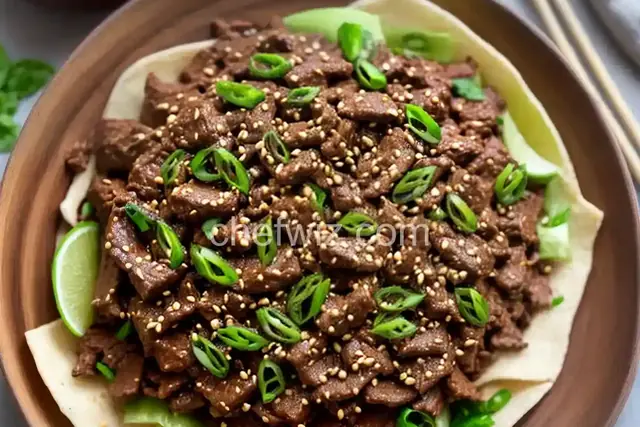
Bulgogi
Rate this recipeBe the first to rate
 By AprilPublished
 Do you ever find yourself craving a dish that combines the perfect balance of sweet and savory flavors?
 By AprilPublished
 Do you ever find yourself craving a dish that combines the perfect balance of sweet and savory flavors?
Freeze the steak until it is semi-frozen, for a minimum of 2 1/2 hours or up to 5 hours.
Slice the semi-frozen steak against the grain, making slices that are 1/8 thick. Transfer the slices to a large bowl.
In a food processor, blend together the chopped onion, apple, kiwi, and garlic until smooth, which should take about 1 minute. Pour this mixture over the sliced meat in the bowl.
Add the sliced onions, scallions, brown sugar, soy sauce, mirin, oil, and 1/4 teaspoon of black pepper to the meat and marinade in the bowl.
Using your hands, massage the marinade into the meat for approximately 2 minutes.
Cover the bowl with plastic wrap and refrigerate it for at least 30 minutes or up to 2 hours.
Heat a large nonstick skillet over medium-high heat.
Working in 3 batches, arrange the marinated meat in a single layer in the skillet, being careful not to overcrowd the pan.
Cook the meat for 3 to 4 minutes on each side, turning it once. If the pan becomes too dark, use tongs to move the meat along the sides of the pan.
Continue to cook the meat, flipping and tossing it to pick up any caramelization from the bottom of the pan, until parts of
Do you ever find yourself craving a dish that combines the perfect balance of sweet and savory flavors? Look no further than the delectable Korean dish known as Bulgogi. Bulgogi, which translates to "fire meat," is a popular Korean barbecue dish that has captured the hearts and taste buds of people all around the world. In this article, we will explore the origins of Bulgogi, its unique flavors, and why it has become a beloved culinary sensation.
Like many traditional dishes, Bulgogi has a rich history that dates back centuries. Originating from the Korean peninsula, Bulgogi was initially prepared as a way to preserve meat. Thinly sliced strips of beef were marinated in a flavorful blend of soy sauce, sesame oil, garlic, and other seasonings, and then grilled over an open fire. The result was a tender, succulent dish that quickly gained popularity among Koreans.
One of the reasons why Bulgogi has become so widely loved is its unique combination of flavors. The marinade, made with a variety of ingredients, infuses the meat with a delightful sweetness and a hint of smokiness. The soy sauce provides a savory umami taste, while the garlic and sesame oil add depth and complexity. When cooked to perfection, the beef becomes incredibly tender, making each bite a burst of heavenly flavors.
Preparing Bulgogi at home may seem intimidating, but it's actually quite simple. Start by thinly slicing the beef, preferably using cuts like sirloin or ribeye. Then, create the marinade by combining soy sauce, sesame oil, garlic, ginger, sugar, and pepper. Let the meat marinate for at least one hour, allowing the flavors to penetrate the beef. Finally, grill the beef over high heat until it reaches your desired level of doneness.
With its mouthwatering flavors and tender texture, it's no wonder that Bulgogi has become a global sensation. Its popularity has spread far beyond the borders of Korea, finding its way onto menus in various countries. This culinary delight has captured the attention of food enthusiasts worldwide, who appreciate the harmonious blend of sweet, savory, and smoky flavors that Bulgogi offers.
Moreover, the versatility of Bulgogi is another reason for its widespread appeal. While traditionally made with beef, variations of Bulgogi can be found using different meats such as pork, chicken, or even tofu for vegetarians. This adaptability allows people with different dietary preferences to enjoy the flavors of Bulgogi.
The best cuts of meat to use for Bulgogi are sirloin or ribeye. These cuts are known for their tenderness and ability to absorb flavors.
Absolutely! Marinating the meat overnight will further enhance the flavors and result in an even more delicious Bulgogi.
Yes, you can! If you don't have a grill, you can cook Bulgogi on a stovetop using a skillet or a frying pan.
Bulgogi is not typically spicy. However, if you prefer a little heat, you can add some red pepper flakes or gochujang (Korean chili paste) to the marinade.
Yes, you can use pre-sliced meat if it's available. However, slicing the meat yourself allows for more control over the thickness and ensures optimal tenderness.
Some popular side dishes to accompany Bulgogi are kimchi, steamed rice, pickled vegetables, and Korean-style pancakes called "jeon."
Yes, you can freeze leftover Bulgogi. Just make sure to store it in an airtight container or freezer bag to maintain its freshness.
Absolutely! Bulgogi can be made with other proteins like pork, chicken, or even tofu for a vegetarian option. The marinade works well with various meats.
In conclusion, Bulgogi is a mouthwatering Korean delight that has captured the hearts and taste buds of people all over the world. Its unique combination of sweet, savory, and smoky flavors, along with its tender texture, make it a culinary sensation that is sure to satisfy any craving. Whether you choose to prepare it at home or indulge in a restaurant, Bulgogi is a dish that promises to leave you wanting more.
AprilCook, recipe developer and the heart of Chefwiz. More about April