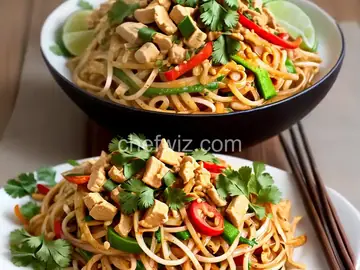
Authentic Pad Thai Noodles
Rate this recipeBe the first to rate
 By AprilPublished
 Who can resist the mouthwatering combination of tangy, sweet, and savory flavors in a plate of authentic Pad Thai noodles?
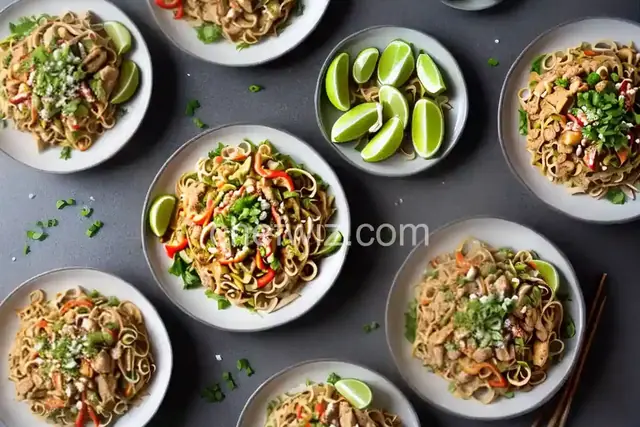 By AprilPublished
 Who can resist the mouthwatering combination of tangy, sweet, and savory flavors in a plate of authentic Pad Thai noodles?
Begin by soaking the rice vermicelli noodles in a bowl filled with hot water for 30 minutes to 1 hour. Once softened, drain the noodles and set them aside.
In a large wok, heat peanut oil over medium heat.
Cook and stir the tofu in the wok, ensuring all sides turn golden.
Using a slotted spoon, remove the tofu from the wok and drain it on a plate lined with paper towels.
Transfer all but 1 tablespoon of the used oil from the wok into a small bowl, as it will be used later.
Heat the remaining 1 tablespoon of oil in the wok over medium heat until it begins to sizzle.
Add the beaten egg to the hot oil and lightly toss to scramble it. Once cooked, set the scrambled egg aside.
Pour the reserved peanut oil from the small bowl back into the wok.
Toss the garlic and drained noodles in the wok until they are coated with the oil.
Stir in the vegetable broth, lime juice, soy sauce, and sugar. Toss the noodles gently and push them around the pan to ensure they are coated with the sauce.
Gently mix in the tofu, scrambled egg, salt, chili flakes, and 3 tablespoons of peanuts. Toss the ingredients together to combine.
Add the bean sprouts and green onions, reserving about 1 tablespoon
Who can resist the mouthwatering combination of tangy, sweet, and savory flavors in a plate of authentic Pad Thai noodles? This iconic Thai dish has gained international fame for its unique blend of ingredients and flavors. In this article, we will delve into the roots of Pad Thai, explore the key elements that make it so delicious, and share some tips for making your own authentic Pad Thai noodles at home.
Like many traditional dishes, the origins of Pad Thai can be traced back to a time when Thailand was facing a rice shortage. The Thai government, under the leadership of Field Marshal Plaek Phibunsongkhram, sought to promote a sense of national identity and unity among the Thai people. As a result, the government launched a campaign to encourage the consumption of noodles, which were seen as a symbol of Thai pride and independence.
Pad Thai was born out of this campaign, combining Chinese stir-frying techniques with local Thai flavors. It quickly became a favorite street food, loved by both locals and tourists alike. Today, Pad Thai is not only a beloved Thai dish but also an international culinary sensation.
Authentic Pad Thai is made up of a harmonious balance of flavors and textures. The dish typically consists of rice noodles stir-fried with eggs, tofu, shrimp or chicken, bean sprouts, garlic, shallots, and a combination of tamarind paste, fish sauce, and palm sugar for the signature Pad Thai sauce.
What sets Pad Thai apart is the complexity of its flavors. The tanginess of tamarind, the umami of fish sauce, the sweetness of palm sugar, and the heat from Thai chili peppers all come together to create a flavor profile that is both vibrant and addictive.
While it may seem daunting to recreate the flavors of authentic Pad Thai at home, it is entirely possible with a few key tips and tricks. The first step is to gather all the necessary ingredients, including rice noodles, protein of your choice, vegetables, and the essential Pad Thai sauce ingredients.
To achieve that perfect balance of flavors, it's crucial to adjust the sauce according to your taste preferences. Some may prefer a sweeter Pad Thai, while others may enjoy a more tangy or spicy version. Don't be afraid to experiment and make the dish your own.
Once you have all your ingredients ready, the cooking process is relatively quick and straightforward. It's essential to stir-fry the ingredients over high heat to achieve that signature smoky flavor. The key is to ensure that each ingredient is cooked to perfection without becoming overly soggy or undercooked.
Yes, absolutely! While shrimp and chicken are traditional choices, you can also use tofu, beef, or even a combination of different proteins to suit your taste preferences.
Yes, you can substitute fish sauce with soy sauce or tamari if you prefer a vegetarian or vegan version of Pad Thai. However, keep in mind that the flavor profile may be slightly different.
To prevent the noodles from sticking together, rinse them with cold water after cooking and toss them with a little oil.
Absolutely! Adding vegetables like bell peppers, carrots, or broccoli can add extra color, texture, and nutrition to your Pad Thai.
If you prefer a spicier Pad Thai, you can add more Thai chili peppers or chili flakes to the dish. Adjust the amount according to your heat tolerance.
The smoky flavor in Pad Thai comes from stir-frying the ingredients over high heat. Ensure that your wok or pan is hot enough before adding the ingredients.
While Pad Thai is best enjoyed fresh, you can make the sauce and prepare the ingredients ahead of time for a quicker cooking process.
Yes, you can customize the Pad Thai sauce according to your taste preferences. Adjust the amount of tamarind, fish sauce, and palm sugar to achieve the perfect balance of flavors for you.
In conclusion, Pad Thai is not just a delicious dish; it is a reflection of Thai culture and history. By understanding its origins and key elements, you can create your own authentic Pad Thai noodles at home. So why not embark on a culinary adventure and bring the flavors of Thailand to your kitchen?
AprilCook, recipe developer and the heart of Chefwiz. More about April